





AI: the
intelligence
behind our
data science
services
AI: the
intelligence
behind our
data science
services
Our AI solutions are built and deployed on enterprise cloud platforms, including AWS, Google Cloud, Microsoft Azure, and Oracle Cloud – selecting the right infrastructure based on your existing environment and requirements.
see what AI can
do with your data
data science & AI: a
symbiotic relationship
Data science provides the foundation AI needs to function – collecting
raw information, cleaning and preparing datasets, engineering meaningful features, and building the infrastructure to store and process data at scale.
AI, in return, provides the intelligence layer that transforms prepared data into actionable outcomes – recognizing patterns humans can’t detect, automating complex decisions, generating predictions, and extracting meaning from unstructured content like images and text.
Together, they create a continuous cycle:
Better data enables smarter AI, and smarter AI unlocks deeper insights
from data – powering everything from real-time fraud detection to personalized recommendations to predictive maintenance.
AI technologies
powering our solutions
generative AI & large
language models (LLMs)
We build AI-powered applications using state-of-the-art language models – customer support chatbots, document analysis systems, automated report generation, internal knowledge assistants, intelligent search, and more. We leverage leading foundation models (OpenAI, Anthropic Claude, Google Gemini, open-source alternatives like Llama) and customize them to your specific business needs and workflows.
retrieval augmented
generation (RAG)
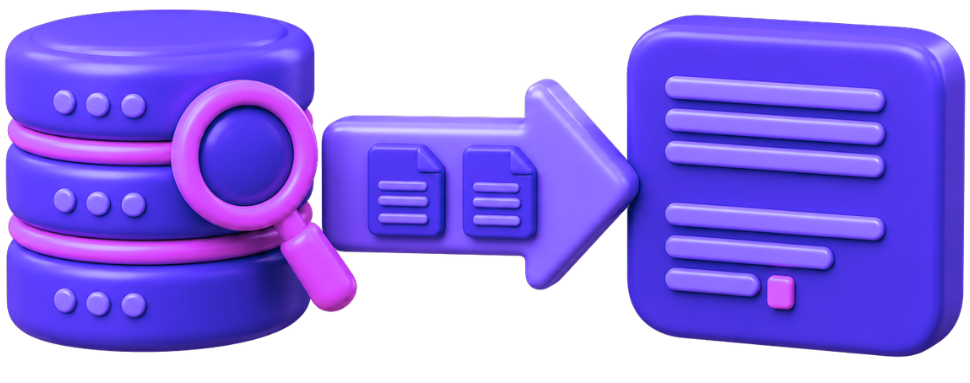
Every AI response is grounded in your actual business data, not generic training. For LLMs, RAG retrieves relevant documents before generating answers – ensuring chatbots and assistants respond accurately. The same retrieval principle powers semantic search across your content libraries, similar image matching in computer vision, and context-aware recommendations based on your product catalog.
traditional
machine learning
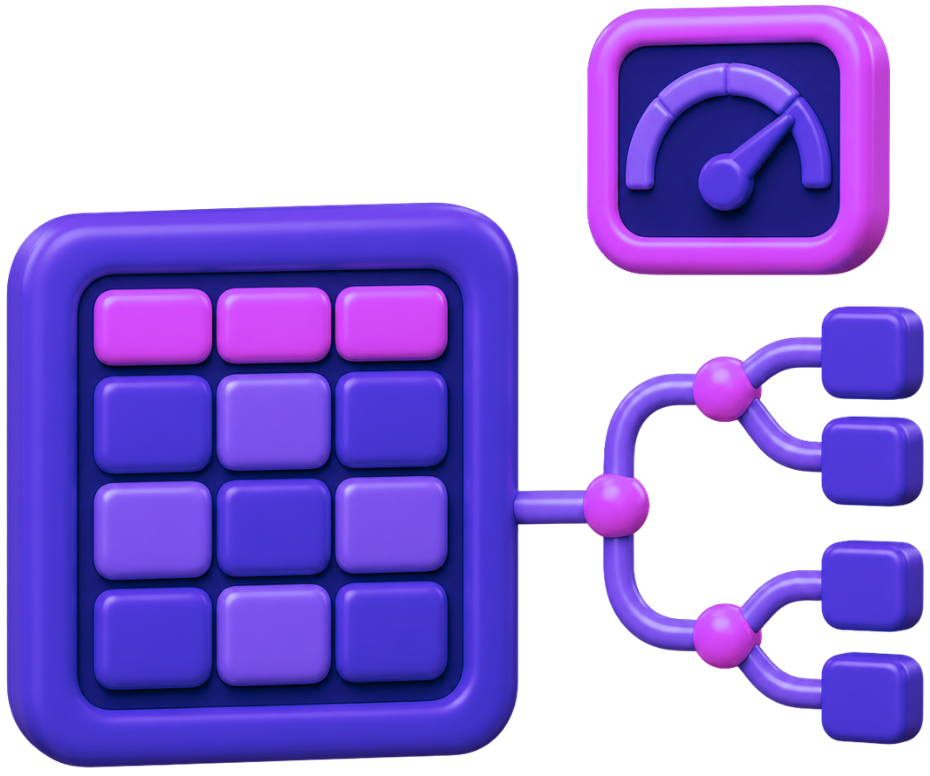
We apply proven algorithms for structured business data – classification, regression, clustering, and anomaly detection using XGBoost, Random Forests, and Gradient Boosting. For tabular data, traditional ML often outperforms deep learning with faster training, lower compute costs, and better interpretability. We select the right approach based on your data and requirements.
deep learning
& neural networks
CNNs for visual intelligence,
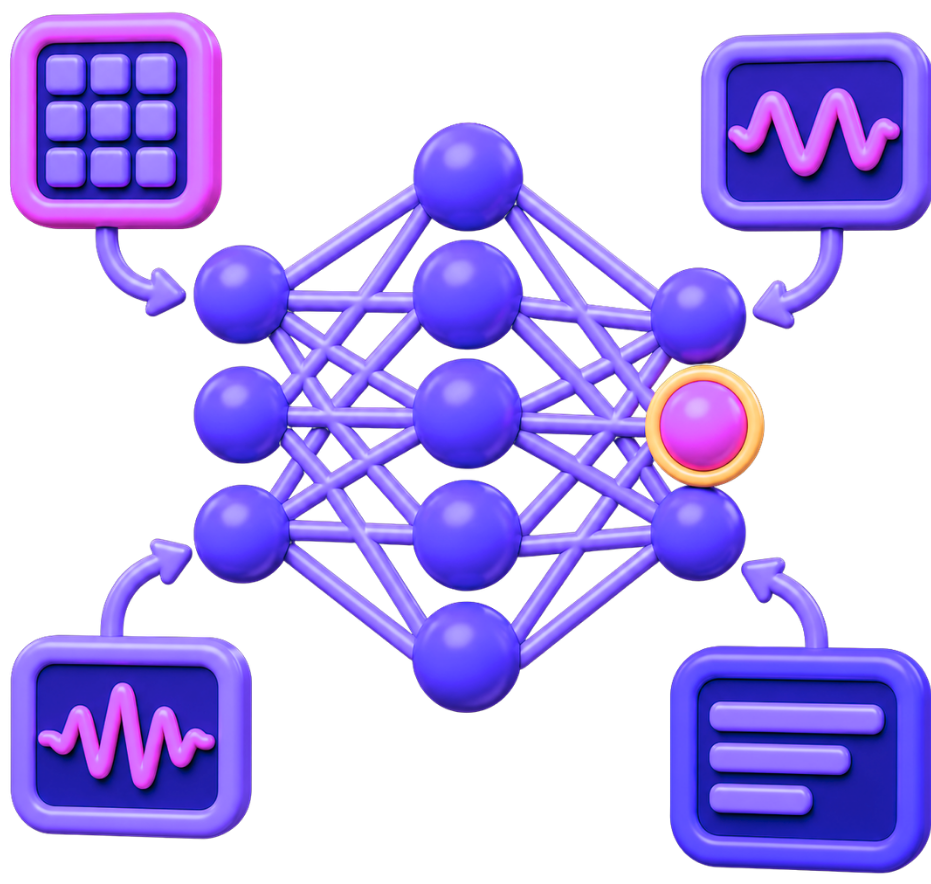
Transformers for language understanding (BERT, RoBERTa for classification and analysis, GPT for generation), LSTMs for time series, and custom architectures for complex pattern recognition – we select the right architecture based on your problem and constraints rather than defaulting to the most complex option.
custom
fine-tuning
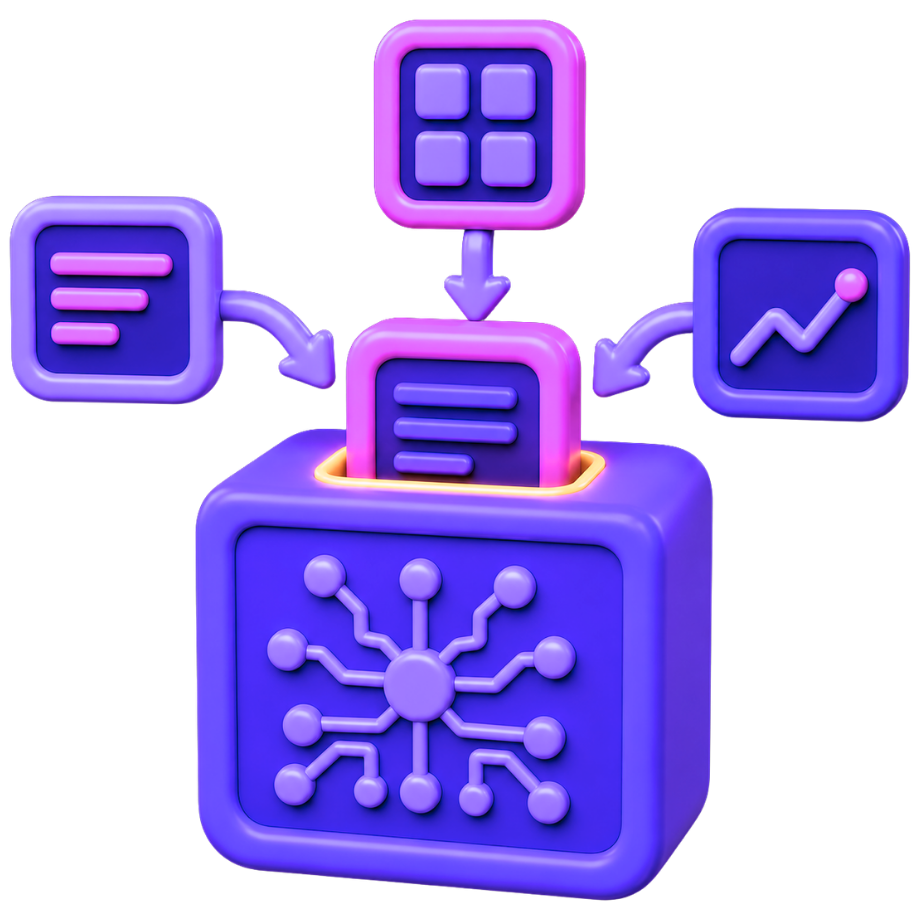
We fine-tune pre-trained AI models to your specific domain, terminology, and patterns. Fine-tuning applies across language models (your industry vocabulary and communication style), computer vision (your product images and defect types), and predictive models (your customer behaviors and operational patterns).

agentic AI
We build autonomous AI systems that plan, execute, and iterate on complex multi-step tasks – going beyond single prompts to intelligent workflows. Our AI agents can research across multiple sources, execute actions in your systems, adapt based on results, and complete end-to-end processes with minimal human intervention.

edge AI & on-device
deployment
Edge deployment delivers instant responses without network latency,
keeps sensitive data local for privacy and compliance, works offline, and eliminates ongoing cloud API costs. We optimize and compress models for edge hardware while maintaining accuracy – ideal when real-time response is critical, data must stay local, connectivity is limited, or cloud costs are prohibitive.
MLops &
production AI
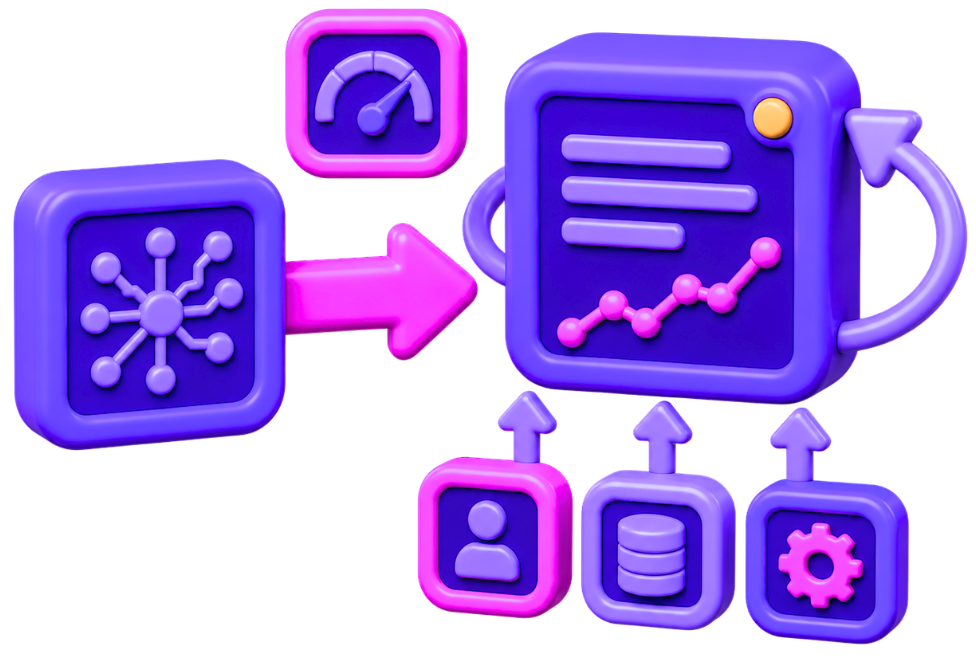
Taking models from prototype to production with integrated MLOps solutions for enterprise deployment – including monitoring dashboards, drift detection, and automated retraining pipelines. We connect AI systems to live data from your CRM, ERP, databases, and operational systems – ensuring predictions reflect current customer information, recommendations use real-time inventory, and chatbots access up-to-date policies.

responsible &
explainable AI
Building AI systems that are fair, transparent, and compliant. We implement bias detection, explainability layers for regulated industries, audit trails, and tools for managing data privacy and compliance in AI systems – ensuring AI decisions can be trusted, explained, and defended.

how AI powers
our services
computer vision
& image analysis
AI enables machines to see and understand visual information the way humans do – but faster, more consistently, and at an unlimited scale.
AI at work
- Deep learning models (CNNs, Vision Transformers) automatically learn to detect defects, recognize objects, segment images, and interpret visual scenes without manual programming of rules.
natural language
processing
AI enables machines to read, understand, and generate human language – extracting meaning from text and enabling natural conversations at scale.
AI at work
- Transformer models (BERT, GPT) understand context, sentiment, and intent.
- RAG systems ground responses in your actual documents.
- Language models generate summaries, translations, and intelligent responses.
predictive analytics
& forecasting
AI identifies complex patterns in historical data to predict future outcomes, such as customer behavior, demand fluctuations, equipment failures, and financial risks.
AI at work
- Machine learning algorithms (XGBoost, Random Forests) discover non-linear relationships humans can’t detect.
- LSTMs and deep neural networks handle time series forecasting and high-dimensional data where traditional statistics break down.
ML & AI
solutions
AI powers recommendation engines, fraud detection, generative content, and intelligent automation across industries.
AI at work
- Custom ML models trained on your data.
- Generative AI creates content and synthetic data.
- Generative AI creates content and synthetic data.
big data
analytics
AI makes sense of data volumes too large for human analysis – finding patterns, anomalies, and insights across massive datasets.
AI at work
- Distributed machine learning at scale.
- AI-powered anomaly detection.
- Pattern discovery across billions of records.
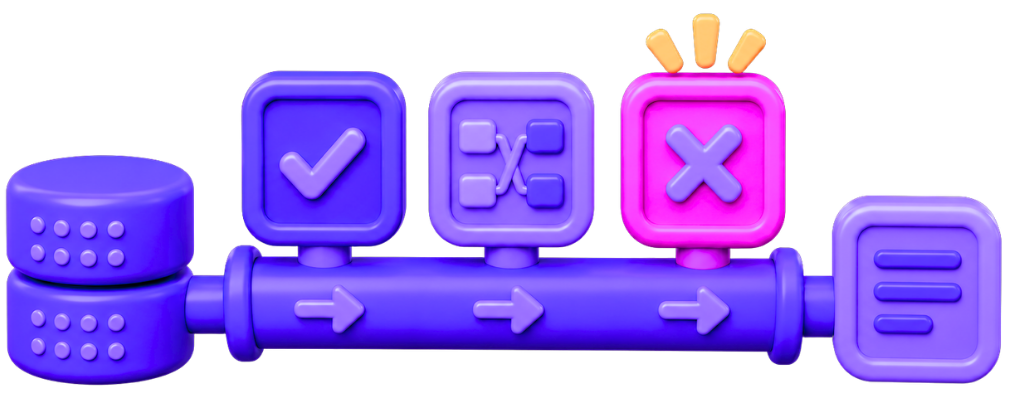
data
engineering
AI improves data quality, automates pipeline monitoring, and enables intelligent data processing.
AI at work
- AI-assisted data quality checks.
- Intelligent schema mapping.
- Automated anomaly detection in data flows.
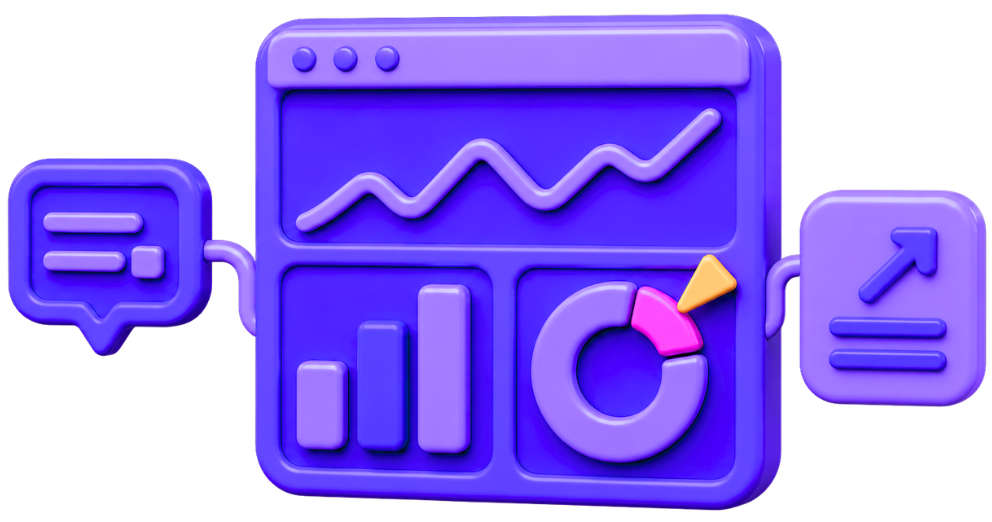
data visualization
& reporting
AI surfaces insights automatically and helps users explore data through natural language queries.
AI at work
- Automated insight generation.
- Natural language querying of dashboards.
- AI-driven anomaly highlighting.
the right AI for your
specific problem

FAQs
Data science and AI have a symbiotic relationship – each depends on the other to deliver value. Data science provides the foundation AI needs, i.e., collecting, cleaning, preparing, and managing data at scale. AI provides the intelligence layer that transforms the prepared data into actionable outcomes, i.e., recognizing patterns, automating decisions, generating predictions, and extracting meaning from unstructured content. Without data science, AI has nothing to learn from. Without AI, data science is just organized information sitting unused. Together, they create a continuous cycle where better data enables smarter AI, and smarter AI extracts deeper value from data.
When evaluating the best AI platforms for data science projects, the leading cloud options include AWS (SageMaker, Bedrock, Redshift ML), Google Cloud (Vertex AI, BigQuery ML, Looker), Microsoft Azure (Azure ML, Synapse Analytics, Cognitive Services), and Oracle Cloud (OCI Data Science, Oracle Analytics). Each offers integrated AI capabilities within their analytics ecosystems – enabling everything from automated insights to embedded ML predictions in dashboards. Selection depends on your existing cloud infrastructure, data residency requirements, team familiarity, and specific AI capabilities needed.
Start with diverse, representative training data to minimize inherent bias. Implement fairness metrics and bias detection during model development. Document data sources, model assumptions, and known limitations transparently. Build explainability layers that help stakeholders understand how predictions are made, especially for high-stakes decisions. Establish human oversight for sensitive applications – AI should augment human judgment, not replace accountability. Create audit trails tracking model versions, training data, and performance over time. Conduct regular bias audits as data distributions shift. Involve diverse perspectives in design, testing, and review to catch blind spots early.
Leading companies offering AI solutions for data science automation typically provide consulting services that span strategy through implementation – helping you identify high-value AI use cases for BI, select appropriate platforms, build AI-powered dashboards, and integrate predictive analytics into reporting workflows. Look for consultancies with proven experience in your industry, expertise across major BI platforms (Tableau, Power BI, Looker), and end-to-end capabilities from data engineering through AI deployment. Evaluate whether they offer ongoing support and MLOps – AI in BI requires continuous model monitoring and refinement, not just initial implementation. At Algoryte, we combine deep BI expertise with AI capabilities across the full data science spectrum, ensuring your AI-powered analytics are built to deliver long-term value.
Costs and timelines vary significantly based on project complexity, data readiness, and scope. Simple AI integrations using pre-built APIs or AutoML can take weeks. Custom model development with quality training data typically requires two to six months. Enterprise-scale implementations spanning multiple use cases may take six months to a year or more. Key cost factors include data preparation effort (often 60-80% of project time), compute resources for training, platform licensing, and ongoing model maintenance. Starting with a focused proof-of-concept helps validate feasibility and establish realistic estimates before committing to full-scale implementation. The biggest timeline risk is usually data readiness – clean, well-structured data accelerates everything. For organizations preferring to outsource operations, managed services for deploying and monitoring AI models reduce internal burden while ensuring continuous model performance.