




LLM fine-tuning
services
to train
standard AI
models
LLM fine-tuning
services
to train
standard AI
models
Fine-tune and customize models with Algoryte specifically for your unique business operations with the highest accuracy and data security.
let us bring you
right business-
tailored answers!
LLM fine-tuning
services
Fine-tuning LLMs transforms the model’s internal capabilities so it masters your unique data, executes your exact operational processes, and mirrors your specific brand voice.
Algoryte provides LLM fine-tuning and customization services through the entire process – from initial feasibility analysis and data preparation to model training and deployment – ensuring accurate, consistent responses against clear performance targets.
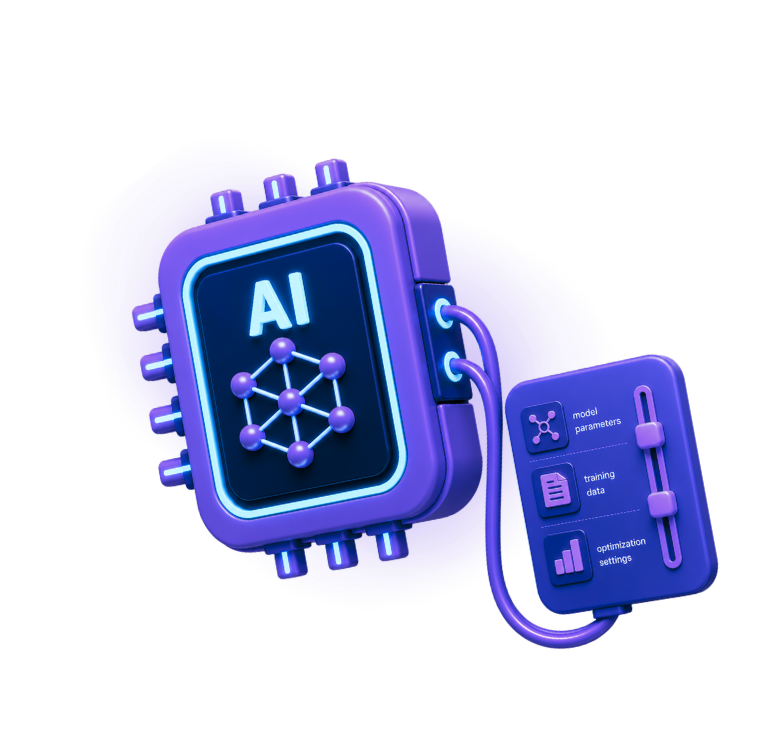
our LLM fine-tuning services
A fine-tuned model relies entirely on the engineering behind it, which is why we apply best practices for fine-tuning on proprietary data, industry-specific datasets, and custom operational workflows at every step:

domain knowledge
& voice
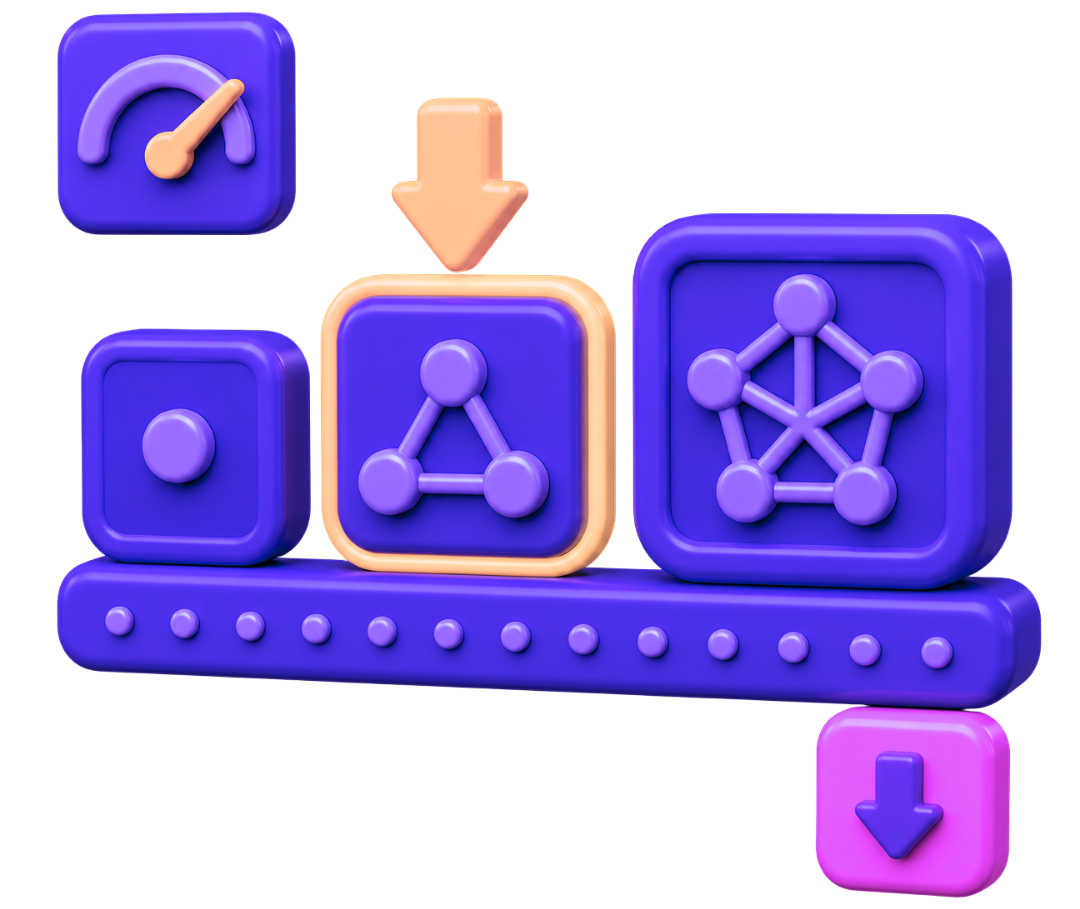
right-sized
model selection
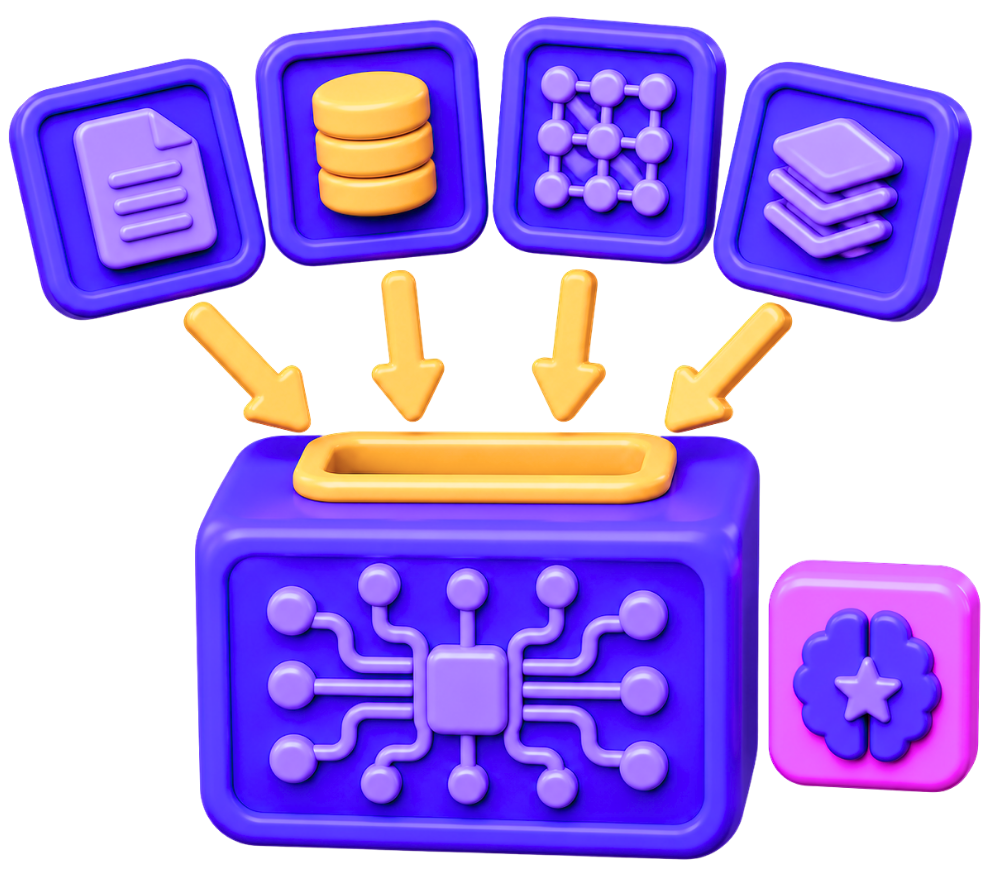
custom knowledge
ingestion
Fine-tuning open-weight models,
or hosting models that support customization on your internal material (documents, knowledge bases, databases, CRM logs, etc.), so the model carries real domain expertise.
tone, style &
terminology alignment
task
specialization
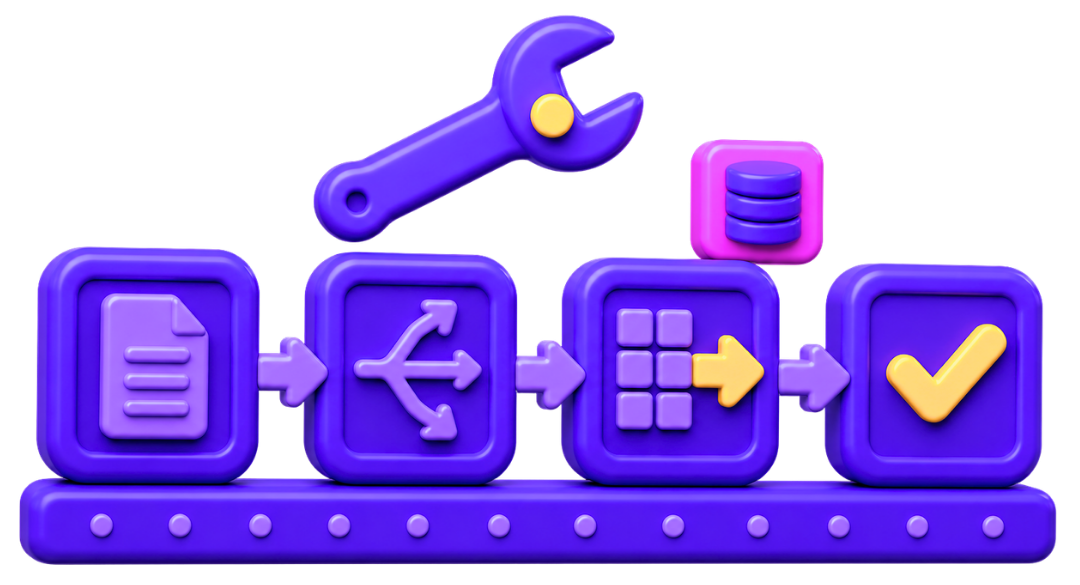
instruction
tuning

structured output
engineering
Training the model to return data in consistent formats, so it plugs straight into your APIs and software.
reasoning &
quantitative tuning
Strengthening the model on logic, quantitative analysis, and structured coding tasks.
agentic reason
& tool use
Applying behavioral reinforcement training to optimize models for complex, multi-turn tool use and reasoning. This allows your model to act as a reliable autonomous agent – orchestrating multi-step business logic and interacting with enterprise APIs without needing massive, expensive datasets.
performance
& cost efficiency
model distillation
& downsizing
latency & throughput
optimization
Speeding up inference for real-time uses like conversational agents and live data streams.

cost
reduction
safety, privacy
& control

safety
alignment

private deployment
readiness
Delivering models you can run
inside your own environment, on AWS, Google Cloud, Azure, or local servers, so your proprietary data never leaves your perimeter.

our LLM fine-tuning
process
scope
engineer data
Isolating, cleaning, and structuring your proprietary data into a high-fidelity dataset. If your existing data is limited, we generate balanced training samples to eliminate inconsistencies and ensure the model aligns precisely with your exact operational standards.

tune
Training the selected base model using optimized parameters tailored to your performance needs. This process embeds your domain knowledge, complex business logic, and brand voice directly into the model’s architecture while keeping compute costs low.
evaluate
Running rigorous blind testing and benchmarks, and measuring outputs side-by-side against the base model and your success targets. This verifies the model is accurate, safe, and ready for edge cases before deployment.
deploy & iterate
Deploying the model into your production environment and managing its full operational lifecycle. Once live, continuous monitoring and feedback loops track real-world performance – allowing the model to adapt as new data flows in.
why choose algoryte
for LLM fine-tuning
services?

right method,
no waste
data done
right
We treat dataset quality as the absolute core of the work, since clean, well-structured data is what separates a model that drives business value from one that stalls.
highly optimized
scale, fractional cost
proven by
benchmarks
Every model Algoryte tunes is validated against clear targets, so you can evaluate the performance improvements after fine-tuning directly.
industries we serve
LLM fine-tuning services for customer support
- Training models on your support transcripts, brand guidelines, and product documentation to handle inquiries with factual accuracy.
- Instruct-tuning models to execute multi-turn workflows by interacting reliably with your internal database APIs.
- Shaping the model’s conversational style to match your brand’s unique customer service persona.
- Training efficient models to analyze incoming tickets and route them with structured metadata to the right department.
LLM fine-tuning services for finance
- Training models on SEC filings, earnings transcripts, and historical market data to generate deep financial synthesis.
- Tuning models on historical credit logs and audit trails to analyze structured or unstructured financial records for risk assessments.
- Hardcoding global financial compliance rules directly into the model’s behavioral logic to streamline audit readiness.
- Aligning models on internal client portfolios to generate hyper-personalized financial advice.

LLM fine-tuning services for healthcare
- Fine-tuning models on peer-reviewed medical literature and clinical guidelines to help physicians retrieve diagnostic and treatment protocols.
- Training models to analyze multi-source EHR data into highly structured, compliant summaries for fast clinical review.
- Specializing in models that map clinical notes to exact billing codes – drastically reducing insurance claim denials.
- Applying preference alignment so patient-facing assistants respond
with clinical accuracy within compliance boundaries.
LLM fine-tuning services for human resources
- Fine-tuning models on your company handbooks, benefit packages, and internal documentation to resolve employee questions.
- Training models to extract skills, certifications, and career history from resumes and match candidates to roles without algorithmic bias.
- Tuning models to assist managers in writing constructive, aligned performance evaluations by analyzing unstructured feedback logs.
- Configuring models to handle onboarding workflows, exit survey analysis, and training data synthesis.

LLM fine-tuning services for legal businesses
- Training models on detailed judicial databases and precedent records so they can reason through legal arguments.
- Training models to handle massive, multi-hour transcripts – extracting timelines, evidence gaps, and contradictions with absolute precision.
- Aligning models to monitor changing regional laws and automatically audit corporate operations against active regulatory frameworks.

LLM fine-tuning services for real estate
- Training models to generate SEO-optimized MLS descriptions and marketing copy from appraisal notes, dimensions, and inspection logs.
- Training models to review lease agreements against state-specific regulations and flag non-standard clauses or missing terms.
- Tuning models to analyze transaction histories, zoning laws, and neighborhood data to generate structured market analysis reports.
- Applying behavioral reinforcement to train conversational assistants to answer neighborhood questions and book property tours seamlessly.
LLM fine-tuning services for blockchain
- Training models on historical exploit data and smart contract code to detect security flaws and gas optimization opportunities before deployment.
- Tuning models to parse real-time on-chain data, MEV activity, and liquidity pool metrics to automate risk assessments or optimize yield-engine mechanics.
- Training models to convert natural language into subgraphs or SQL queries for blockchain indexing — eliminating pipeline breakages.
our engagement models
for LLM fine-tuning
services
resource
augmentation/
work-for-hire for
LLM engineering
Full-time LLM engineers embed directly into your team to accelerate custom modeling and handle ongoing infrastructure scaling, multi-GPU orchestration, and data training pipeline maintenance.
project-based
LLM fine-tuning
implementation
A turnkey, end-to-end engagement with fixed timelines and clear performance targets to manage the entire model lifecycle independently – from data audits and synthetic training set generation to fine-tuning, preference alignment, and production deployment.
sprint-based
LLM fine-tuning
assistance
Time-bound, high-velocity development cycles used to solve specific model performance bottlenecks, execute targeted model distillation, or upgrade your current models to modern training frameworks and optimization techniques.
part-time LLM
fine-tuning
maintenance
support
Fractional engineering support allocated for continuous telemetry monitoring, routine training dataset updates, periodic model re-tuning as new business data emerges, and steady-state oversight to prevent model drift and maintain output accuracy.

tech stack
base models



llama
mistral
gemma


qwen
google vertex AI
amazon bedrock


tuning & alignment frameworks



hugging face TRL
unsloth
axolotl


LoRA
QLoRA


DoRA
GaLore



preference alignment



DPO
ORPO
GRPO

cloud & edge platforms



AWS
microsoft azure
google cloud

FAQs
LLM fine-tuning is the process of taking an existing, pre-trained model and training it further on a smaller, specialized dataset to adapt its intelligence for a specific domain, workflow, or brand voice. It essentially takes a model that already knows how to speak and gives it a corporate degree. This differs fundamentally from foundational LLM modeling, which is the massive, multi-million dollar undertaking of building a core model completely from scratch by training a blank-slate neural network on internet-scale data just to teach it basic human language, grammar, and general facts.
Preparing a dataset begins with isolating and gathering high-quality, real-world examples of the exact inputs and ideal outputs you want your model to replicate. Next, this raw data must be cleaned and anonymized by stripping out system noise, duplicate entries, and any sensitive personal identifiable information. The text is then structured into strict, paired training formats (such as conversational role templates or specific input-output schemas) before being balanced across different use cases to prevent the model from over-indexing on a single type of response.
The primary ethical consideration is data privacy – ensuring that proprietary corporate data or user information used during training is securely handled and cannot be accidentally exposed or leaked by the model in future public outputs. Additionally, engineering teams must guard against bias amplification, as fine-tuning can cause a model to hyper-focus on and repeat any historical biases or factual inaccuracies present in the training datasets. At Algoryte, we apply modern preference optimization techniques like DPO and ORPO to directly align the model’s behavior – reinforcing safe, accurate outputs while explicitly training out hallucinations and compliance risks.
Fine-tuning is a direct application of transfer learning, which is the machine learning practice of taking a model developed for one task and reusing it as the starting point for a second, related task. As a foundational large language model already understands sentence structure, contextual reasoning, and general logic from its initial training, it transfers that entire broad capability to your project. This means the model does not need to relearn how to communicate from scratch; it only needs to absorb the specific nuances and patterns of your proprietary data, drastically reducing required training time, compute costs, and dataset size.
Effective human validation relies on blind A/B testing, where domain experts rate responses from both the base model and the newly tuned model side-by-side without knowing which system generated them. To keep evaluations objective, reviewers should grade outputs against strict, standardized rubrics that measure explicit metrics like factual accuracy, brand alignment, and formatting adherence rather than subjective preferences. Finally, human testing should intentionally focus on edge cases and adversarial prompts – pushing the model into rare or complex scenarios to guarantee its logical guardrails and safety constraints hold up under operational pressure.
Treat every fine-tuned model like versioned software. Each version should be stored with the exact dataset, base model, and training parameters used to build it, so any result can be reproduced or rolled back. Performance for each version is logged against the same benchmarks – making it easy to compare a new tune against the one in production before promoting it. Access and changes stay controlled and recorded, so you always know which model is live, who changed it, and why.