





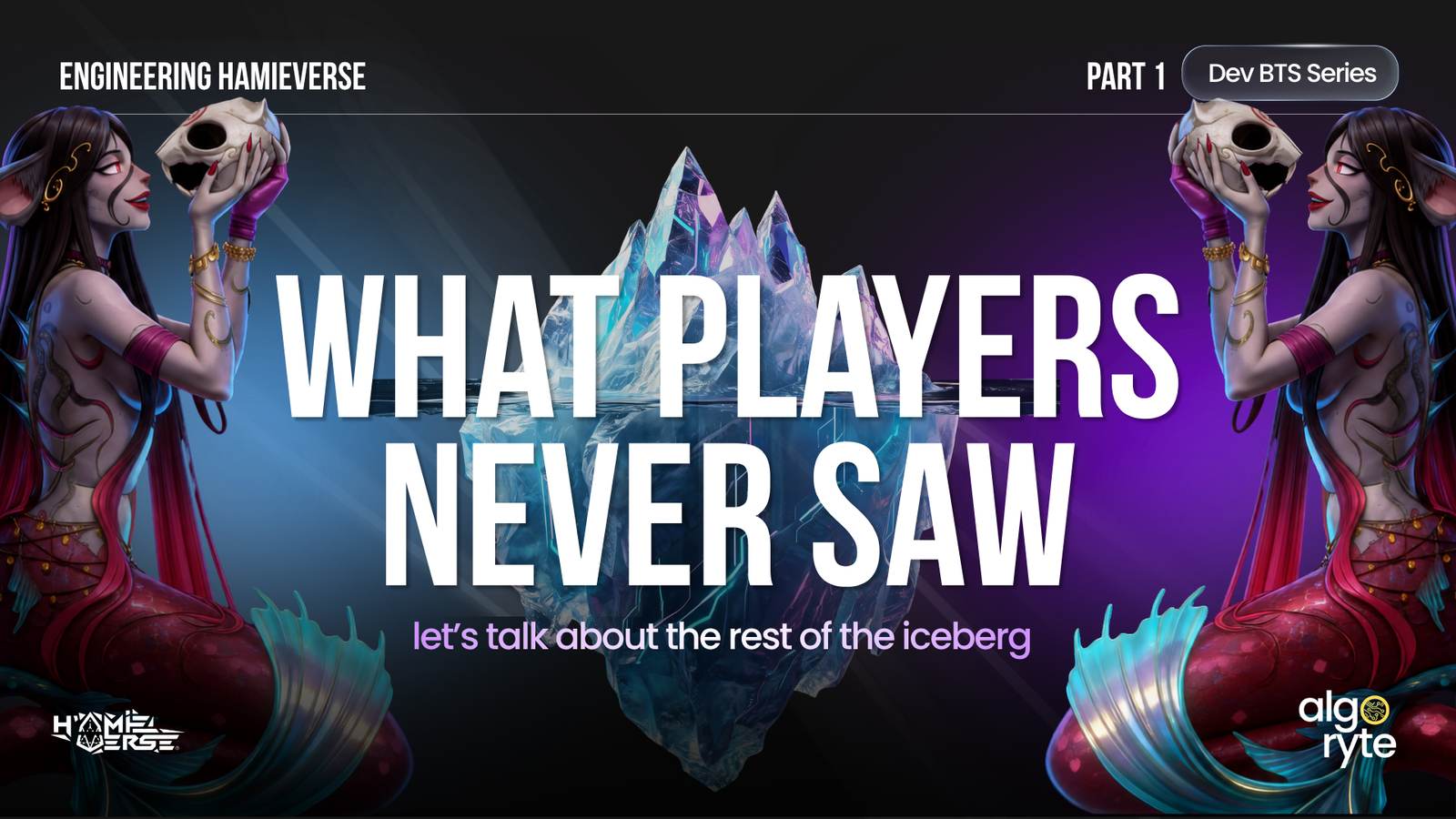
When the Hamieverse team came to us, they needed one thing fast: a playable prototype. Wallet sign-in, a card collection, a store, and a leaderboard — enough for players to touch the game and validate the idea.
Fast prototyping was the brief. What we built underneath it went further than that.
Two Priorities, Running At Once
Every early-stage build faces the same tension: ship fast, or build for scale. We treated it as a false choice. The surface of Hamieverse’s Pre-Alpha stayed intentionally simple — a single shared UI, a prototype backend, no caching, and direct database reads. It needed to go out quickly, so it did.
But beneath that surface, we were already building for a game several times its current size. A clean architecture, adopted from day one so the whole system could scale. A database schema normalized not just around what existed, but around the systems we knew were coming — more players, more cards, and more requirements.
Why It Mattered Later
That early investment is what let every phase since — Alpha, Beta, Tournament 1 — move fast without tearing up what came before. The foundation didn’t need to be rebuilt when the game grew. It was built to grow with it.
This is the first post in a series on how we engineered Hamieverse from prototype to live, scalable tournament play. Next: how the front-end and game architecture evolved once real-time PvP entered the picture.
Don’t want to wait for the rest of the series? The complete Hamieverse case study — every phase, every system — is live now on the Algoryte site. Read it in full → Engineering Hamieverse: From Prototype to a Scalable Card Game.