



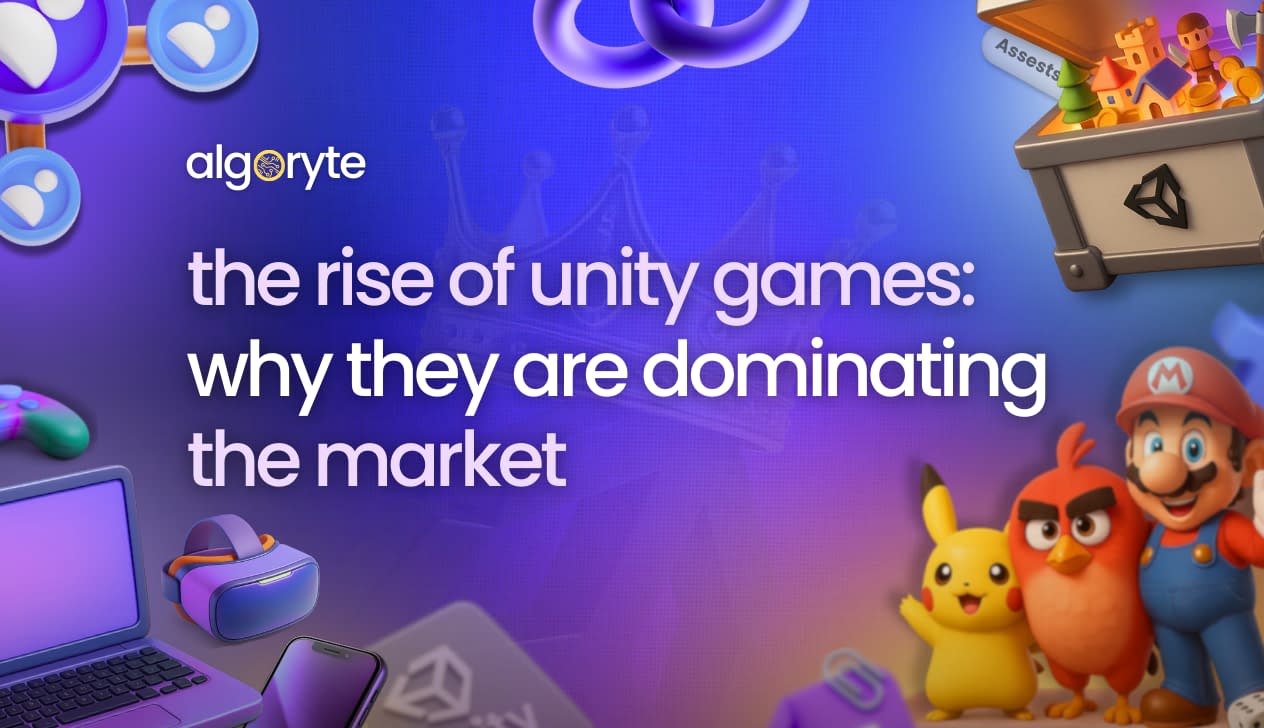
The Rise of Unity Games: Why They're Dominating the Market
Introduction: Unity’s Reign Over the Game Development World
When you think of game development today, there’s one name that stands above the rest: Unity games. Over the past decade, Unity has become a driving force behind countless successful games across all platforms, from mobile to PC, VR, and even console. But what makes Unity so dominant in the gaming world, and why are Unity game development and the Unity gaming platform so widely used by developers and studios alike?
In this blog, we’ll dive into why Unity games are taking over the market and how this powerful engine continues to shape the future of gaming. Whether you’re a seasoned developer or a newcomer, understanding Unity’s rise is essential for navigating today’s gaming landscape.
Unity isn’t just another game engine; it’s a platform that allows developers to create games with incredible ease and efficiency. But what really sets Unity apart from other game engines like Unreal or CryEngine?
1. Ease of Use
Unity is known for its user-friendly interface and accessible tools, which make it easy for developers of all skill levels to jump in. The engine’s intuitive design allows you to focus more on creating games and less on learning complex coding systems.
-
Cross-Platform Compatibility: Unity’s ability to export games to a wide variety of platforms, including mobile, PC, console, AR/VR, and even web, is a huge draw. This flexibility allows developers to reach broader audiences without being confined to a single platform.
-
Asset Store: Unity’s Asset Store is a game-changer for developers, offering thousands of ready-to-use assets, including models, textures, animations, and even scripts. This allows game developers to save time by utilizing pre-made content rather than building everything from scratch.
-
Extensive Documentation and Support: Unity has one of the most extensive communities and documentation systems in the game development world. Whether you need help troubleshooting or want to learn how to implement a specific feature, there are countless tutorials, forums, and resources available at your fingertips.
2. Affordable and Accessible
One of the main reasons Unity has taken the industry by storm is its accessibility to indie developers and small studios. Unlike many other game engines that require a hefty upfront investment, Unity offers a free version that’s perfect for beginners and hobbyists. This approach makes game development more accessible than ever.
For professional studios, Unity offers affordable licensing options that scale as your game’s revenue increases. This means even large studios can get started with Unity without worrying about prohibitive costs.
Why Unity Games Are Dominating the Market
Unity has quickly become the go-to engine for developers worldwide. Let’s look at the key reasons why Unity game development is at the forefront of the gaming industry.
1. The Best Unity Games Span All Genres
From puzzle games to high-action shooters, best Unity games cover nearly every genre imaginable. The versatility of the Unity engine means that no matter what type of game you want to create, Unity provides the tools to make it happen. Some of the best Unity games have proven its ability to handle even complex 3D environments while maintaining fluid performance.
-
Mobile Games: Unity’s mobile game development tools make it the engine of choice for creating mobile hits. Games like Angry Birds 2 and Pokemon Go have shown just how capable Unity is at handling mobile-specific gameplay features, like touch controls, geolocation, and in-app purchases.
-
Virtual Reality (VR) and Augmented Reality (AR): Unity has become the leading engine for creating immersive VR and AR experiences. Its support for platforms like Oculus Rift, HTC Vive, and Microsoft HoloLens means developers can build engaging, interactive experiences that push the boundaries of what’s possible in immersive technologies.
-
Indie Games: Many of the most successful indie games, like Hollow Knight, Celeste, and Super Mario Run, were developed using Unity. Its versatility, coupled with the ability to prototype and iterate quickly, makes Unity the perfect engine for indie developers looking to make a mark in the industry.
2. Cross-Platform Development: One Game, Many Devices
In a market where players expect to experience games on multiple devices, Unity games offer developers a clear advantage with their cross-platform capabilities. Unity’s development environment allows developers to create one version of their game and deploy it across a variety of platforms, including:
-
PC and Mac desktops
-
PlayStation and Xbox consoles
-
Mobile devices (Android and iOS)
-
Web browsers
-
VR/AR headsets and cloud gaming services
This ability to reach players on nearly every device with minimal additional work is a huge selling point for developers, especially when looking to expand their audience.
3. Community and Ecosystem
Unity’s vibrant community is one of its biggest assets. With millions of developers using Unity worldwide, there’s a wealth of knowledge and resources available to help developers succeed. The Unity game development ecosystem includes:
-
Unity Asset Store: A marketplace that offers pre-made assets, scripts, and tools, saving developers countless hours of work. Developers can buy and sell assets, making it easier for teams to get the resources they need.
-
Unity Learn: Unity offers an online platform where developers can access tutorials, courses, and challenges to help them improve their skills and learn new techniques.
-
Forums and Support: Unity’s community forums are an invaluable resource for troubleshooting, discussing ideas, and collaborating with other developers. With so many developers around the world contributing to the platform, you’re never alone when you encounter a problem.
The Future of Unity Games
Unity’s success story is far from over. As the gaming industry continues to evolve, Unity is poised to remain at the forefront of game development. Here’s how Unity is continuing to shape the future of gaming:
-
Real-Time Rendering: Unity’s focus on real-time rendering allows developers to create photorealistic environments and dynamic lighting systems, making games look more lifelike and immersive.
-
Machine Learning: Unity has begun integrating machine learning into the development process, allowing for smarter NPC behavior, procedural content generation, and even player-driven game design.
-
Cloud Gaming: Unity is also making strides in cloud gaming, allowing players to stream high-quality games to their devices without needing powerful hardware. This could revolutionize gaming, making high-end experiences accessible to players on a range of devices.
-
5G Integration: As 5G networks continue to roll out, Unity is positioned to take advantage of this new technology, enabling developers to create even more immersive multiplayer experiences that require ultra-low latency.
Conclusion: Why Unity Is Here to Stay
Unity games have taken the gaming industry by storm, and for good reason. Its accessibility, versatility, and community-driven ecosystem have made it the engine of choice for developers worldwide. Whether you’re a beginner creating your first game or an experienced developer working on the next big hit, Unity offers the tools and resources you need to succeed.
With its ability to create games for virtually any platform, support for cutting-edge technologies like VR, AR, and cloud gaming, and a thriving community of developers, Unity game development will continue to be a key player in the gaming industry for years to come. If you’re looking to build your next game or jump into the world of game development, Unity is the perfect place to start.