extended reality – XR
solutions across VR,
AR & MR

Get unified XR applications supporting VR immersion, AR mobility, and MR spatial interaction – deployed across headsets, mobile devices, and AR glasses from a single codebase.

don't choose between
VR, AR & MR - build for
all three

extended reality services

Algoryte develops unified extended reality solutions that work across the entire reality spectrum, from fully immersive VR to real-world AR overlays to spatially aware MR. Our XR approach prioritizes platform flexibility by building applications that adapt intelligently to multiple devices, including standalone VR headsets, AR-capable smartphones, MR glasses, and next-generation spatial computing platforms.

We solve the fundamental XR challenge – building once instead of three separate times. Our unified development approach utilizes platform-agnostic frameworks, adaptive UI systems, and intelligent content scaling – ensuring your XR investment works seamlessly across current hardware and emerging devices without requiring complete rebuilds.

Pair of virtual reality hand controllers with joysticks and tracking buttons in purple and blue gradient finish

our XR services

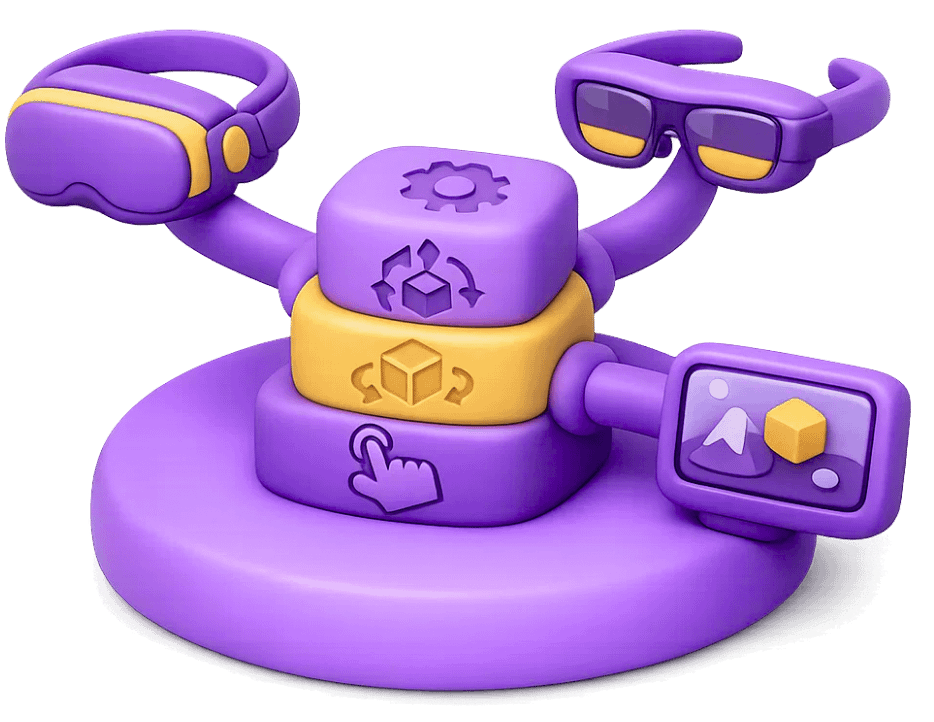
Layered extended reality platform architecture with VR headset, AR glasses, and development layers

unified XR platform
development

Single applications that support VR, AR, and MR experiences from one codebase. We architect platform-agnostic systems using OpenXR and cross-platform frameworks, so content automatically adapts rendering fidelity, interaction, and UI layouts based on detected hardware – without separate builds

for each reality format.

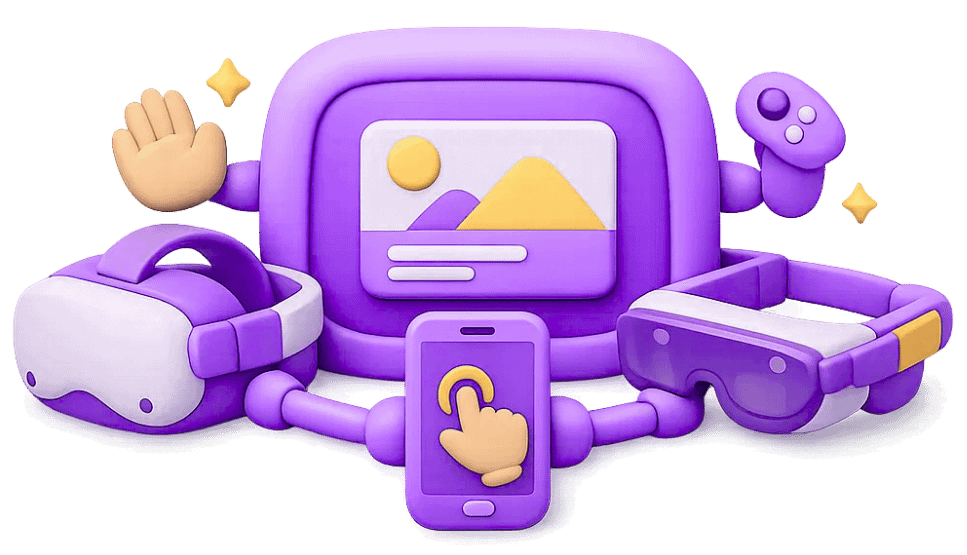
Cross-reality character with VR headset, AR glasses, smartphone showing unified extended reality experience design

cross-reality
experience design

Experiences that feel consistent as users move between headsets, phones, and mixed reality devices. We design adaptive interaction systems that recognize input methods (hand tracking, controllers, touch), scale 3D content to device capability, and reposition UI for screens versus spatial interfaces.

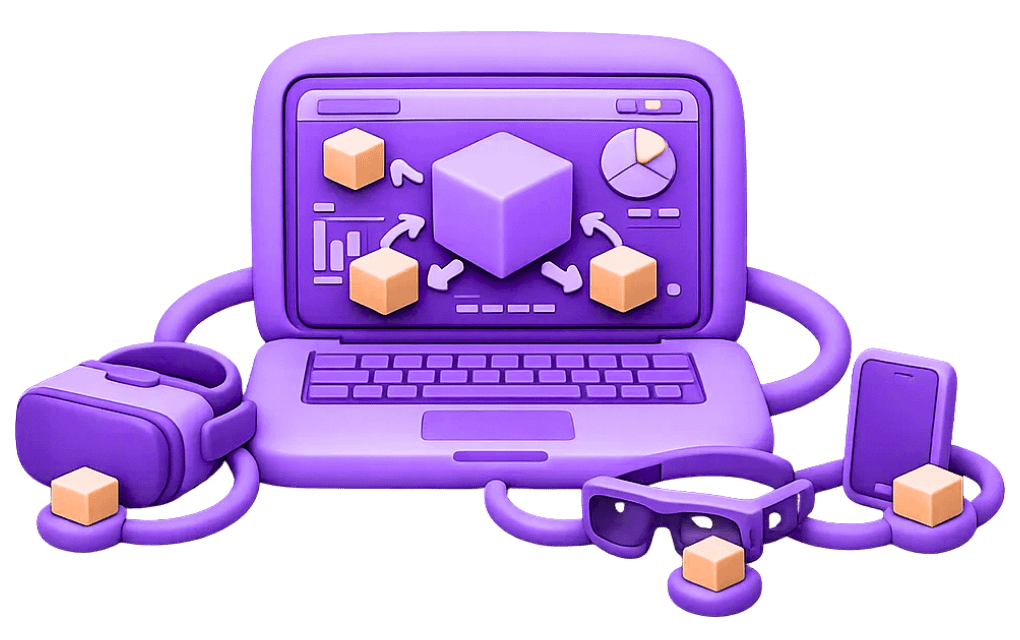
Laptop displaying extended reality content management with VR headset, AR glasses, and 3D assets

XR content
management systems

Central hubs to manage, version, and distribute XR content across devices. We build backends that handle 3D asset variants, device capability detection, dynamic content delivery, version control, and analytics, so you update once and serve optimized content everywhere.

Extended reality devices connected to unified platform with VR headset, AR glasses, smartphone, and wearable

platform abstraction &
hardware independence

Architectures that decouple your app logic from specific XR hardware. We implement abstraction layers for rendering pipelines, input methods, spatial tracking, and performance targets – protecting your investment from device churn and easing the adoption of new headsets.

Extended reality performance analytics with VR headsets, smartphone, and data visualization chart

adaptive rendering
& performance scaling

Visuals that automatically adjust to the power of each device – VR headsets, AR phones, and MR glasses. We use dynamic LOD, resolution scaling, shader controls, and feature toggles so high-end VR users get rich visuals, MR users get stable spatial rendering, and mobile AR users get smooth performance.

XR interaction with gesture, voice, and touch controls

multi-modal
interaction systems

One interaction logic, many input methods. We design unified systems that gracefully support hand tracking, controllers, touch, gaze, and voice, so users interact naturally on any XR device without fragmenting the core interaction model.

XR analytics dashboard with device performance metrics

XR analytics &
device intelligence

Visibility into how users actually experience your XR products. We add tracking for session behavior, device usage, performance bottlenecks, and cross-platform drop-off points – giving you the insights needed to optimize content, UX, and hardware priorities.

XR deployment workflow across multiple platforms

progressive XR
deployment strategy

A realistic roadmap from prototype to full XR ecosystem. We help you start with accessible smartphone AR, then phase in VR and MR as your audience and hardware readiness grow – designing systems that expand capabilities instead of forcing big upfront bets.

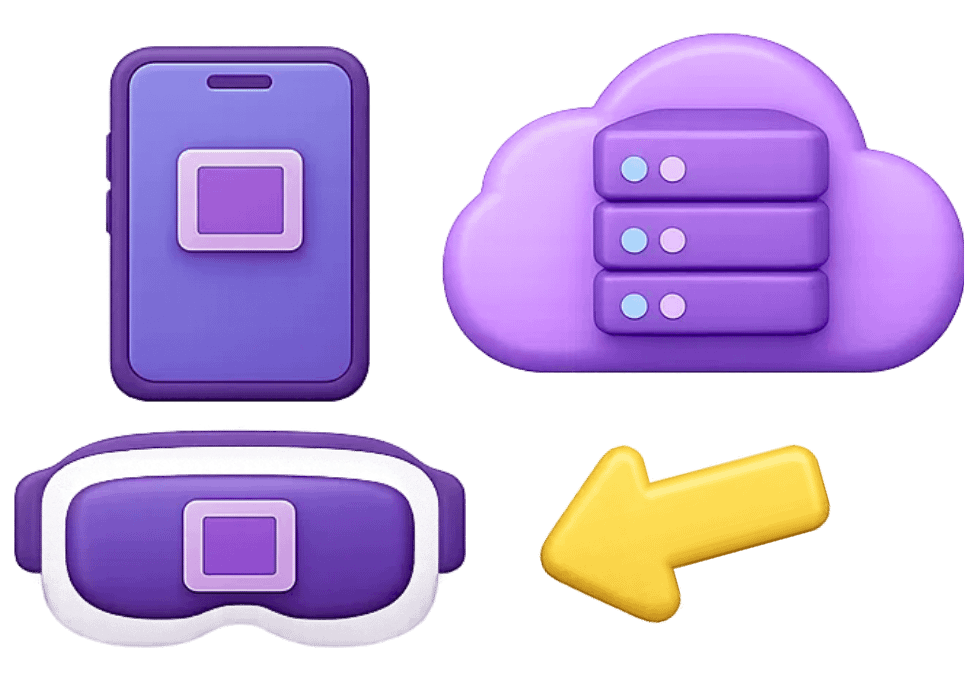
XR cloud infrastructure with streaming capabilities

XR cloud &
streaming solutions

Run heavy XR experiences in the cloud instead of on the device. We render complex scenes on remote servers and stream them with low latency, so users can explore high-quality VR/AR/MR worlds on normal phones, tablets, and standalone headsets without high-end hardware.

XR emerging platforms and future technology integration

future-proofing &
emerging platform support

XR solutions that evolve with the hardware landscape. We monitor platform roadmaps, adopt emerging standards like WebXR and OpenXR updates, and conduct architecture reviews, so your XR stack stays compatible instead of becoming a dead end.

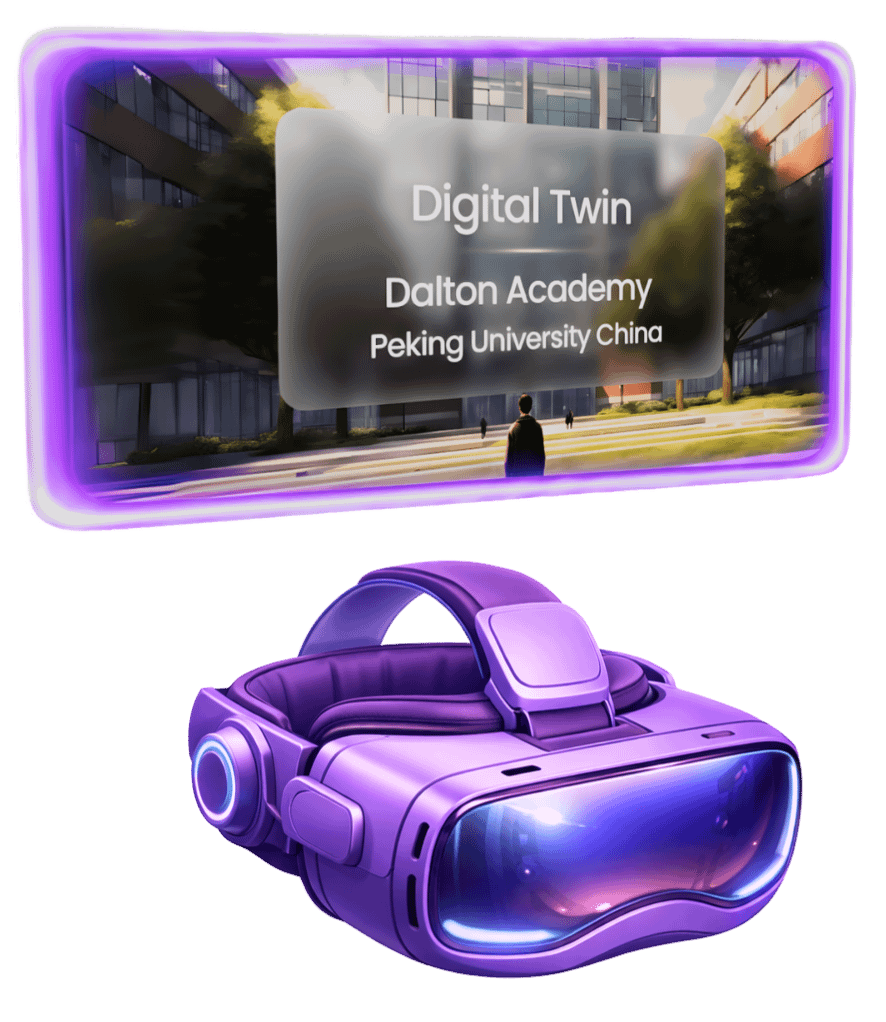
XR headset displaying digital twin of Dalton Academy campus

spatial computing &
digital twin development

XR experiences that mirror and augment real-world spaces and systems. We build spatial computing workflows and digital twins for factories, campuses, retail spaces, products, and more – combining mapping, LiDAR data, IoT signals, and simulation to enable monitoring, training, and scenario testing in virtual replicas.

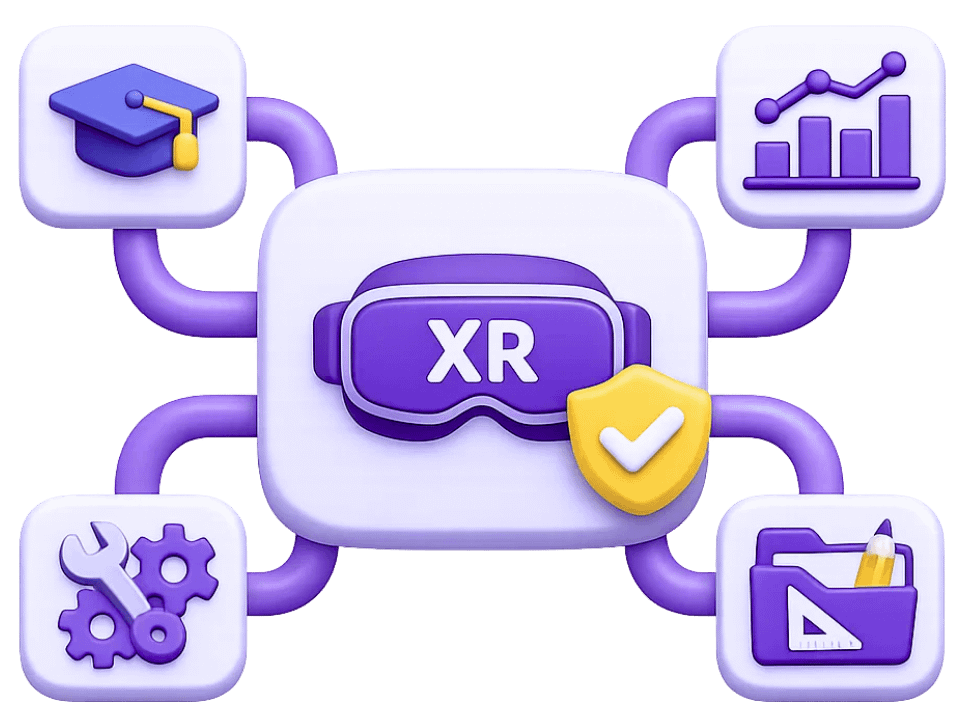
XR headset connected to enterprise systems including education, analytics, settings, and security

enterprise
XR integration

XR that plugs into your existing tools and workflows. We integrate XR applications with systems like LMS platforms, CRMs, IoT dashboards, CAD/PLM repositories, analytics stacks, and cloud services – ensuring immersive experiences support real business processes instead of sitting in isolation.

why choose algoryte for
XR development?

cross-platform
XR architecture

We specialize in unified architectures supporting multiple

reality formats from a single codebase – eliminating

redundant development costs and ensuring consistent experiences whether users access content via VR headset,

AR phone, or MR glasses, rather than building three separate applications.

future-proof
development

We build XR solutions anticipating hardware evolution rather than targeting single platforms – using open standards (OpenXR, WebXR), abstraction layers isolating platform dependencies, and scalable architectures accommodating emerging devices without requiring complete application rewrites as the XR ecosystem matures.

device-agnostic
experience design

We design XR experiences thinking across the reality spectrum – creating interaction patterns working with controllers, hand tracking, touch, or gaze input; UI systems adapting between spatial and screen contexts; and content strategies scaling from smartphone screens to room-scale MR environments.

strategic XR
roadmapping

If you are looking for consultants specializing in extended reality strategy, we help organizations navigate XR adoption strategically – identifying which reality formats serve specific use cases best, planning phased rollouts maximizing ROI, and designing architectures supporting progressive capability expansion as users and organizations invest in more sophisticated XR hardware over time.

platform
abstraction
expertise

We separate your core app logic from device-specific code, so your XR experience works across different headsets and platforms without rewrites. Rendering, input, and spatial tracking adapt to each device, while your main functionality stays the same – making maintenance easier and new device support faster.

multi-device
testing &
optimization

We validate XR experiences across the device spectrum – testing on VR headsets (Quest, PSVR, Index), AR phones (iOS, Android), MR devices (HoloLens, Magic Leap, Quest 3), and emerging platforms – ensuring consistent quality and appropriate performance targets across completely different hardware capabilities.

XR ecosystem
knowledge

We maintain expertise across the entire XR landscape – understanding technical constraints, interaction paradigms, and user expectations for VR, AR, and MR while tracking emerging platforms, evolving standards, and industry direction – bringing an informed perspective to strategic XR investment decisions.

your users are on different
devices. your XR should
work everywhere

our XR development
process

XR strategy & device planning

We start by understanding your goals, users, and use cases, then decide which XR formats (VR, AR, MR) actually make sense for you. From there, we recommend which devices to target first and in what order, so you reach the widest audience possible – without over-investing in expensive hardware too early.

2D game art project planning and discovery with purple blueprint grid showing level design layout and architecture for game development workflow
XR architecture blueprint with 3D structural elements and grid layout

platform-agnostic architecture design

We design technical architectures isolating core application logic from platform-specific rendering, input, and spatial systems – selecting appropriate frameworks (Unity XR, Unreal OpenXR, WebXR), defining abstraction interfaces, and planning content delivery strategies enabling single-source multi-platform deployment.

adaptive content & interaction design

We create design systems working across reality formats

– developing 3D assets with multiple LOD tiers, designing UI adapting between spatial and screen contexts, defining interaction patterns supporting diverse input methods, and establishing visual languages maintaining brand consistency across VR, AR, and MR experiences.

Virtual reality hand interaction design with 3D cube element
XR unified development with VR headset, smartphone, and code layers

unified application development

We build XR applications using cross-platform frameworks – implementing shared business logic, adaptive rendering systems, multi-modal input handling, and device capability detection – ensuring core functionality remains consistent while presentation and interaction adapt appropriately to detected hardware.

cross-device testing & optimization

We validate experiences across the XR spectrum – testing on VR headsets for immersion quality, AR smartphones for tracking stability and battery impact, MR devices for spatial understanding accuracy, and emerging platforms for compatibility – optimizing performance targets and interaction comfort for each device category.

XR devices with testing settings across VR headset, smartphone, and laptop
XR content management checklist with notification bell

XR content management & delivery

We implement backend infrastructure managing XR content distribution – building systems detecting device capabilities, serving appropriate asset variants, managing version control across platforms, and aggregating analytics – enabling centralized content updates automatically reaching diverse XR hardware.

phased rollout & user migration

We execute strategic rollout plans – launching accessible entry points (smartphone AR) first to build user bases, then progressively introducing premium experiences (VR/MR) as users invest in hardware, using analytics to identify optimal migration timing, and designing onboarding flows by introducing advanced capabilities gradually.

XR user migration pathway from smartphone to VR headset with location marker
Virtual reality headset with maintenance tools and gear icon

ongoing XR support & evolution

We monitor the XR ecosystem for new hardware, updated standards, and emerging capabilities – providing architecture reviews identifying necessary adaptations, implementing support for new devices as they gain market traction, and ensuring your XR solution remains compatible and competitive as the technology landscape evolves.

industries we have
worked with

E-commerce and retail industry icon with globe and shopping cart

retail & e-commerce

As one of the companies offering customized extended reality solutions for retail businesses, we provide product visualization, adapting to available devices – smartphone AR for home preview, VR for immersive showrooms, and MR for spatial product configuration, delivering consistent shopping experiences whether customers use phones or invest in headsets.

Education industry icon with stacked books

education & training

Extended reality enhances employee training programs and educational content by providing learning experiences accessible across the institutions’ diverse hardware – students without headsets access AR content on phones or tablets, while those with VR equipment experience full immersion, ensuring educational equity.

Enterprise and collaboration industry icon with handshake and circular arrows

enterprise collaboration

Extended reality services improve remote collaboration through tools that work regardless of team members’ hardware – some joining via VR for full spatial presence, and others via AR glasses for hands-free access, enabling inclusive meetings across device contexts.

Marketing and advertising industry icon with megaphone, video, and target symbols

marketing & brand experiences

Campaign activations reaching broad audiences – accessible smartphone AR generating initial engagement, with deeper VR experiences rewarding enthusiasts investing in hardware, maximizing reach while providing premium experiences for committed brand advocates.

Real estate and architecture industry icon with buildings

architecture & real estate

Property visualization for diverse client preferences – smartphone AR for quick on-site visualization, VR for immersive walkthroughs from remote locations, and MR for on-site design collaboration, serving different stakeholder needs with appropriate tools.

Healthcare industry icon with medical cross symbol

healthcare & medical

Medical visualization and training accessible across healthcare systems – smartphone AR for patient education and field diagnostics, VR for surgical

training and therapy, and MR for operative guidance, supporting diverse clinical environments with appropriate technology.

Industrial remote assistance icon with hands supporting mechanical gears representing maintenance and technical support systems

industrial & remote assistance

Maintenance and support systems adapting to field conditions – technicians using AR glasses for hands-free guidance, supervisors joining via VR for immersive oversight, and mobile workers accessing support through smartphone AR when specialized hardware isn’t available.

Military and defence industry icon with tank and security shield

military & defense

Mission training, planning, and field support across all devices – VR for immersive simulations, MR for heads-up awareness, and AR/mobile tools for on-site guidance, delivering flexible readiness tools for any operational environment.

our XR tech stack

XR frameworks

Unreal engine
Unreal engine

unity XR plugin framework

unreal engine openXR

WebXR logo for web-based extended reality experiences
Unity AR Foundation logo for augmented reality development
Vuforia augmented reality platform logo

webXR

AR foundation

vuforia

cross-platform standards

OpenXR open standard platform logo
WebXR logo for web-based extended reality experiences

openXR (cross-vendor VR/MR)

webXR (browser-based XR)

ARCore Google augmented reality platform logo
ARKit Apple augmented reality framework logo

ARcore (mobile AR)

ARkit (mobile AR)

supported devices

VR

Meta Quest logo for virtual reality headset platform
PlayStation VR2 headset platform logo

Quest

PS VR2

Valve Index headset platform logo
HTC Vive headset platform logo

valve index

vive

AR

ARKit Apple augmented reality framework logo
ARCore Google augmented reality platform logo

iOS(ARkit)

android(ARcore)

MR

Microsoft HoloLens logo for mixed reality headset platform
Magic Leap logo for spatial computing and mixed reality platform

hololens 2

magic leap 2

Apple Vision Pro spatial computing platform logo
Meta Quest 3 logo for virtual reality headset

vision pro

quest 3

web

WebXR logo for web-based extended reality experiences

webXR-compatible browsers

rendering & performance

Universal render pipeline
Dynamic LOD systems

universal render pipeline (URP)

dynamic LOD systems

Occlusion culling
Asset bundle management
Shader variants

occlusion culling

assest bundle management

shader variants

input abstraction

Unity Input System multi-modal logo for cross-platform input handling in game development

unity input system (multi-modal)

Gesture recognition systems
Custom input abstraction layers

gesture recognition systems

custom input abstraction layers

backend & content delivery

CDN-based asset delivery
Device-capable APIs

CDN-based asset delivery

device capability APIs

Version management systems
Cross-platform analytics aggregation

version management systems

cross-platform analytics aggregation

development tools

XR Interaction Toolkit development tool logo
MRTK Mixed Reality Toolkit logo for cross-platform mixed reality development

XR interaction toolkit

MRTK (mixed reality toolkit)

Photon Unity Networking multiplayer solution logo
Virtual reality device simulators icon with headset symbol
Mirror networking solution for Unity logo

photon

device simulators for testing

mirror

FAQs

Extended Reality (XR) is the umbrella term encompassing all reality-altering technologies – VR (fully virtual), AR (digital overlays on the real world), and MR (interactive digital-physical blending). XR specifically refers to unified solutions working across this entire spectrum from a single codebase, rather than building separate VR, AR, and MR applications. XR development focuses on platform-agnostic architectures, adaptive experiences, and future-proofing against hardware evolution.

Unified XR development dramatically reduces costs by building once instead of three times, ensures consistent brand experiences across devices, simplifies maintenance and updates, future-proofs against new hardware without rebuilds, and reaches broader audiences by supporting whatever devices they already own. Separate applications multiply development time, fragment user bases, create version management nightmares, and require complete rewrites when new XR hardware launches.

The core components of an extended reality system include: (1) Hardware layer – headsets, phones, or AR glasses with sensors for tracking and display; (2) Rendering engine – Unity or Unreal handling 3D graphics and physics; (3) Input systems – controllers, hand tracking, gaze, touch, or voice; (4) Spatial understanding – mapping, anchoring, and environment recognition; (5) Content delivery – backends managing 3D assets, versions, and distribution; (6) Platform abstraction – frameworks like OpenXR enabling cross-device compatibility; and (7) Integration layer – APIs connecting to business systems, analytics, and cloud services.

Start with accessible smartphone AR reaching broad audiences without hardware barriers, design architecture supporting progressive enhancement, collect usage data identifying engaged users likely to invest in headsets, and then introduce premium VR or MR experiences for committed users. This phased approach maximizes ROI, validates demand before expensive hardware investments, and builds user bases that grow into more sophisticated XR over time rather than requiring expensive hardware upfront.

XR applications built on open standards (OpenXR, WebXR) and platform abstraction layers remain highly future-proof – new devices get support through framework updates rather than application rewrites. We isolate platform-specific code, use standardized APIs, and design adaptive systems accommodating new capabilities. While some optimization for new hardware is inevitable, unified XR architectures protect core investments from obsolescence, unlike single-platform applications requiring complete rebuilds as the ecosystem evolves.


let's get working
on your new
project!