crown of khosrow:
recreating 7th-century
warfare through RTS
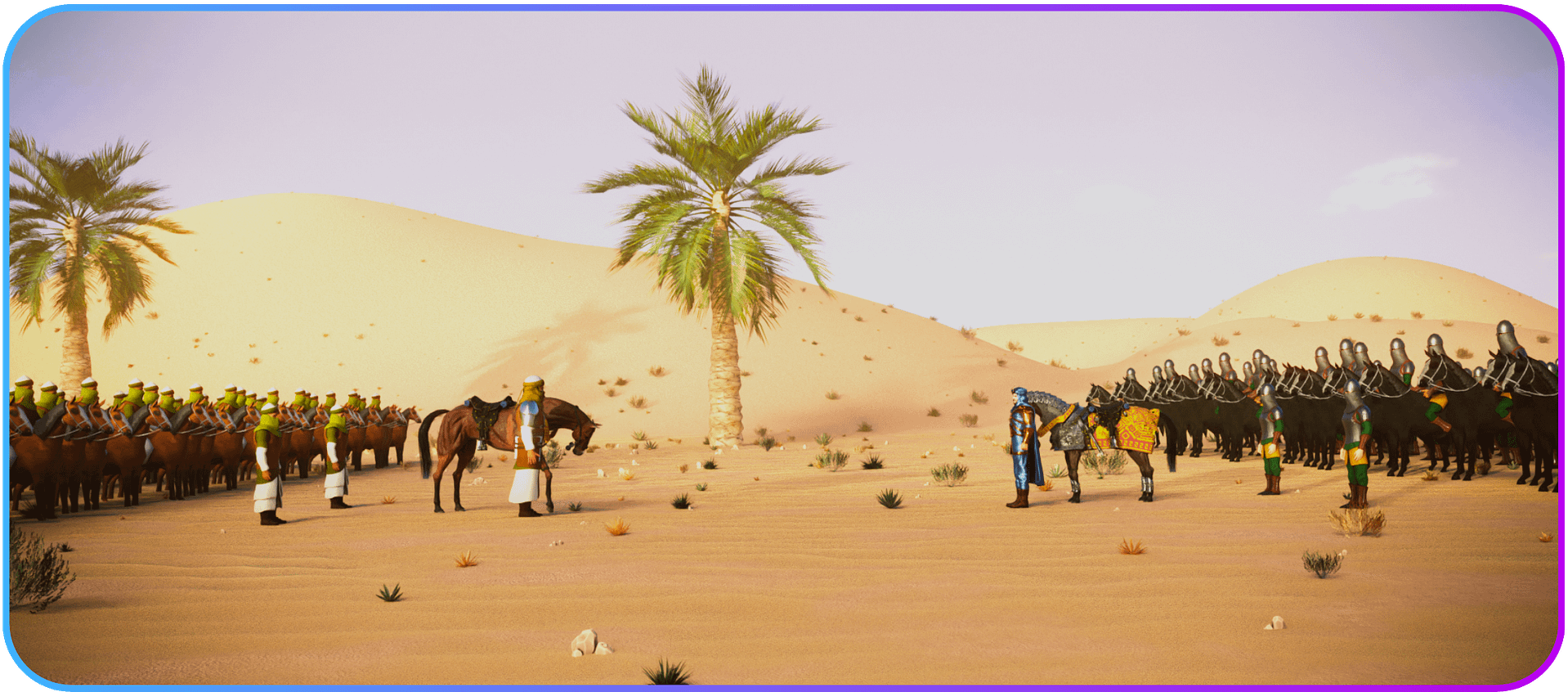
The Crown of Khosrow is a 3D isometric mobile game. It is single-player for now, but it will be brought to the online Player versus Player (PvP) version soon. The game features visually immersive and historically inspired environments set in the 7th-century Arab-Persian conflict. It is a real-time strategy (RTS) and simulation game (SLG) with all the major characteristics of any standard RTS/SLG gameplay, such as:



The Crown of Khosrow is largely distinguishable in two aspects when compared with other RTS/SLG games. These are:
1. It offers two player modes – Story Mode and World View, rather than just a World View.
- The Story Mode lays the foundation and motives of the battle, introducing the characters, allowing the player to select units and troops, and guiding them from one strategic location to another with reasoning. It also lets the player witness the warfare unfold in real time.
Â
- The World View introduces additional characters and enables the player to manage resources and construct settlements, providing insight into the logic and rationale behind each decision.

2. While every RTS/SLG game has a story to tell, most are imaginative fiction ones. On the contrary, the Crown of Khosrow is based on a true 7th-century historical event. Meticulous attention is paid to historical accuracy across every element, whether it be the terrain, architecture, characters, props, or the background sounds and score.
Speaking of historical events and storytelling, the current version delineates the circumstances leading to the first battle between the Arabs and Persians in the 7th century, known as the Battle of Chains. In addition to that, it is a game with ample room for progression over the years.
the story behind the
game’s development
In the 7th century, a new faith appeared and rapidly rose in Mecca, Arabia, and began expanding beyond Arabia. The Persian emperor, Khosrow II, rejected the invitation from the Arabs to accept the new faith. After his death, Yazdegerd III became the Persian emperor.
In 633, the Arabian Caliph, Abu Bakr, appointed his general, Khalid ibn al-Walid, to initiate the conquest of the Persian Empire. Before beginning the conquest, Khalid sent a letter to the Persian governor, Hormuz, to submit to the new faith.

Disregarding the invitation, Hormuz, with his army, set out to fight the followers of the new faith. On the other side, Khalid ibn al-Walid also set out with his 10,000 men to defend and fight for their stance. The first battle between the Arabs and Persians is called the Battle of Chains.
Before diving into the game’s progression detailing the Battle of Chains, it is pertinent to understand the research behind the architecture, characters, and music of the game.
art & artifacts
in the game
Inspired by real-life historical events, The Crown of Khosrow draws deeply from the cultural legacies of ancient Arabia and Persia. We conducted in-depth multi-source research to design and develop compelling cultural elements in the game evocative of that era:
- Architectural & natural elements, such as buildings, structures, monuments, rubble, ruins, terrains, rocks, water bodies, trees, plants, and birds;
- Authentic characters, including their appearances, attire, and ornamental styles;
- Background music, changing with different game scenarios and situations.

This immersive research process predominantly included (but was not limited to):

in-person & online consultations
with middle eastern historians
Innovavera collaborated with the Middle Eastern academic historians and cultural experts to gain accurate insights into the era’s dominant architectural elements, traditional garments, and societal customs. These conversations provided real-time feedback, cultural nuance, and validation of the game’s historical integrity.

consultation of historical
books & archival sources
The team studied scholarly literature, books and visual archives, focusing on the dominant civilization markers of early Arabia and the Sassanid Empire. These resources helped ensure a grounded portrayal of the 7th century.

historical reimagination through
creative interpretation
Where gaps in historical records existed, we engaged in respectful reimagination, drawing from regional aesthetics and traditional patterns to reconstruct environments and characters. This allowed the game to retain creative freedom while remaining culturally and historically plausible.
By blending rigorous research with thoughtful creativity, The Crown of Khosrow offers an immersive visual and narrative experience. This enables the players to enjoy the game while vicariously living through the 633 AD Arabic and Persian period.

architecture
arabic
The Arabic buildings and structures were designed and developed keeping in mind:
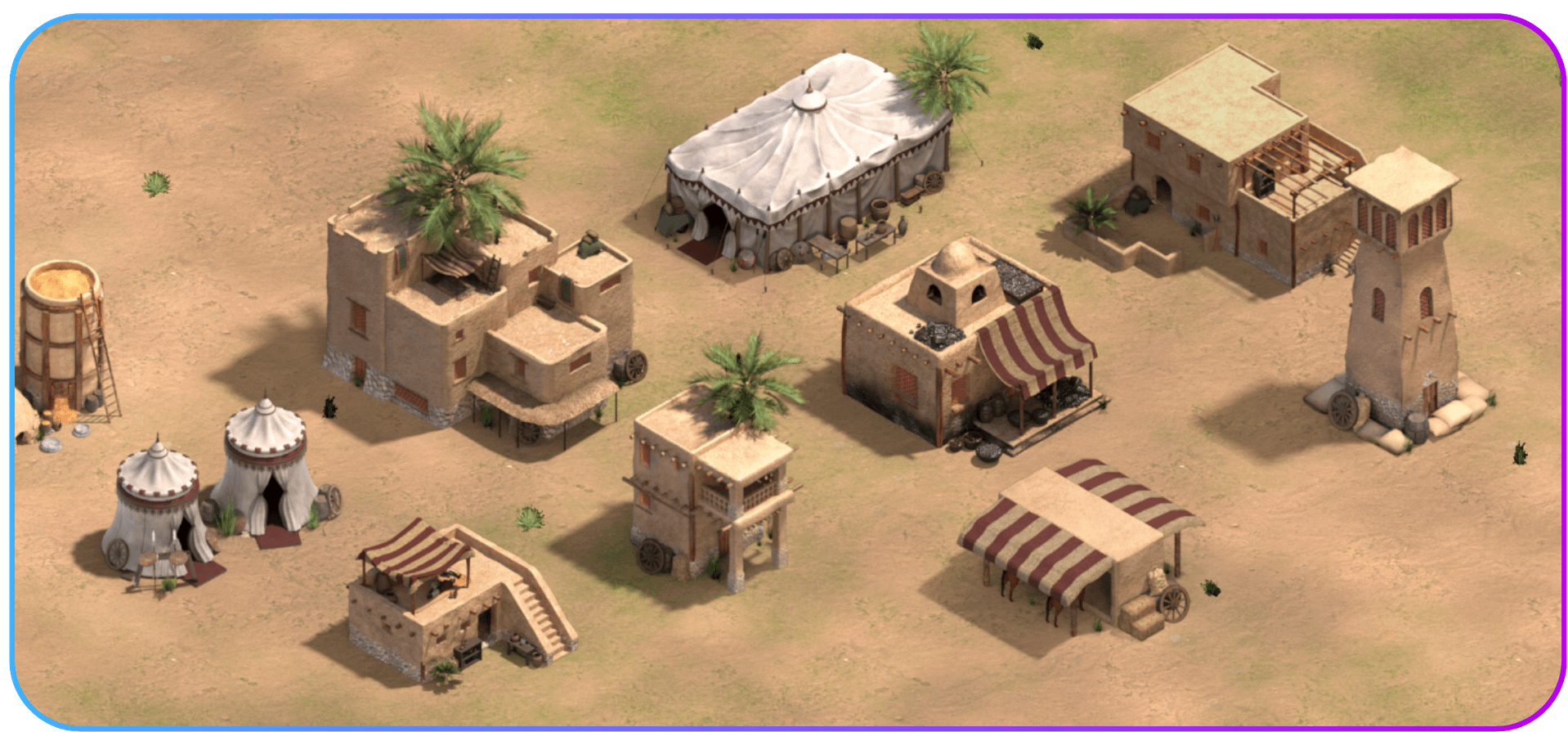
- Landscape & Temperature: Deserts, arid plains, and harsh temperatures.
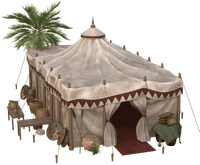
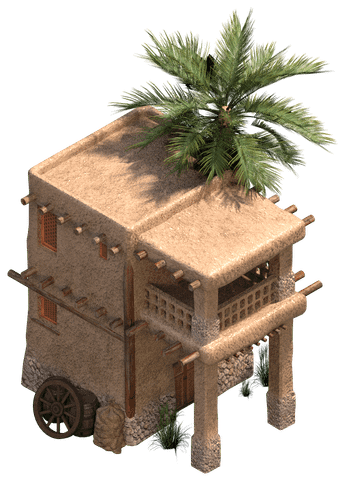
- Typical Structure: Flat-roofed mud houses, courtyard homes, and barracks (for soldiers) with minimal decoration, luxury, or ornamentation. To avoid the desert heat, the buildings were created using available natural resources with the intention of maximum insulation. Most buildings had an open layout for accommodating community and family members.
- Materials: Mud brick, limestone, palm trunks, iron, wood, animal skins, and reeds, representing the tribal way of living.
sassanid persian
The Persian buildings and structures were designed and developed keeping in consideration:
- Landscape & Temperature: Deserts, mountains, and fertile plains.
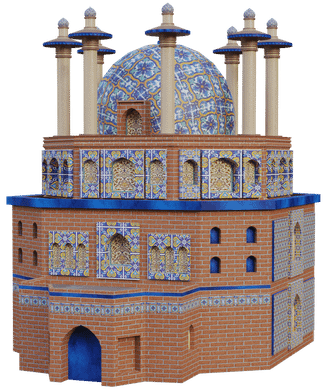
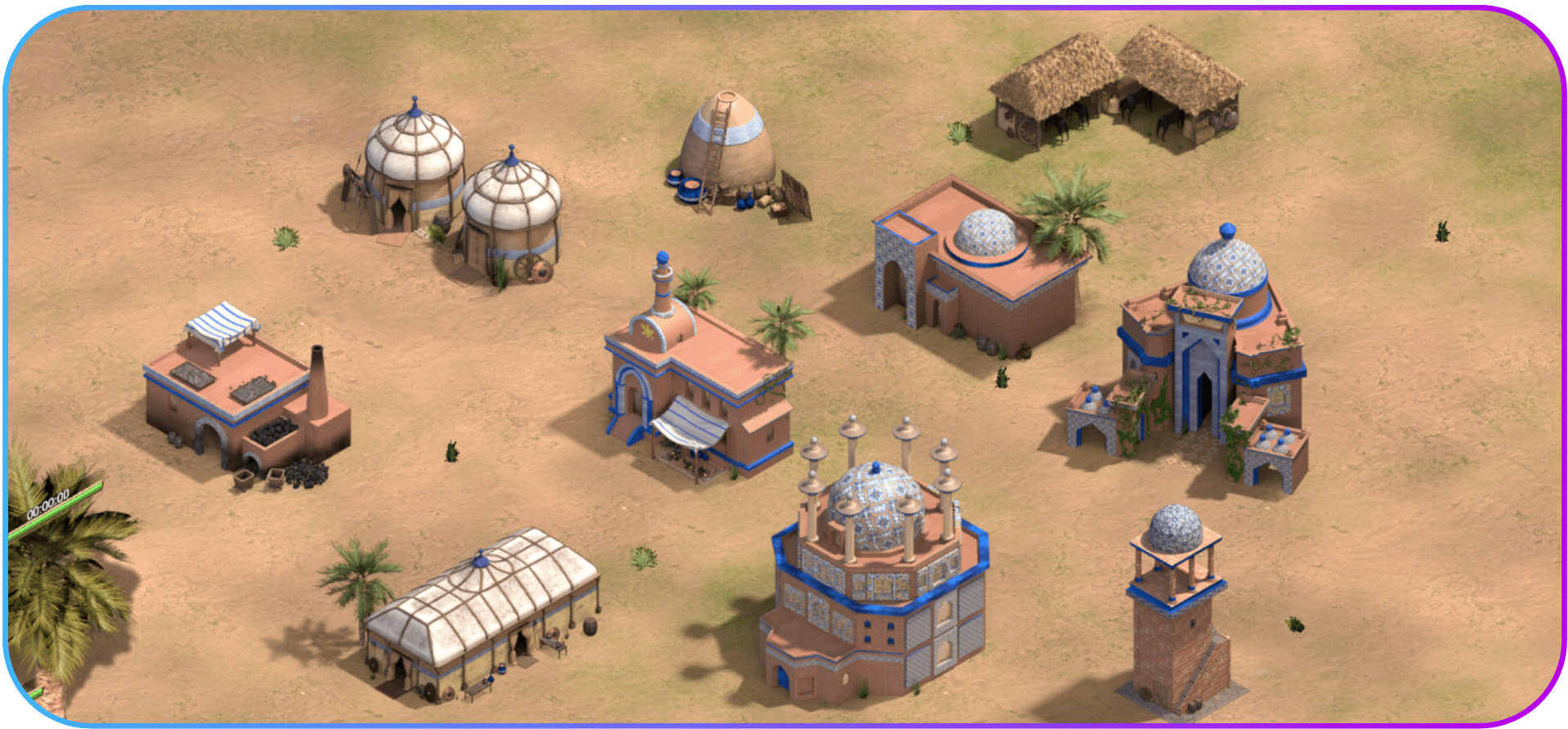
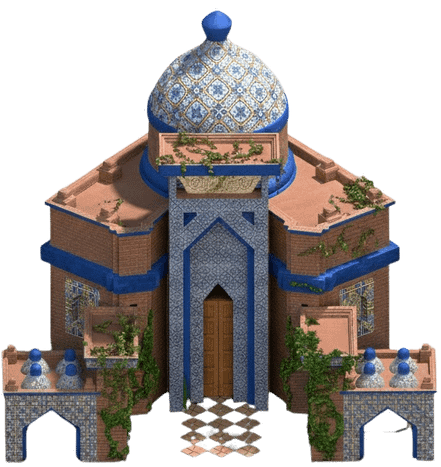
- Typical Structure: Arched halls, iwans, domed roofs, large palace complexes with extravagant stone carvings, and motifs of animals, flowers, and kings.
- Social & Imperial Influences: Grand, luxurious structures reflecting imperial power and hierarchy. Persia had a centuries-old empire, known for its rich architectural heritage and distinctive style.
- Materials: Stone, baked bricks, plaster, wood, and iron.

buildings & their
gameplay functions
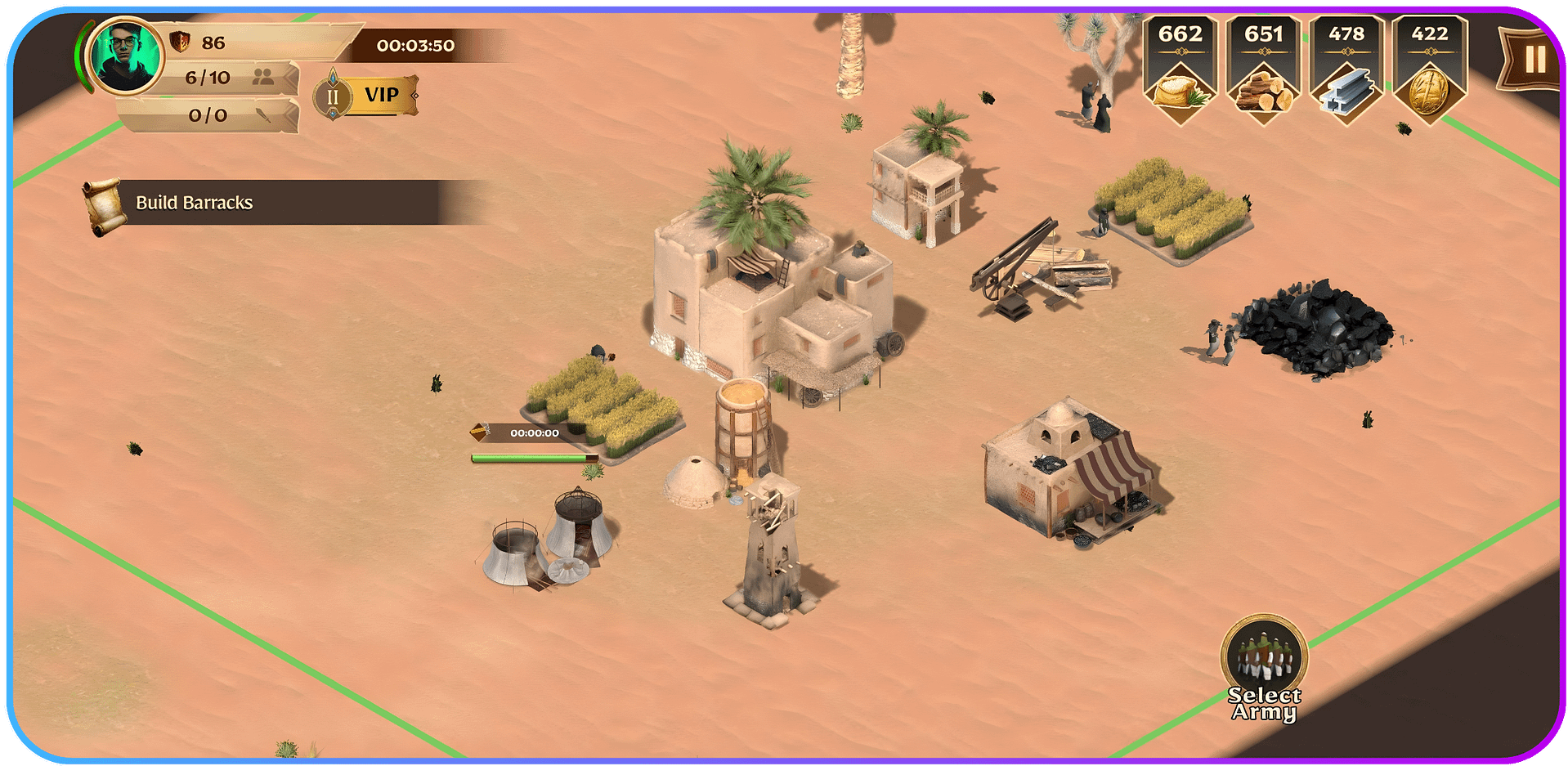
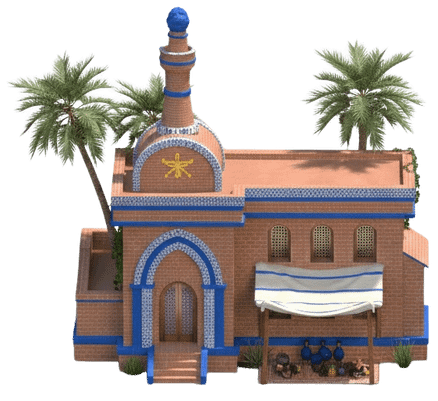
Considering the architectural differences between Arabia and Persia, the same set of ten building and structure types appears throughout the game’s timeline. Each is designed with culturally distinct architectural intricacies and serves a unique gameplay function.

watch tower
The tower is used for surveillance, early warning, defense, and signaling.

town center
It is the core building for resource management and training of workers.

leader hall
The hall is the central command structure where heroes train and develop new skills as well as unlock and upgrade effective strategies and policies during the battle.

university
It is a training center for troops.

iron mine
The mine produces iron for equipment, weapons, gear, and buildings.

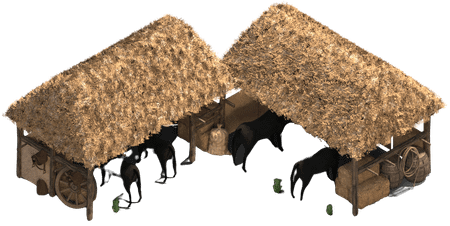
stables
The stables are employed to recruit and train cavalry units.

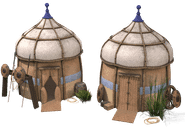
housing
It serves as a symbol to showcase cultural identity and flavor. The houses become vulnerable to raids during the battle.

hospital
The injured soldiers get rest and are treated in the hospital.

barracks
The barracks are used to recruit and train combat units.

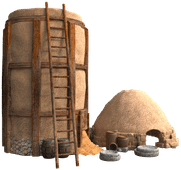
granary
It stores and manages food and resources for economic preservation.
characters
arabic
The four Arabic characters were created considering the following aspects:
- Climate Response: Light, loose-fitting, and breathable clothing made from materials such as cotton, wool, and camel hair, suited for hot climates.
- Social, Cultural & Religious Influences: Modest, simple, and subtle in line with early Arabic religious values and their emphasis on equality.
The character names, their gameplay functions, and attire details are as follows:

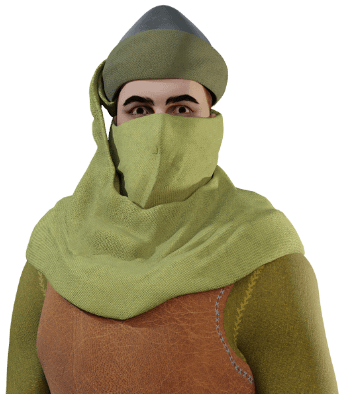
khalid-ibn al-walid
arabic general
- Defending against the enemy.
Â
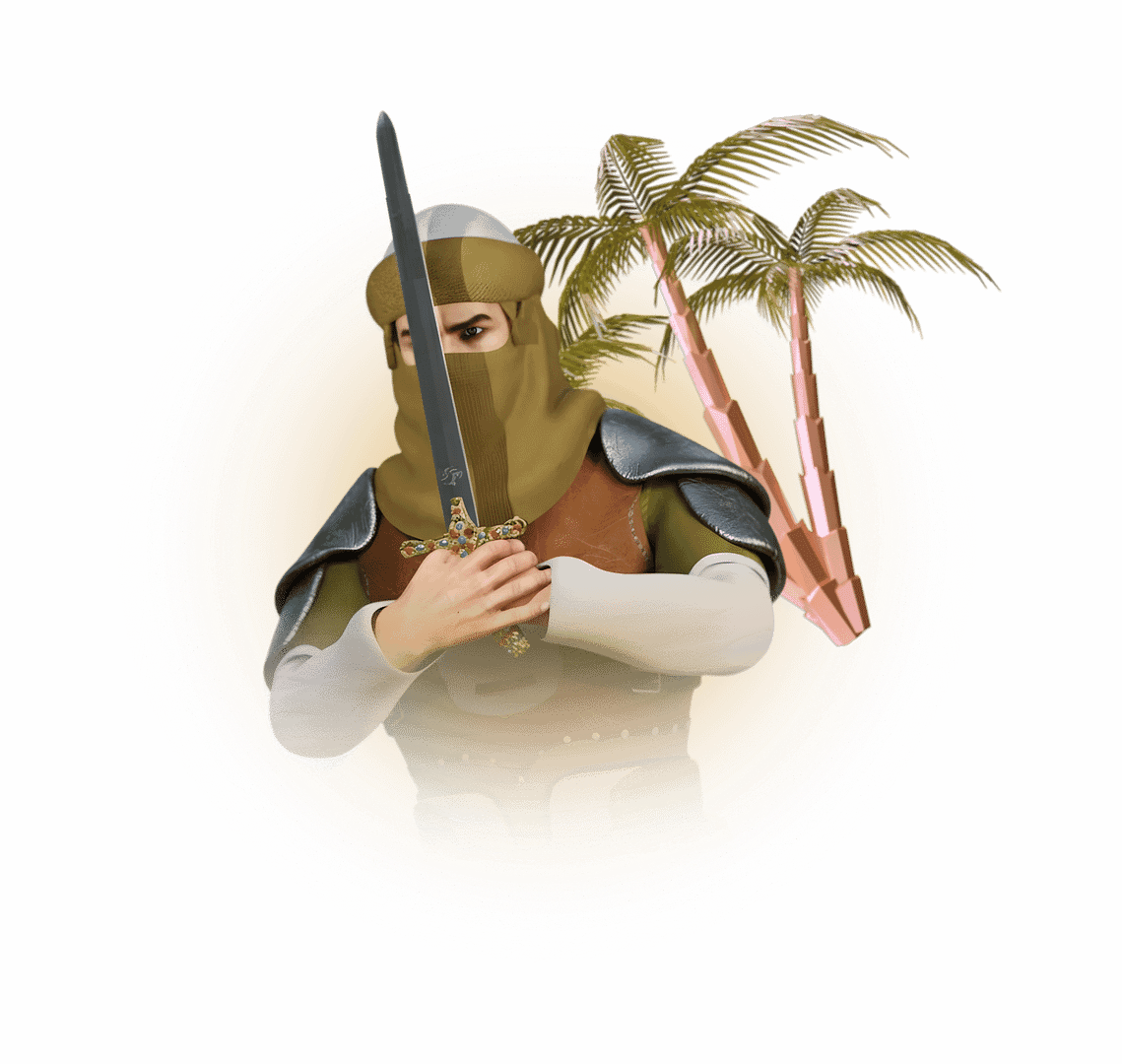
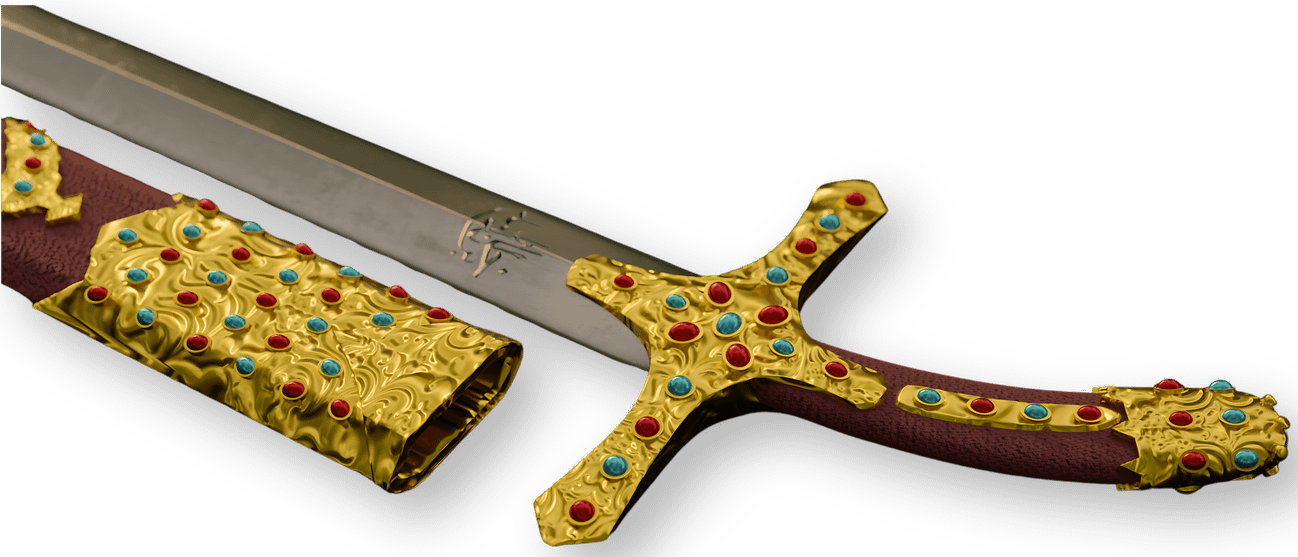
- Owing to his respected status in the Arabian faith and religion, his face is covered; he wears modest colors with leather and metal armor, and his sword.

arabic soldiers
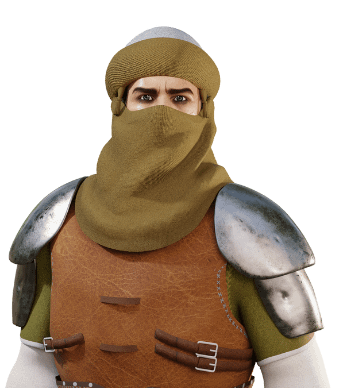
- Defending against the enemy and getting trained in the settlements.
Â
- Their faces and heads are also covered to avoid sun and sand exposure, wearing modest colors, with the leather armor and a weapon related to their unit.

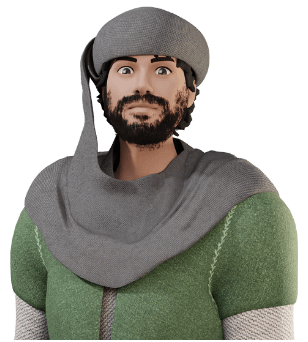
arabic villagers
male
- Populating the settlement, performing agricultural and construction duties, efficiently utilizing the resources, and helping soldiers during the battle.
Â
- Garments consist of light-colored long tunics with a head covering.

arabic villagers
female
- Populating the settlement, performing agricultural and construction duties, and efficiently utilizing the resources.
Â
- Garments consist of light-colored loose robes and a headscarf.
persian
Similarly, the six Persian characters were created considering the following markers:
- Climate Response: Layered, exaggerated clothes made from pricier garments, such as silk, wool, linen, and richly dyed fabrics, suitable for diverse climate zones.
- Social, Cultural & Religious Influences: Influence of Zoroastrian beliefs. Elaborate dresses for elites with old jewelry, decorated belts, ornamental armlets, and earrings, while comparatively modest for people down the social and political hierarchy.
The character names, their gameplay functions, and attire details are as follows:

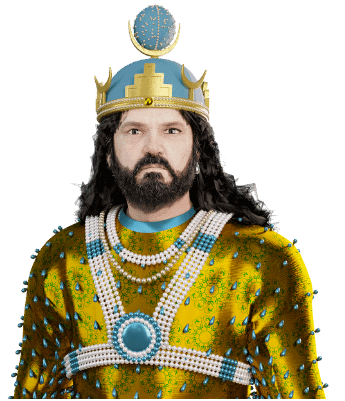
khosrow II-persian
emperor
- The Emperor of the Sassinid Empire who refused the invitation to accept the new faith.
Â
- Wearing a gleaming golden-shaded robe with earrings and a neckpiece, along with a bejeweled belt and crown.

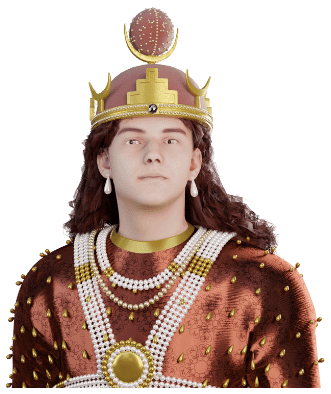
yazdegerd III -
persian emperor
- The Emperor of the Sassinid Empire in 633 AD who ordered his governor Hormuz to fight the Arabian caliphate.
Â
- Wearing a gleaming brown-shaded robe with earrings and a neckpiece, along with a bejeweled belt and crown.

hormuz - persian
governor
- Yazdegerd’s governor, who fought Khalid ibn al-Walid.
Â
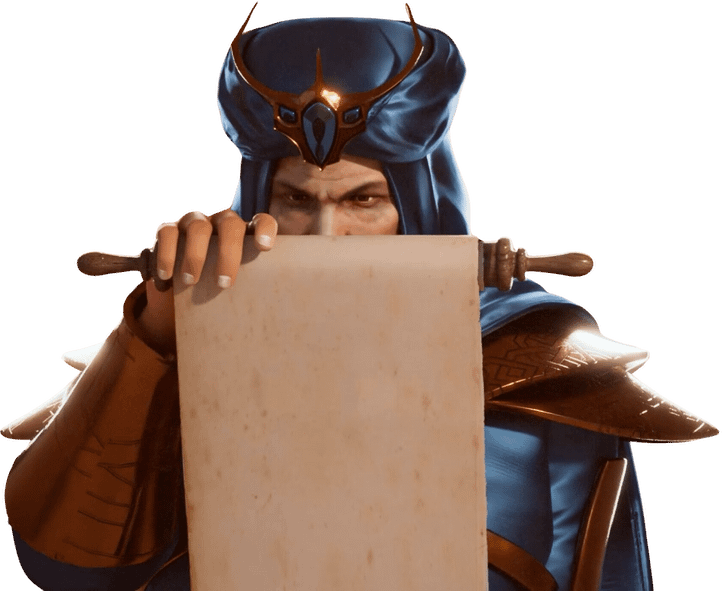
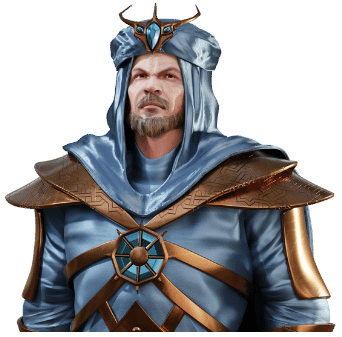
- Wearing a blue robe with a belt, cloak, and headwear, along with metal armor and some jewels.

persian soldiers
- Chained soldiers to attack Khalid and his army in hordes.
Â
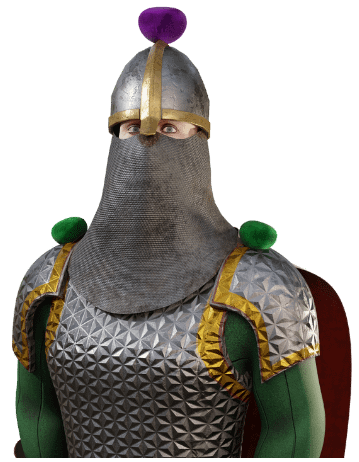
- Two versions of the Persian soldiers have been created based on levels of seniority, wearing a warfare uniform with metal armor pieces covering the face, head, and body.

persian villagers
male
- Populating the settlement, performing agricultural and construction duties, efficiently utilizing the resources, and helping soldiers during the battle.
Â
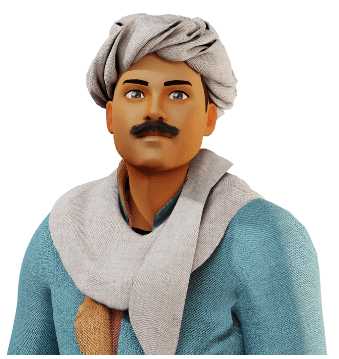
- Garments consist of a turban and traditional dress.

persian villager
female
Â
- Populating the settlement, performing agricultural and construction duties, and efficiently utilizing the resources.
Â
- Garments consist of long silk dresses.
others

militant soldiers
Â
- They are tribal militants and do not belong to either the Arabs or the Persians.
Â
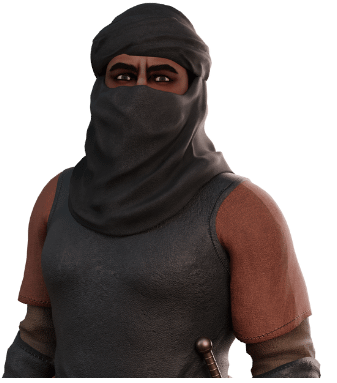
- Covered face and head, wearing a grey and black traditional dress with their swords.

background
music
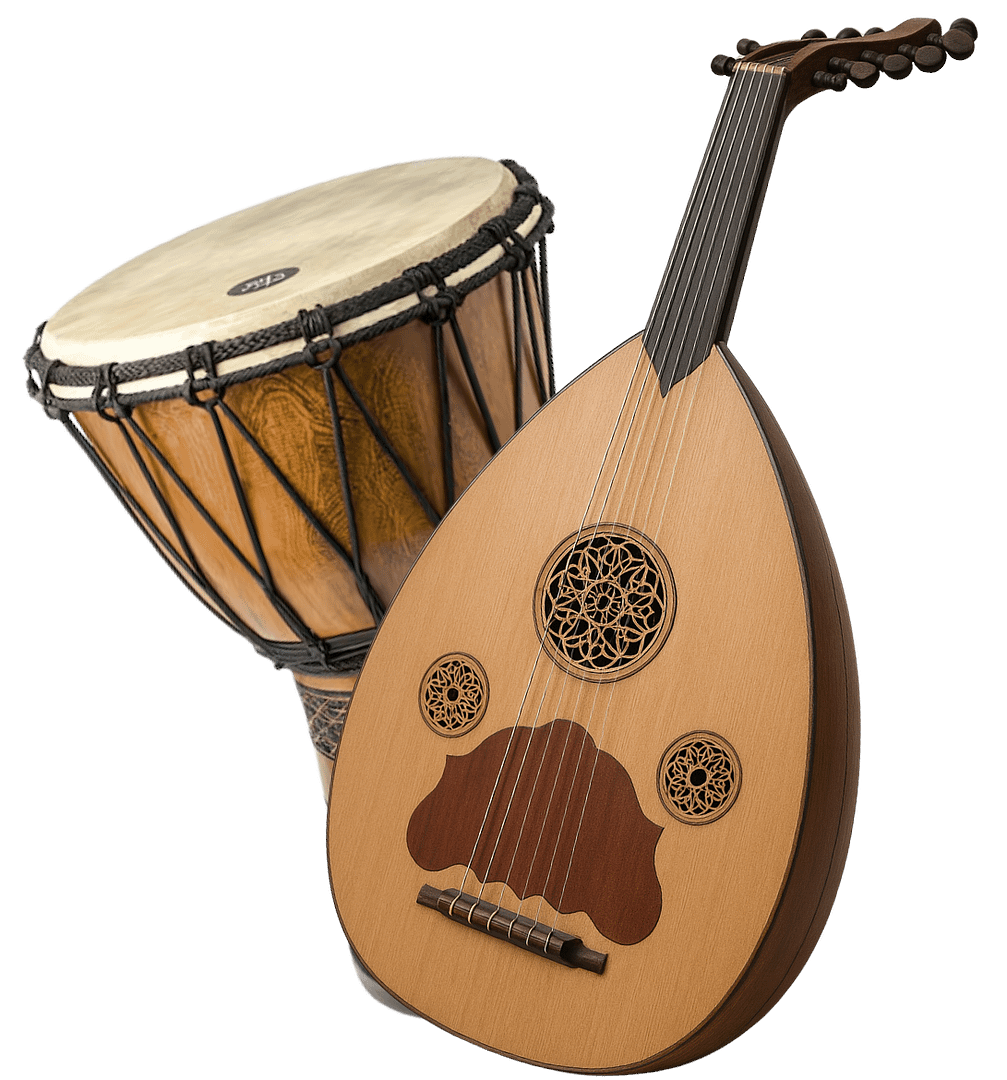
Crown of Khosrow has both Arabic and Persian background music, switching accordingly with the appearance of both sets of characters, points of view, and situations. The voice-overs and the sounds while the troops change their locations, engage in the fight, destroy prior settlements, and build new ones while gathering and using resources add a realistic flair to the game.
crown of khosrow’s
gameplay & progression
setting the scene
The game starts with the reasons leading to the Battle of Chains. Some of the characters get introduced, such as Khosrow II, Yazgerad III, Hormuz, Khalid bin al-Walid, and the Arabic and Persian soldiers.
The player starts noticing the character and musical nuances, like their expressions, clothes, changes in voices and sounds, and body language, that immediately hook them to the game. The difference in the architectures of both empires becomes imminent from the start. The terrains, date trees, and desert atmosphere add a reality-driven authority to the game.

the battle journey
begins
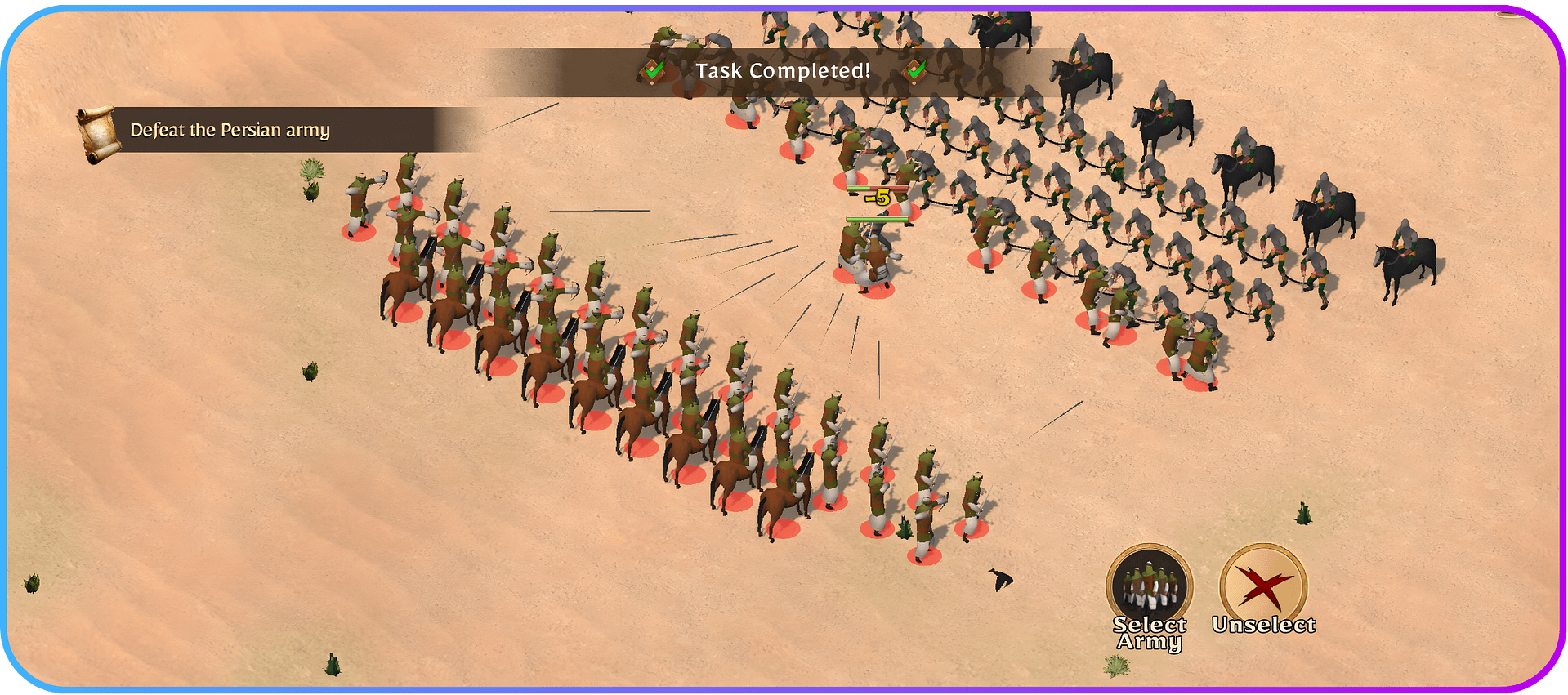
At this point, the player starts engaging with the game. As directed by the hand direction and land markings, the player then selects one of the armies and units and moves them from one strategic location to the next.
The Story Mode shows one commander’s plans to outplay the other and his soldiers by changing his route and combat locations time and again. The other commander and his soldiers in heavy armor and tied in chains in a fury to crush the enemy, persistently follow the former commander and his army in two exhausting pursuits.
The gameplay constantly keeps the players on the edge of their seats about who will eventually overpower in this battle between the Arabs and Persians.
The scene-by-scene story progression and dialogues are crafted to build a nail-biting cliffhanger.
the climax
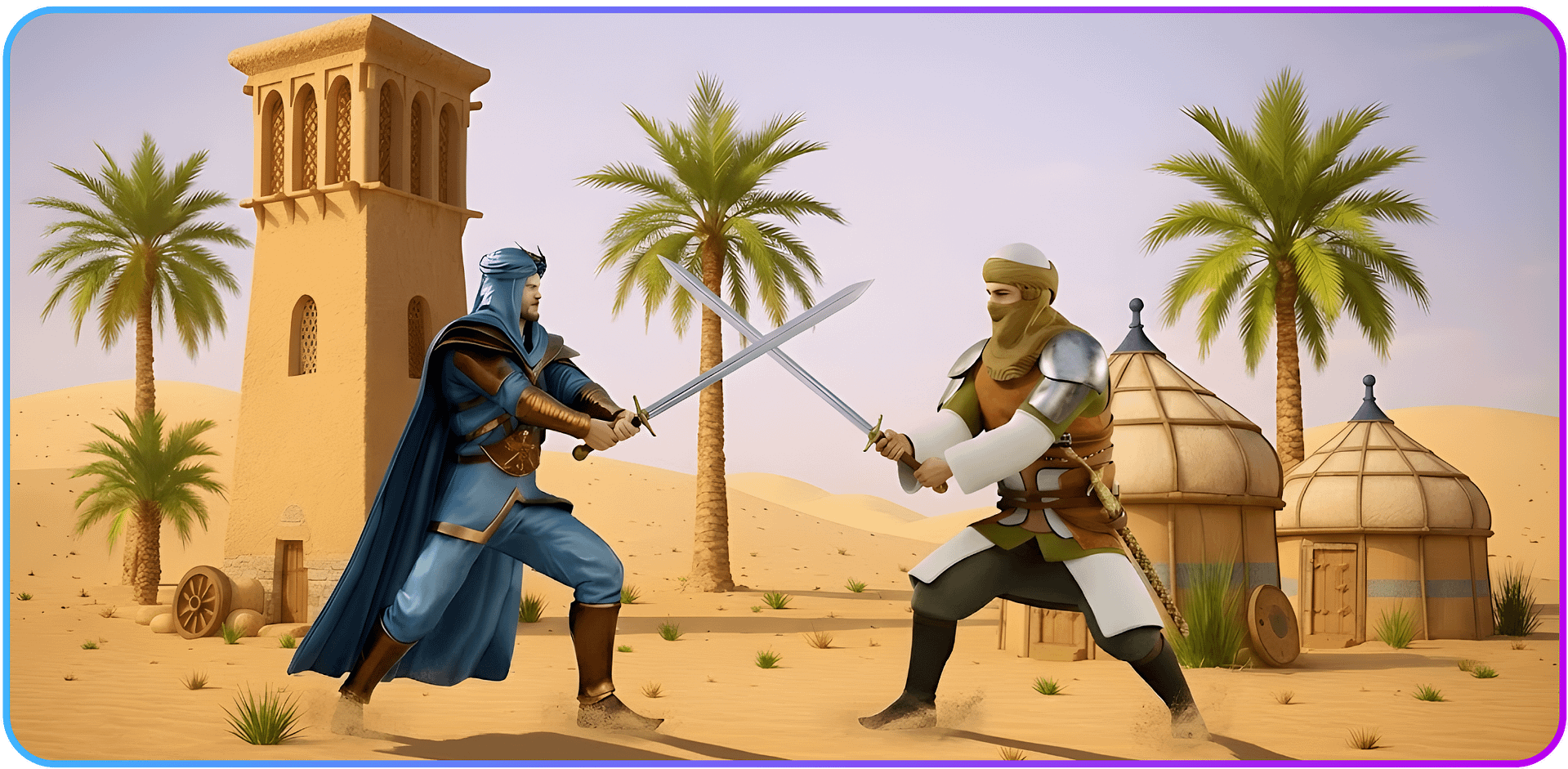
Both commanders are seen challenging and intimidating each other with their might to crush the morale of the other side. Both sides are shown to be equally competitive and competent in their own quintessential ways. The Arabs and Persians finally come face-to-face.
To the player, the tides of victory and defeat are ever-shifting, making it impossible to foresee the final outcome. The battle sequences are enhanced through dynamic audio of swords clashing, soldiers shouting, and horses neighing – paired with real-time numeric updates on the casualties, keeping players engaged and informed.
The game documents a rigorous fight, with one side ultimately owning the other in a high-stakes, gripping combat.

post-war scenario
Some new characters, such as Arabic and Persian men and women, appear after the battle is won by one side. Post-war gameplay is about the destruction of the losing side’s settlements, turning them into ruins, and the construction of the victorious side’s settlements and communities.
The post-war immersive sound effects detailing the destruction of the losing side’s settlements with their villagers running for their lives do not let the player’s attention and interest drift away, even for a second.
The World View player mode lets the player build settlements from the bottom up, gathering the most urgent resources and setting up buildings and structures one by one. All this is done to populate and strengthen the victorious side, recruit and train soldiers and workers, and forge and deploy weapons to get ready for the next battle.
the payoff
The Crown of Khosrow offers a sweet spot of gameplay excitement – combining tactical warfare, strategic settlement building, and fortification with a History 101 deep dive into the real-life Arab-Persian conflict of 633 AD. It has something for every RTS/SLG gameplay enthusiast, as well as for both history buffs and non-history lovers who enjoy immersive storytelling and decision-making.
moving forward
Following the Battle of Chains, several decisive battles were fought between the Arabs and Persians, including the Battles of Dhat al-Salasil, Al-Madhar, Walaja, and others. We’re now actively developing gameplay around these remaining historical battles.
Crown of Khosrow will feature a much stronger focus on battles than many other RTS/SLG titles, while still preserving core functionality like territory expansion and alliance systems similar to those in large-scale strategy and simulation games.
Until then, the victorious side’s leaders, soldiers, workers, and villagers must fortify their settlements and strengthen their unity in preparation for the competitive wars to come, because: