





Overview
- The combined VR/AR/MR market is projected to grow from $26.9 billion in 2026 to over $106 billion by 2031 – driven not by consumer hype but by measurable enterprise ROI in retail, healthcare, and training applications.
- Healthcare is the fastest-growing vertical for XR technology at 33.9% CAGR, while retail AR applications are already influencing purchase decisions for millions of consumers through virtual try-ons, product visualization, and interactive showroom experiences.
The Shift from Novelty to Necessity
Immersive technology has crossed a threshold. What started as expensive experiments and gaming peripherals has matured into practical business tools delivering measurable returns across industries.
The numbers tell the story. Approximately 40% of healthcare providers now use VR for patient treatment and staff training. In 2020 alone, approximately 100 million shoppers used AR for purchasing decisions – a figure that has grown substantially since. These are not pilot programs or proofs of concept – they are production systems generating revenue and reducing costs.
The shift happened because the technology finally caught up to the promise. Hardware became affordable, development tools became accessible, and businesses started measuring outcomes instead of chasing trends. This is not about replacing reality. It is about augmenting it with information, interaction, and immersion, where those elements add genuine value.
Retail & Automotive: Where Visualization Drives Conversion
Retail was among the first industries to find practical applications for AR and VR. The core problem is universal:
Customers cannot physically interact with products before purchasing online, leading to uncertainty, hesitation, and returns.
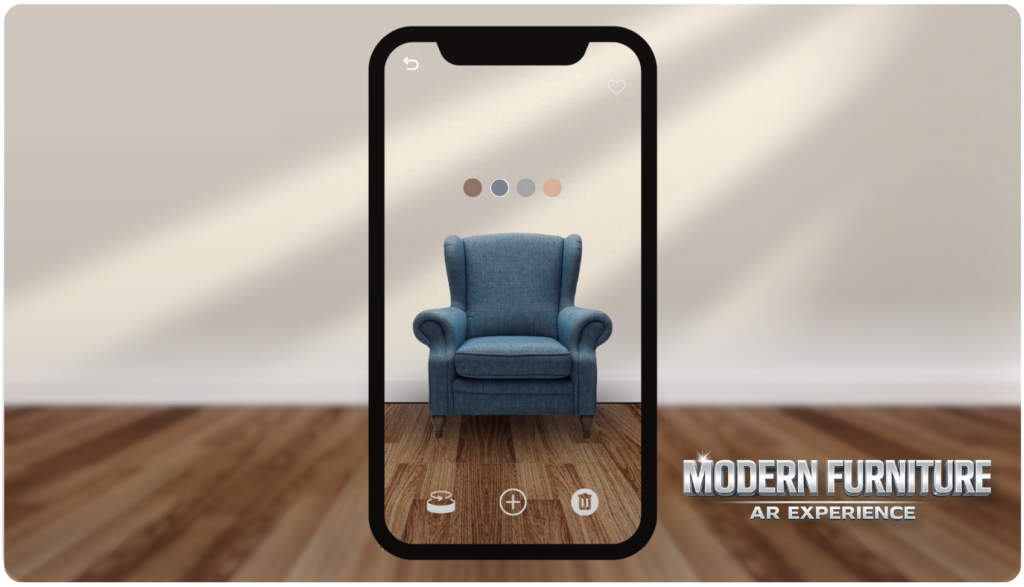
AR Furniture Visualization
Customers point their phone at their living room and see exactly how a sofa, table, or lamp will look in their actual space – with accurate scale, lighting, and color. Major furniture retailers report measurable reductions in return rates and increases in purchase confidence when AR previews are available.
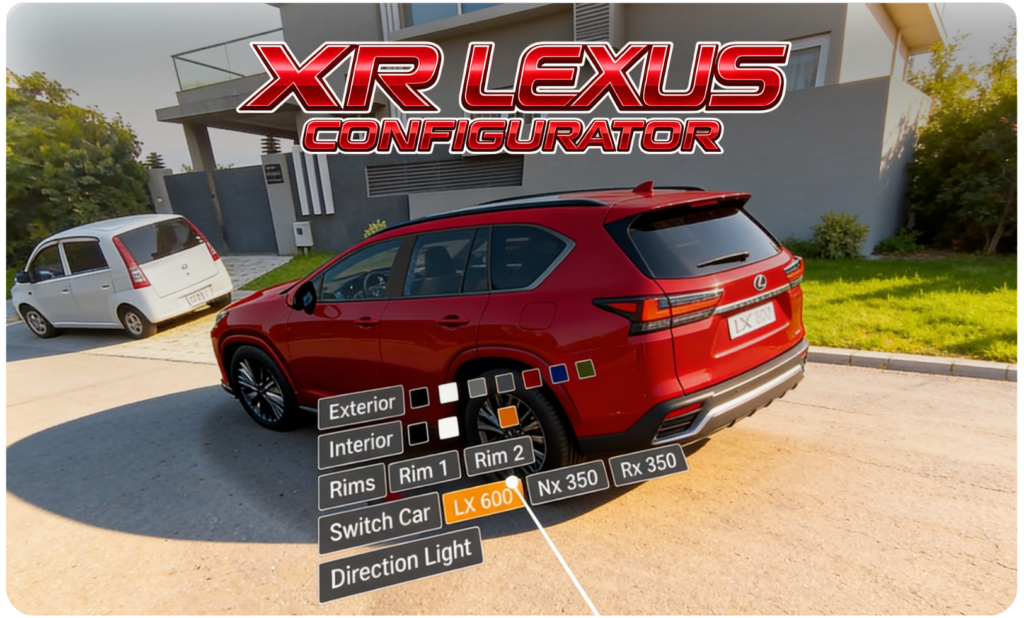
XR Car Configurators
Instead of scrolling through static images of color options and trim packages, customers can explore a fully rendered vehicle in mixed reality – walking around it, opening doors, sitting inside, and experiencing different configurations in real time. Dealerships are deploying these tools to let customers build their dream car before it exists on the lot, compressing the sales cycle and reducing the friction between interest and purchase.
Virtual Tours
Virtual tours and digital twins extend this logic beyond retail. Banks are deploying immersive experiences that let customers navigate services and speak with advisors in spatial environments – bringing the branch to them. Universities are building digital twins of their campuses, allowing prospective students to explore classrooms, libraries, and dormitories from anywhere in the world. Automotive brands are creating VR showrooms where customers can walk around vehicles, inspect interiors, and compare models without visiting a dealership.

Healthcare: Where Immersion Saves Lives & Reduces Costs
Healthcare represents the fastest-growing vertical for immersive technology – and the applications extend far beyond what most people imagine.
Medical Training
VR in healthcare enables surgeons, nurses, and emergency responders to practice high-stakes procedures in realistic simulations without risking patient safety. Studies show VR training delivers significantly better retention and skill acquisition compared to traditional methods. Medical schools and hospitals worldwide have integrated these tools into their curricula, recognizing that repetition in a safe environment builds the muscle memory and decision-making skills that save lives in real situations.
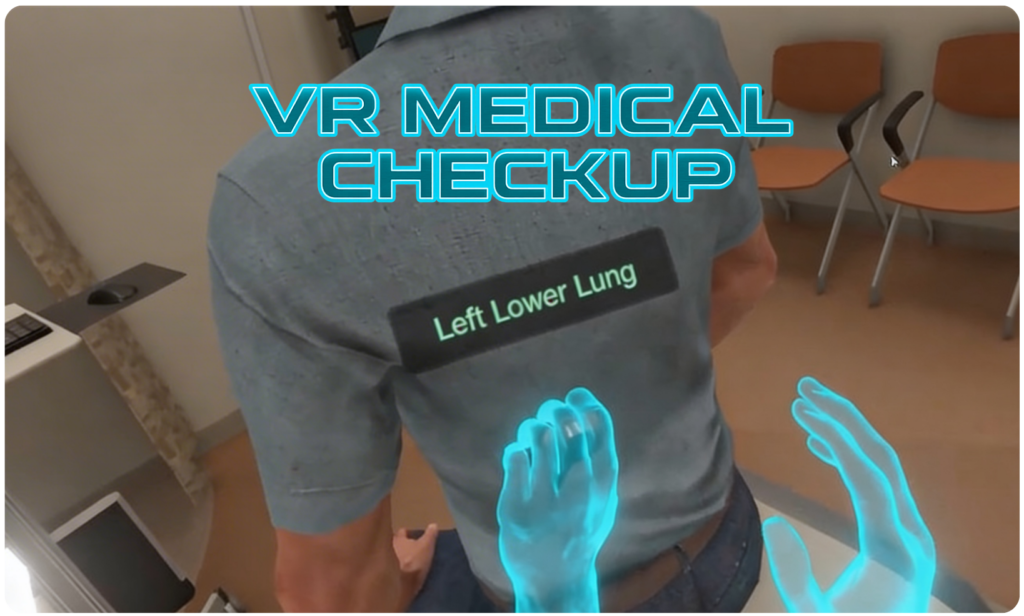
VR Medical Checkups & Diagnostics
Remote consultations gain depth when patients and physicians share a virtual environment rather than a flat video call. Specialists can examine 3D scans collaboratively. Therapists can guide patients through exposure therapy in controlled virtual settings. The technology creates presence and context that traditional telemedicine lacks.
Pain management has become a particularly compelling application. Clinical case studies report up to 50% reduction in patient pain scores, with some implementations citing significant savings in medication costs – a clear ROI that justifies investment.
Gaming & Entertainment: Where Immersion Meets Interaction
Gaming remains the largest consumer driver of VR and AR adoption – but the category has evolved significantly beyond headset-based experiences.
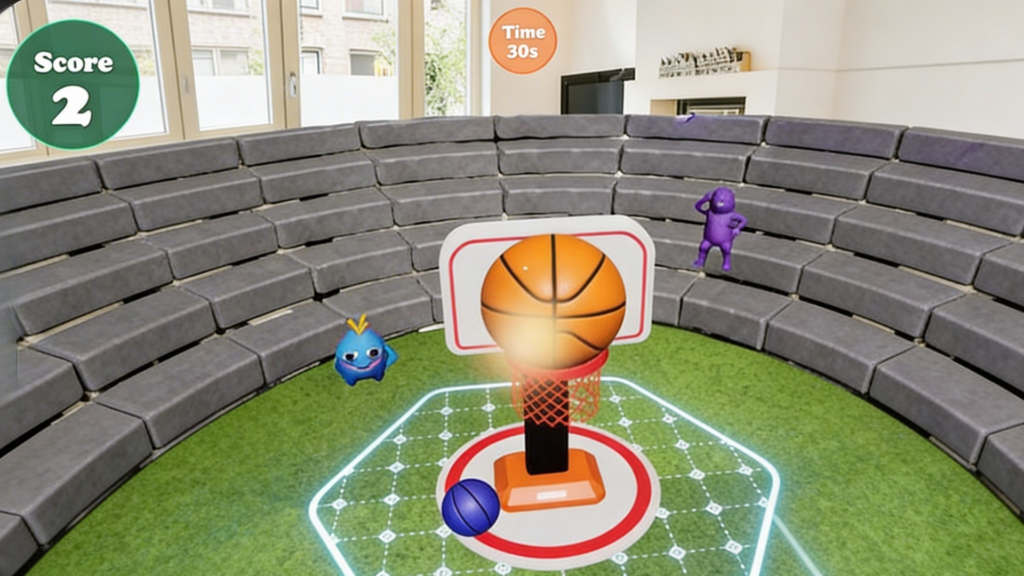
Interactive AR Games
These games have found mainstream audiences by meeting players where they already are – on their phones, in their living rooms, or in their neighborhoods. Rather than requiring dedicated hardware, these experiences overlay game mechanics onto physical spaces. Players shoot hoops at a virtual basketball court in their driveway, defend their living room from digital invaders, or explore their neighborhood through a game layer that transforms familiar streets into adventure zones.
The design philosophy has shifted. Early AR games treated the real world as a backdrop. Current applications treat physical space as a gameplay element – using furniture as cover, walls as boundaries, and room layout as level design. This creates experiences that could not exist in pure VR or on flat screens.
VR Simulators
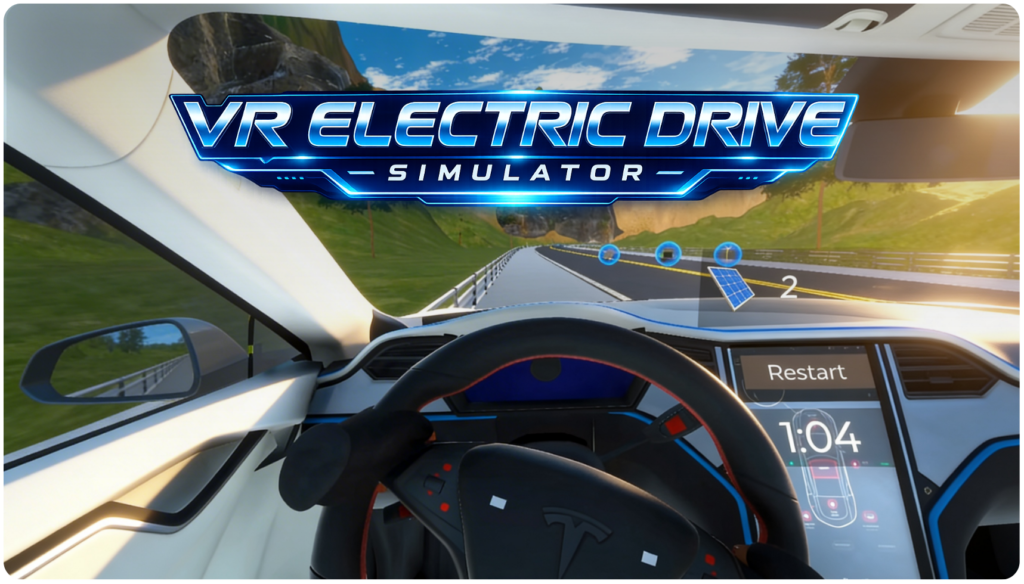
VR simulators occupy the opposite end of the spectrum – full immersion for training, entertainment, and skill development. Racing simulators and flight simulators have achieved fidelity levels that professional drivers and pilots use for practice. Automotive VR simulators allow enthusiasts to experience vehicles they could never access otherwise, while training facilities use the same technology to prepare drivers for hazardous conditions without real-world risk.
The gaming and simulation market continues to expand because these applications serve multiple purposes simultaneously. A VR car simulator can entertain consumers, train professional drivers, and showcase a manufacturer’s latest models – often within the same application with different modes and content. Entertainment, training, and marketing converge in well-designed XR experiences.
What Makes Immersive Applications Succeed
Across retail, healthcare, and gaming, successful XR projects share common characteristics. They solve real problems rather than demonstrating technology for its own sake. They measure outcomes and optimize for specific metrics. They meet users where they are – on devices they already own, in environments they already occupy, and with interactions that feel natural rather than forced – to take them where they want to be.
The projects that fail typically share opposite traits. They require expensive dedicated hardware for casual use cases. They prioritize visual spectacle over functional utility. They assume users will adapt to the technology rather than designing technology that adapts to users.
For businesses exploring immersive applications, the strategic questions have shifted:
- What specific problem does immersion solve that existing tools cannot?
- What measurable outcome will define success – reduced returns, faster training, higher conversion, or lower costs?
- What hardware and platforms will reach the target audience without creating adoption barriers?
- How will the application evolve as technology improves and user expectations rise?
Building Immersive Experiences That Deliver Results
At Algoryte, we develop immersive applications across retail, healthcare, automotive, and gaming – from AR furniture visualization and XR car configurators to VR medical training tools, virtual tours, and interactive AR games.
Our approach treats platform choices as tactical decisions based on audience, budget, and objectives. We build for the devices your users actually have, the outcomes your business actually needs, and the timelines your market actually demands.
Whether you are exploring your first AR pilot, scaling an existing VR training program, or building an interactive MR experience that blends physical and digital environments, we bring the technical depth and production experience to deliver results – offering end-to-end XR strategy and deployment services.
Are you ready to transform your customer experience with immersive technologies? Explore our services at www.algoryte.com.
FAQs
1. What are the most impactful applications of augmented reality in retail?
Virtual try-ons lead the category – eyewear, cosmetics, clothing, and accessories are previewed on the customer’s own image before purchase. Furniture and home decor visualization lets shoppers place products in their actual spaces at an accurate scale. In-store AR enhances physical shopping with product information overlays, wayfinding, and interactive displays. AR-powered packaging connects physical products to digital content – tutorials, authenticity verification, and loyalty programs. The measurable impacts are reduced return rates, increased conversion, longer engagement times, and higher average order values. Retailers using AR report that customers who engage with AR features are significantly more likely to complete purchases.
2. How do businesses use AR for customer engagement and sales?
AR removes the uncertainty that kills conversions. Furniture retailers let customers visualize sofas in their actual living rooms before purchasing. Beauty brands offer virtual makeup try-ons through smartphone cameras. Automotive companies deploy AR configurators where buyers explore vehicle colors, interiors, and features in real time. Product packaging comes alive with AR – scan a label to see recipes, instructions, or brand stories. The common thread is reducing friction between interest and purchase. Customers who interact with AR product previews report higher buying confidence and lower return rates.
3. How can virtual reality be used in medical training simulations?
VR allows medical professionals to practice high-stakes procedures repeatedly without patient risk. Surgeons rehearse complex operations on realistic 3D anatomies. Emergency responders train for crisis scenarios – trauma, cardiac events, mass casualty incidents – in controlled simulations. Nursing students practice patient interactions, injections, and equipment handling. The key advantage is consequence-free repetition – trainees build muscle memory and decision-making skills through hundreds of attempts before touching a real patient. VR also enables standardized assessment – every trainee faces identical scenarios, making evaluation consistent and objective.
4. How is VR being used in mental health therapy and rehabilitation?
VR enables exposure therapy in controlled environments – patients confront phobias, trauma triggers, or anxiety-inducing situations safely and gradually. Therapists adjust intensity in real time. For PTSD treatment, veterans revisit combat scenarios at manageable levels with clinical guidance. Pain management programs use immersive VR environments to distract patients during procedures or chronic pain episodes – studies show measurable reductions in reported pain scores. Cognitive rehabilitation helps stroke and brain injury patients relearn daily tasks through guided VR simulations. The technology creates presence and immersion that traditional talk therapy or flat-screen tools cannot replicate.
5. What challenges do businesses commonly face when integrating XR?
The most common challenges include high initial development costs, hardware compatibility across devices, and user adoption resistance. Many businesses struggle with unclear ROI metrics – they invest in XR without defining what success looks like. Integration with existing systems (CRM, inventory, training platforms) can require custom development. Content creation is another hurdle – XR experiences need ongoing updates to stay relevant, and finding developers with both technical and design expertise is competitive. Finally, some industries face regulatory uncertainty around data privacy and accessibility compliance in immersive environments.
6. What makes AR games different from traditional mobile games?
Traditional mobile games exist entirely on screen – players interact with a self-contained digital world. AR games use the phone’s camera to blend game elements with actual surroundings, turning living rooms into game boards and backyards into arenas. Physical movement becomes a mechanic – walking, turning, and reaching affect gameplay. Real-world objects serve as obstacles or interactive elements. Multiplayer gains a new dimension when players in the same room see shared virtual objects anchored to physical space. The result is gaming that rewards exploration and physical activity rather than stationary screen time.