augmented reality
experiences for a
life-like immersion
Deploy AR experiences that overlay interactive 3D content, real-time data, and contextual information onto real-world environments – with accurate surface tracking, object recognition, and persistent anchoring across iOS, Android, AR glasses, and web browsers.
your reality could
use an AR upgrade
augmented reality
services
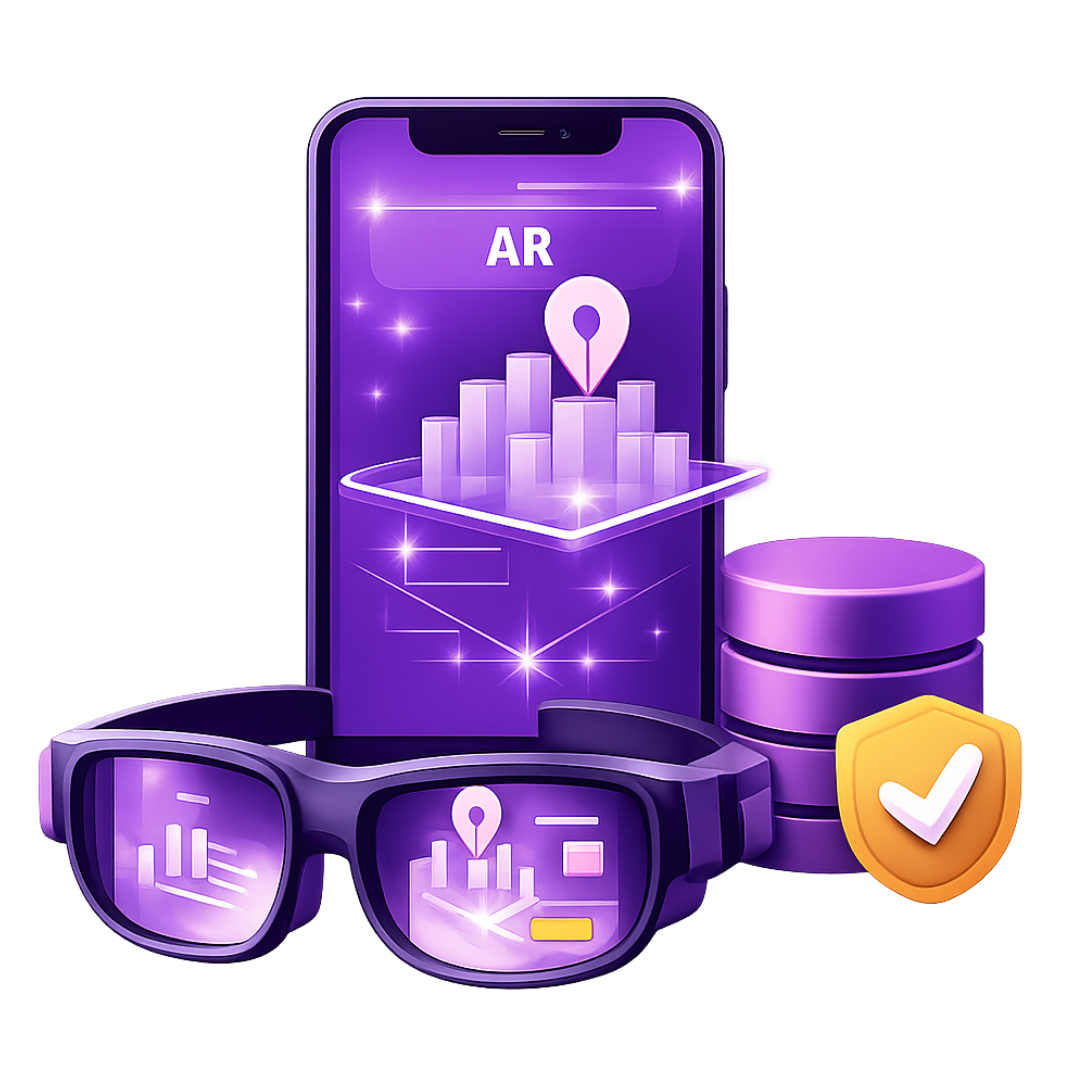
We build AR applications that layer digital information onto physical environments, creating experiences where virtual content responds to real-world surfaces, objects, and conditions in real time. Our solutions work across smartphones, tablets, AR glasses, and web browsers – delivering interactive 3D models, live data overlays, and contextual guidance exactly where users
need them.
From retail environments where customers visualize products in their actual spaces to industrial facilities where technicians receive overlay instructions
on real equipment, our AR solutions bridge the gap between digital information and physical reality.
Whether you need marker-based recognition for product packaging, markerless tracking for open environments, or location-based experiences tied to geographic coordinates, we architect AR solutions that work reliably in real-world conditions while delivering measurable business value.
our AR services

custom AR application
development
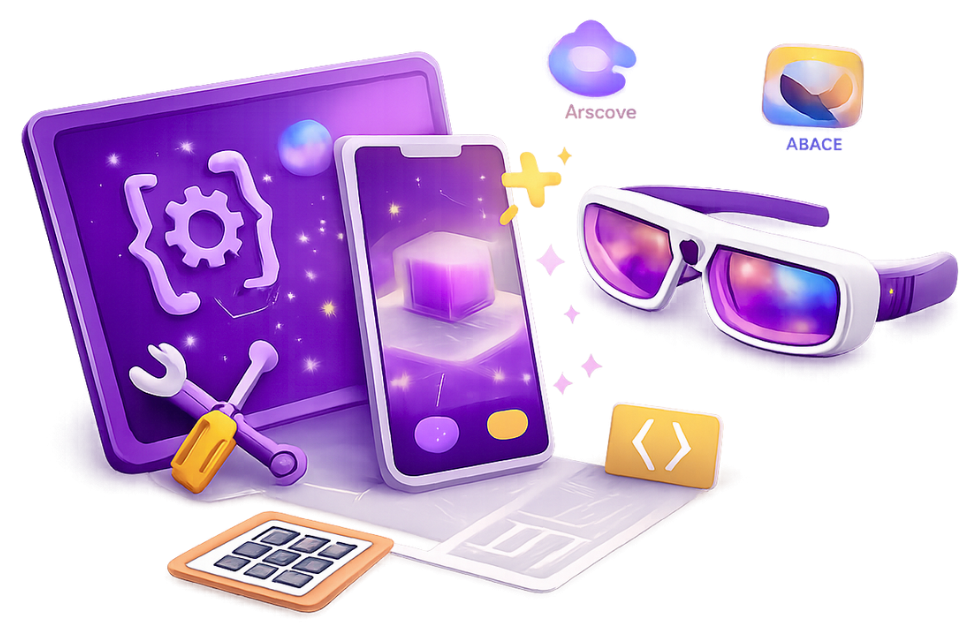
Build tailored AR experiences that solve specific business challenges and create measurable value for your operations. Our team develops AR applications for mobile platforms (iOS/Android), AR glasses (HoloLens, Magic Leap, Meta AR), and web browsers – implementing features like surface detection, image tracking, object recognition, and persistent anchoring using ARKit, ARCore, and WebAR frameworks to create reliable, production-ready solutions.
marker-based AR
experiences
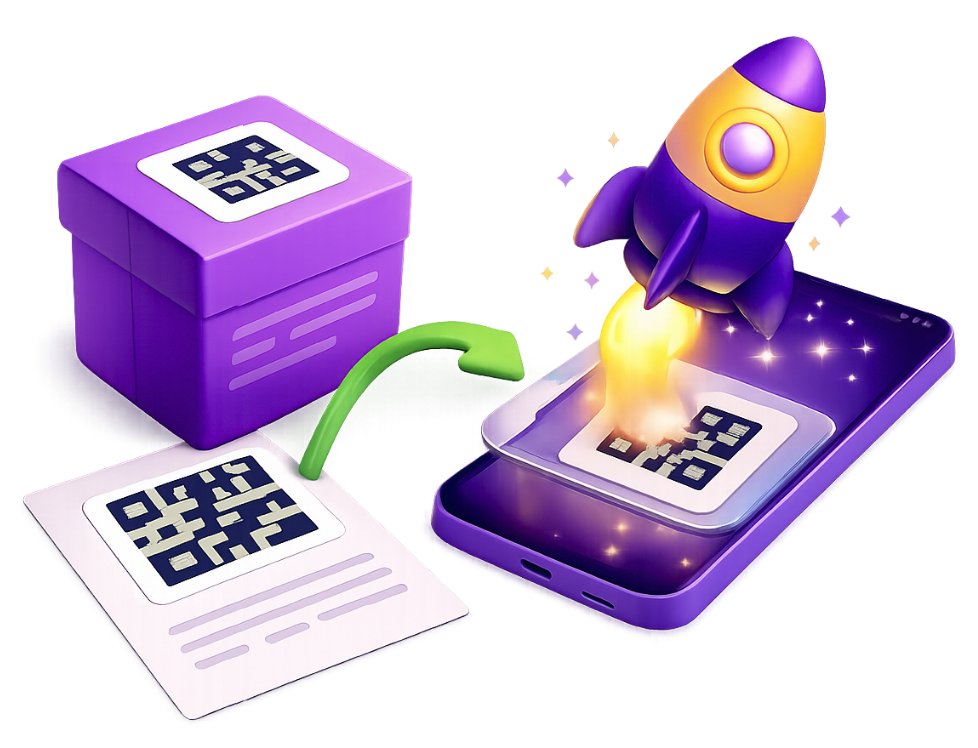
Transform printed materials, product packaging, and physical objects into interactive digital gateways. We design and implement marker-based AR systems that trigger 3D models, animations, videos, and interactive content when users scan specific images or objects with their devices.
markerless AR
solutions
Enable AR experiences that work anywhere without predefined triggers or markers. Our team builds markerless AR applications using SLAM technology, plane detection, and environmental understanding to place digital content accurately in any physical space.

webAR
development
Deliver AR experiences instantly through web browsers without requiring app downloads. Our team builds WebAR solutions using frameworks like A-Frame, Three.js, and AR.js, creating accessible experiences that work across devices with just a URL.

AR product
visualization
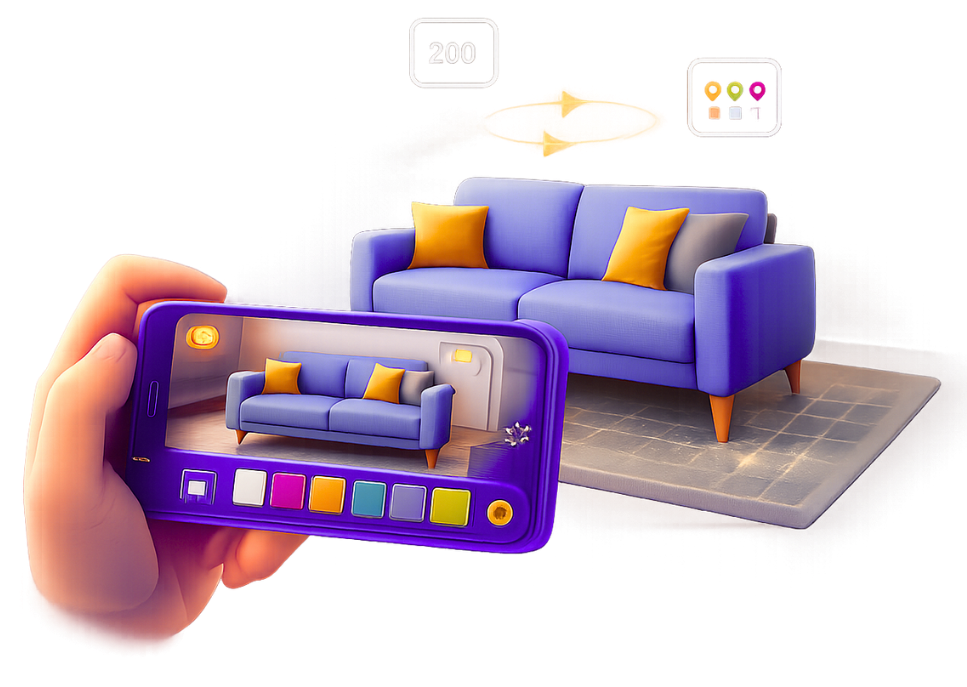
Let customers preview products in their actual spaces before purchasing. We create photorealistic 3D models with accurate materials, lighting, and scale, integrated into AR applications that allow users to position, rotate, and customize products in their real environments.

location-based AR
development
Overlay digital content onto specific geographic locations and points of interest. Our team implements GPS-based AR experiences, geofencing, spatial anchoring, and location triggers to deliver contextually relevant information based on where users are in the world.

AR training &
simulation tools
Provide hands-on learning experiences that overlay step-by-step instructions onto real equipment and workspaces.
We develop AR training applications
with interactive guides, safety alerts, performance tracking, and remote assistance features that accelerate
skill development.

AR field service &
remote assistance
Enhance field service operations with
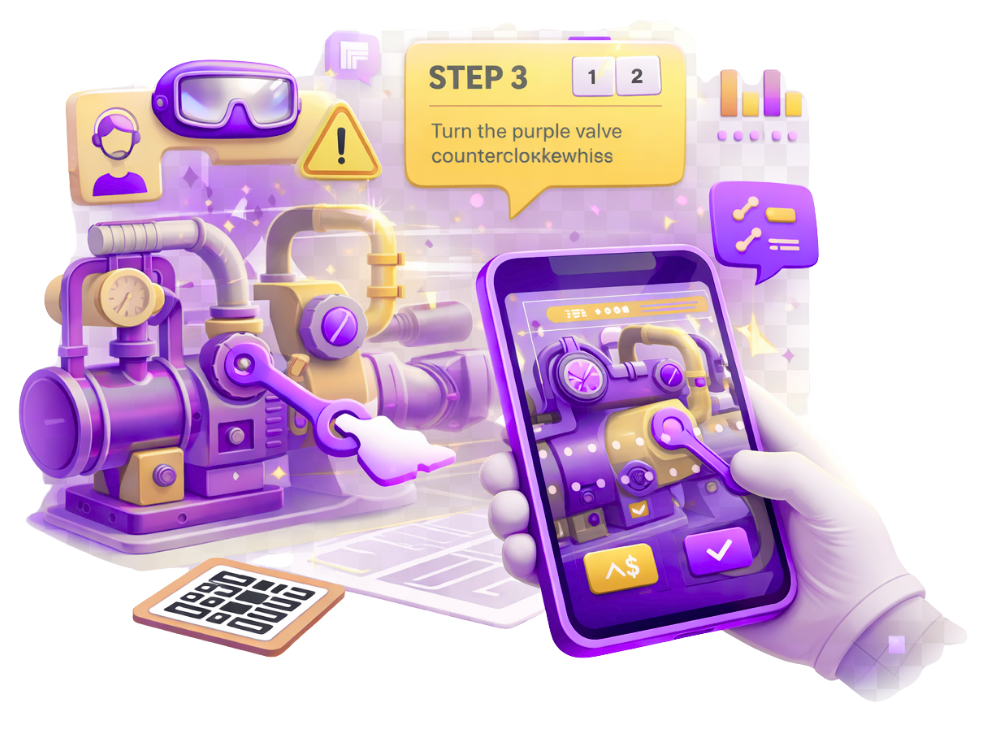
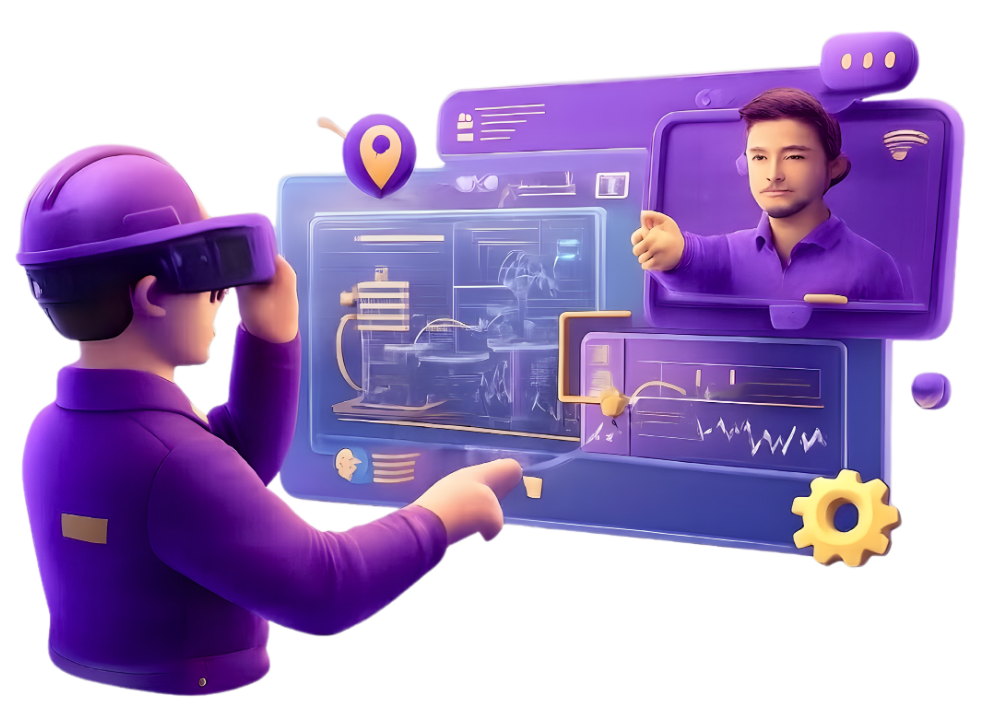
AR-guided repairs and remote expert assistance. We create AR applications
that display technical schematics,
highlight components, provide
diagnostic information, and enable
real-time collaboration between
technicians and experts.

AR gamification &
interactive experiences
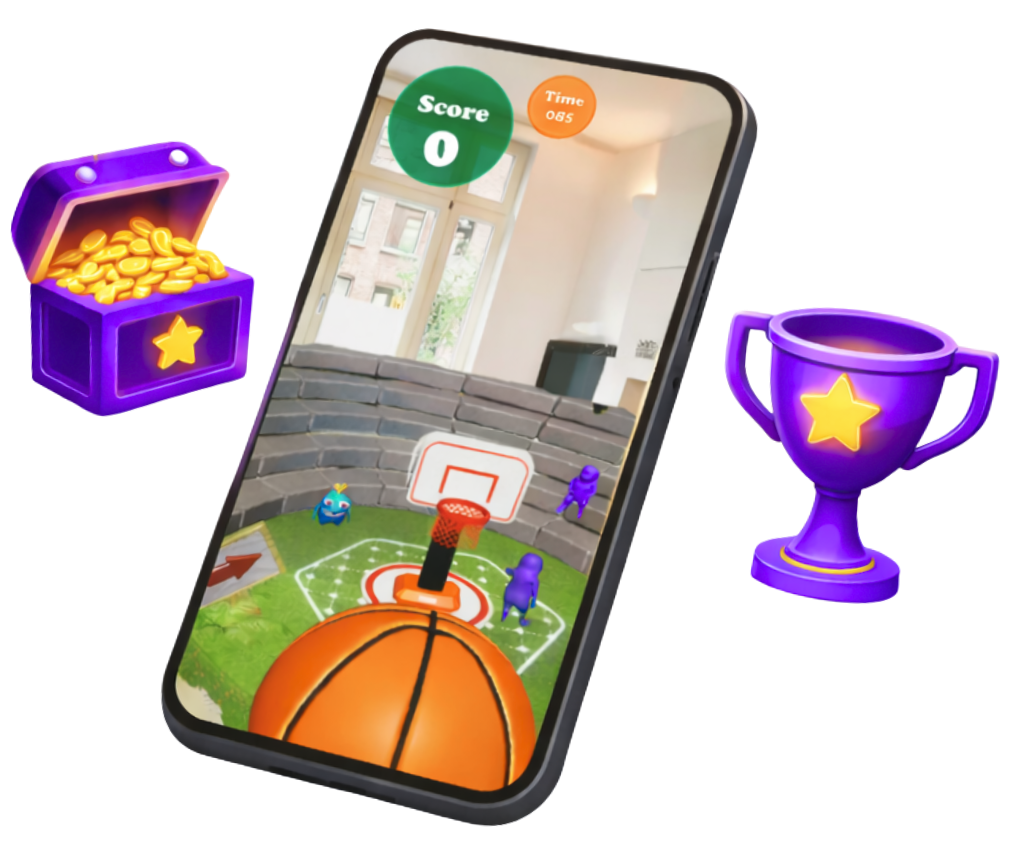
Boost customer engagement and retention through interactive AR challenges, collectibles, and rewards. We build AR game mechanics – progression systems, scoring, and multiplayer features – that turn physical environments into dynamic play spaces.

AR content optimization
& performance tuning
Ensure AR content loads fast, tracks accurately, and performs well on all supported devices. We optimize 3D
assets, memory usage, and rendering pipelines – maintaining framerate
stability even on lower-end hardware.
why choose algoryte for
AR development?
real-world
testing protocols
We test AR applications across diverse lighting conditions, surface types, and environmental scenarios to ensure tracking stability and accurate placement in actual use conditions.
performance-
optimized AR
assets
Our technical pipeline produces lightweight 3D models, optimized textures, and efficient rendering systems that maintain smooth frame rates and responsive interactions on mobile hardware.
cross-platform
AR expertise
We develop for the full spectrum of AR platforms – native mobile apps for iOS and Android, dedicated experiences
for AR glasses like HoloLens, Magic Leap, and Meta AR,
and browser-based WebAR solutions – implementing
platform-specific features while maintaining consistent
user experiences across all deployment options.
spatial
accuracy
focus
We prioritize precise object placement, stable anchoring,
and accurate scale representation – ensuring digital
content aligns correctly with physical environments.
continuous
tracking
optimization
Our team implements advanced tracking algorithms, handles edge cases, and builds recovery systems that maintain AR experiences even when environmental conditions challenge device sensors.
your space + our AR =
something worth pointing
your device at
our AR development
process
discovery & feasibility analysis
We evaluate your AR concept against technical constraints, assess device compatibility requirements, identify tracking challenges, and define success metrics for the experience.


AR prototype development
Our team builds functional prototypes focusing on
core tracking mechanisms, interaction patterns, and environmental responses – testing feasibility before full production begins.
3D asset creation & optimization
We model, texture, and optimize all digital content for
AR deployment – ensuring assets render efficiently while maintaining visual quality on target devices.


AR application development
We implement tracking systems, user interfaces,
interaction logic, and data integration – building
complete AR applications with robust error handling
and performance optimization.
real-world testing & refinement
Our team conducts extensive testing across different environments, lighting scenarios, and device types – refining tracking accuracy and user experience based
on real-world performance.


deployment & technical support
We handle app store submissions, provide deployment documentation, and offer ongoing technical support to
address issues and implement updates as AR platforms
evolve.
industries we have
worked with
retail & e-commerce
Customers preview products in their actual spaces before purchasing – placing furniture to check size and fit, trying on virtual accessories through smartphone cameras, navigating stores with AR wayfinding, and accessing product details by pointing devices at shelf items.
manufacturing & industrial
Technicians receive hands-free guidance overlaid on equipment – following assembly instructions that highlight components, accessing maintenance procedures beside machinery, conducting inspections with measurement overlays, and completing safety training with hazard warnings in real work environments.
real estate & architecture
Buyers visualize spaces beyond current conditions – touring properties with virtual furniture in empty rooms, planning layouts with digital fixtures, previewing renovations overlaid on existing structures, and tracking construction progress against digital plans.
education & training
Students interact with concepts anchored to physical environments – examining 3D anatomical models on desks, exploring historical reconstructions at present-day locations, conducting virtual lab experiments, and receiving hands-on guidance with instructions appearing on actual equipment.
healthcare
Medical professionals enhance precision through visual overlays – planning surgical approaches with 3D organ models on patients, visualizing veins for improved IV placement, explaining conditions with interactive demonstrations, and training on devices with instructional overlays.
gaming
Players dive into immersive worlds with enhanced interactivity – exploring expansive maps through AR overlays, battling augmented enemies in real environments, collecting virtual items scattered in physical spaces, and experiencing dynamic storytelling triggered by device movements.
marketing & advertising
Brands create memorable interactions beyond traditional media – launching campaigns triggered by scanning ads, unveiling products through AR at launch
events, activating experiential installations, and transforming packaging into storytelling platforms viewed through smartphone cameras.
our AR tech stack
AR frameworks


ARkit
ARcore
vuforia


wikitude
8th wall
3D development


unreal engine
unity
web AR


AR.js
A-frame
three.js
3D modeling


blender
maya
3Ds max
mobile development


swift
kotlin
react native
computer vision


open CV
tensor flow lite
cloud services


AWS
Azure Spatial Anchors
google cloud
FAQs
Modern AR works on most recent smartphones and tablets (iPhone 6S and newer for ARKit, Android devices with ARCore support). We also develop for AR glasses like HoloLens, Magic Leap, and Meta AR for enterprise applications. During discovery, we’ll assess your target audience’s devices and recommend the best approach.
Both options are available. Native apps provide the most robust tracking and feature sets, while WebAR delivers instant access through browsers without downloads. We’ll recommend the approach based on your distribution strategy, technical requirements, and target audience preferences.

Modern AR frameworks achieve centimeter-level accuracy under good conditions. Tracking stability depends on environmental factors like lighting, surface textures, and device movement. We implement multiple tracking methods and build recovery systems to maintain experiences even when conditions aren’t ideal.
Marker-based AR triggers content when scanning specific images or objects, providing reliable recognition but requiring physical markers. Markerless AR works anywhere by detecting surfaces and environments, offering more flexibility but requiring different technical approaches. We’ll recommend the right method based on your use case.
Simple marker-based experiences can take 4-8 weeks, while complex markerless applications with custom 3D content typically require 3-6 months. The timeline depends on feature complexity, asset creation requirements, platform targets, and integration needs. We’ll provide a detailed timeline after understanding your specific requirements.