





Overview
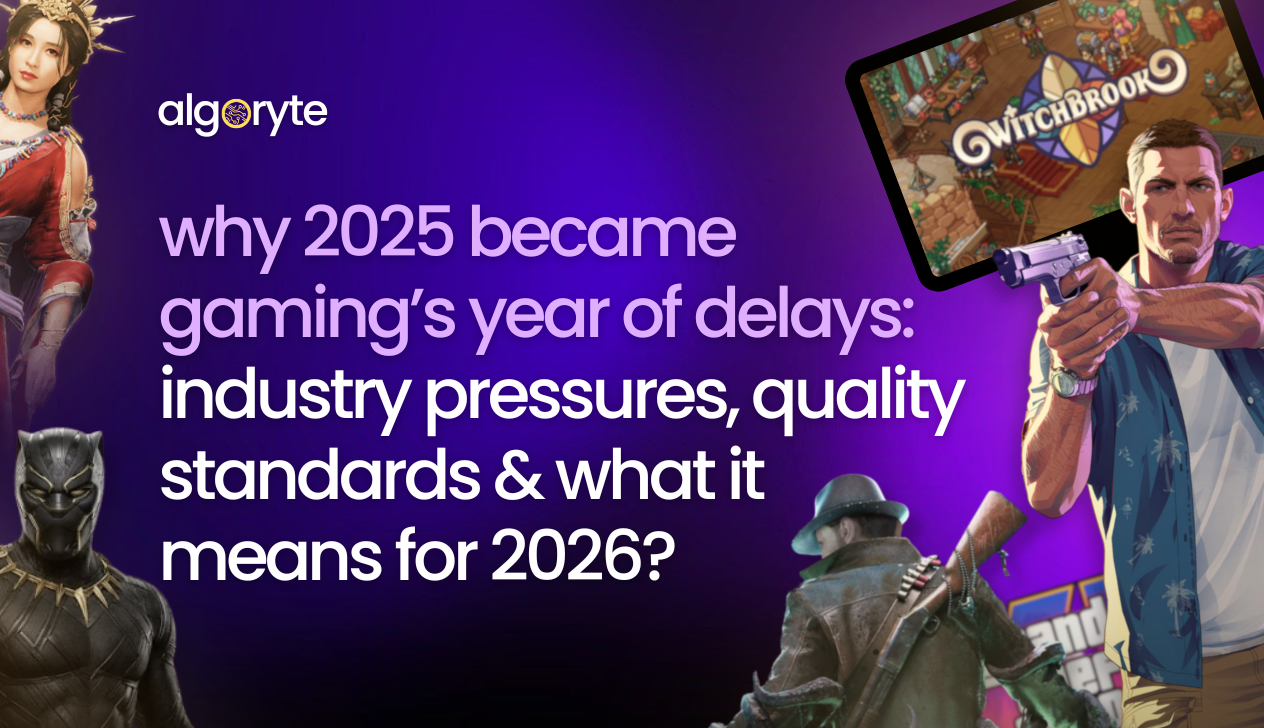
- 2025 became the gaming industry’s most delay-heavy year in recent memory, with major titles from GTA VI to Marvel 1943: Rise of Hydra pushed into 2026 as video game companies prioritized polish over deadlines, reflecting broader shifts in development culture where launching excellent video games matters more than meeting arbitrary release windows amid rising costs and player expectations.
- The unprecedented wave of delays – affecting AAA games, indie game studios, and everything between – signals fundamental changes in how the industry balances commercial pressure against quality standards, with GTA VI‘s double delay alone reshaping 2026’s entire release calendar and forcing developers across all game genres to reconsider their launch strategies in an increasingly unforgiving market.
The Games That Defined 2025’s Delay Crisis
GTA VI
It suffered the most dramatic delay saga of the year, slipping twice from its original fall 2025 target. Rockstar first pushed the game to May 26, 2026, citing quality concerns and the need for additional polish. Then, in November, the studio delayed again to November 19, 2026 – adding six more months to a wait that already spanned over a decade since GTA V‘s 2013 release.
The game developer king of open-world experiences, needing two delays in a single year, sent shockwaves through the industry. The double delay reshaped 2026’s entire release calendar as publishers scrambled to avoid competing with gaming’s most anticipated title.
Marvel 1943: Rise of Hydra
The game faced multiple setbacks that transformed its release window from concrete to completely uncertain. Originally targeting 2025, Skydance Games first delayed the title to early 2026 to “add more polish and make sure we give you the best possible experience.”
By November 2025, the game slipped again with no specific release window attached. The narrative-driven game marks the return of Uncharted director Amy Hennig to game design, focusing on Captain America and Black Panther during World War II. The uncertain timeline raises questions about whether the project faces deeper development challenges beyond simple polish needs.
Subnautica 2
It moved from its planned early access 2025 launch to a full 2026 release, though the delay came wrapped in controversy. Publisher Krafton fired Unknown Worlds’ leadership team shortly before the delay announcement, creating questions about whether the decision was purely development-focused or reflected deeper organizational turmoil.
The underwater survival sequel faces high expectations following the original’s success, and early access would have allowed iterative development based on player feedback. The delay to a complete 2026 release suggests either that the game needs significantly more work than initially anticipated or that the leadership changes disrupted planned timelines.
Witchbrook
The game emerged from years of silence during a Nintendo Direct earlier in 2025, thrilling fans with its gorgeous pixel game art and magical life sim premise. The announcement included a winter 2025 release window that seemed surprisingly close. But as months passed without further updates, the dreaded delay announcement arrived – Witchbrook now targets a vague 2026 window with no season specified.
Developer Chucklefish hasn’t detailed specific reasons beyond needing more time, though the game’s ambitious scope, combining life simulation, magic school attendance, and relationship building across different game genres, likely requires more development than initial estimates suggested.
The Sinking City 2
It shifted from its 2025 target to the first half of 2026, with developer Frogwares citing the need for additional polish. The Lovecraftian detective sequel aims to improve on the original’s ambitious but flawed execution, addressing criticism about repetitive gameplay and technical issues.
Frogwares operates as an independent studio, making delays financially difficult but necessary to meet quality standards. The first half of 2026 window gives some certainty compared to games with vague “2026” labels, suggesting development is further along, even if not quite ready for a 2025 release.
Why the Delays Kept Coming
Delays As A Way To Save Permanent Reputation Damage
The cascade of delays throughout 2025 reflects fundamental shifts in how the gaming industry balances commercial pressure against quality expectations in an environment where launching broken games destroys reputations permanently, while delays create only temporary disappointment. Development costs for AAA games now routinely exceed $100-300 million with marketing included, making the financial stakes of failure catastrophic – when individual projects cost as much as major Hollywood films, publishers increasingly choose delays over risky launches that could sink studios entirely.
The industry watched Cyberpunk 2077‘s disastrous 2020 release despite multiple delays demonstrate that even extra time doesn’t guarantee success, but more importantly, that launching too early creates damage requiring years to repair.
Players claim they want games released on schedule, but their purchasing behavior reveals they punish broken launches mercilessly through review bombs, refund demands, and viral social media campaigns that persist years after issues are fixed. This creates incentives where delays produce temporary complaints that players largely forget once games launch successfully, while broken launches generate permanent reputation damage that no amount of post-launch support can fully erase.
Game Design Complexity
The complexity of designing modern games has exploded as players expect massive worlds, photorealistic graphics, sophisticated AI, seamless multiplayer, extensive customization, robust accessibility features, and bug-free performance across multiple platforms simultaneously – each raised expectation adds development time that original schedules based on previous-generation standards didn’t anticipate.
The Concord effect loomed large as Sony’s $100+ million hero shooter lasted just two weeks before being pulled entirely, teaching the industry that mediocrity fails regardless of marketing spend or platform backing and that players have limited patience for derivative experiences in saturated game genres.
What This Means for 2026
The delays didn’t disappear – they stacked up in 2026, creating one of the most crowded and front-loaded release calendars in recent memory as publishers scramble to avoid GTA VI‘s November 19 gravitational pull:
- February 2026 suddenly features major releases, including Resident Evil Requiem and Nioh 3 – titles that would typically target fall windows but are fleeing to traditionally quiet months to gain separation from Rockstar’s juggernaut.
- March continues the rush with Crimson Desert and 007 First Light, creating unusual density in Q1 that historically saw lighter releases as publishers avoided post-holiday doldrums.
This front-loading happens because nobody wants to compete with GTA VI, but it creates new problems as these quality games now compete with each other rather than being spread throughout the year, potentially cannibalizing audiences that would have supported multiple releases if distributed across different months.
Player budgets become zero-sum when major releases cluster – when faced with five excellent video games launching in six weeks, most players prioritize certain titles and skip others regardless of quality, meaning some genuinely good games will underperform commercially, not because they deserve to but because the market simply can’t support everything simultaneously.
The New Normal
2025’s delay cascade reveals an uncomfortable truth that the industry is slowly accepting: the current game development model treats deadlines as goals rather than guarantees because complex creative projects resist precise scheduling across multi-year timelines involving hundreds of people and millions of interconnected systems.
The delays aren’t failures but acknowledgments of reality, representing cultural evolution toward prioritizing quality over arbitrary dates, sustainability over crunch, and realistic timelines over optimistic marketing promises, even when this evolution frustrates players, investors, and publishers expecting certainty in inherently uncertain creative processes.
Games will launch when they’re ready rather than when calendars say they should, and while this creates short-term frustration all around, it builds toward healthier long-term industry practices where excellent video games matter more than hitting announcements made years before under different circumstances. The sooner all stakeholders accept that “when it’s done” is an acceptable answer rather than a cop-out, the less painful future delays will feel, and the more realistic planning can become.
FAQs
1. Why did GTA VI get delayed twice in one year?
Rockstar needed additional development time beyond initial estimates to meet its quality standards for the most anticipated game ever, with the first delay moving the game from fall 2025 to May 2026, followed by a second delay to November 19, 2026, when the team determined they still needed six more months for proper polish, given the game’s massive scope and decade-long player expectations.
2. Will all these delayed games actually release in 2026?
Most games with specific 2026 dates will likely hit those windows, but games with vague “2026” labels (Marvel 1943, Witchbrook) face a higher risk of slipping again.
3. How does this affect the game industry financially?
Delays shift anticipated revenue into future fiscal years, disappointing investors and complicating financial planning, but publishers increasingly view delays as financially safer than launching broken games that require years of expensive reputation repair and generate permanent negative perception that damages long-term franchise value.
4. Should players stop trusting announced release dates?
Players should view announced dates as targets rather than guarantees, especially for games revealed years before launch, with dates closer to release (within 6 months) being more reliable, while distant announcements serve primarily marketing purposes that may not survive actual development realities.
5. What does this mean for game development going forward?
Expect longer development cycles, more conservative announcement strategies where studios wait until confident about timelines before revealing games, continued priority on quality over schedules, and industry-wide acceptance that complex creative projects resist rigid timelines regardless of planning efforts or budget size.