






Overview
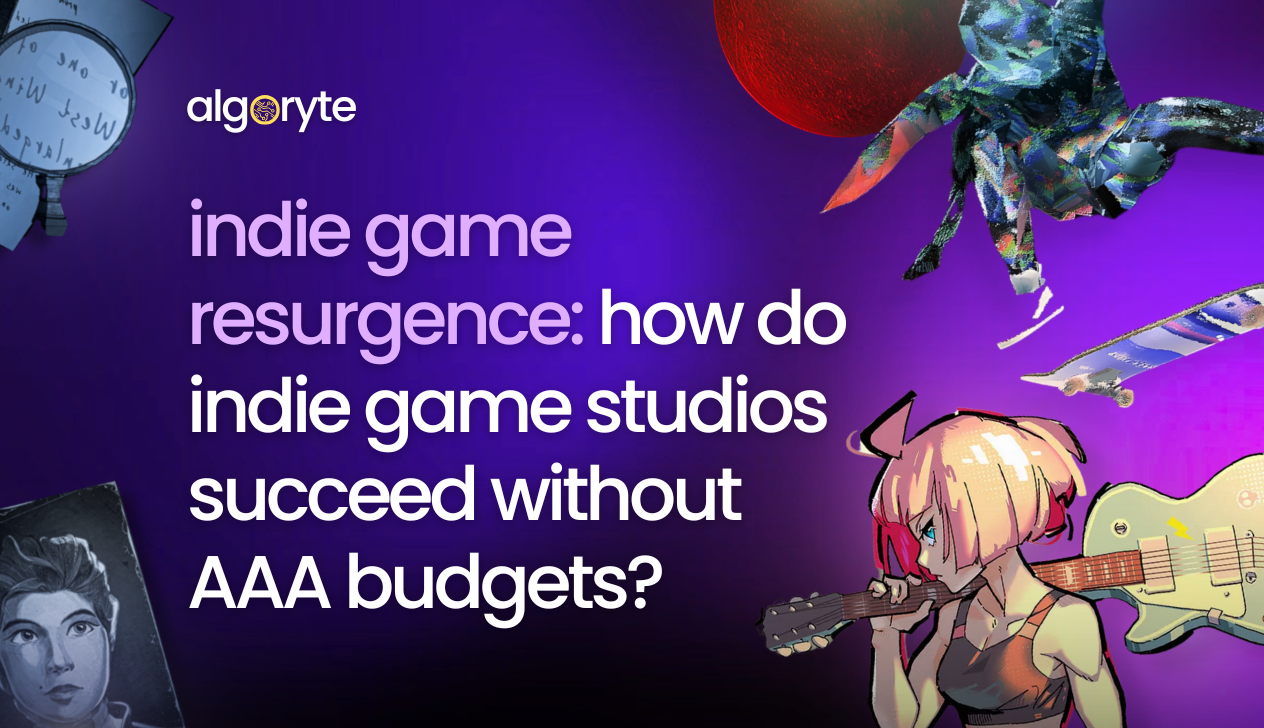
- Indie game studios demonstrate superior innovation through creative freedom impossible in AAA development, with 2025 releases like Skate Story (demon skateboarding to the moon), Unbeatable (rhythm game where music is illegal), and Blue Prince (roguelike puzzle in shapeshifting manor) showcasing how small teams deveoping indie games, unburdened by corporate oversight and market-driven game design committees produce distinctive game design that AAA games with hundred-million-dollar budgets consistently fail to match despite vastly greater resources.
- AAA studios avoid innovation because hundred-million-dollar budgets mean catastrophic consequences for failure, forcing reliance on proven formulas. Indie studios risk modest investments, enabling rapid iteration and experimental game genres without corporate approval. Innovation correlates more with creative freedom than budget size.
When Millions Can’t Buy Creativity
While major video game companies pour hundreds of millions into blockbuster titles, some of the most innovative and talked-about games come from small indie game studios working with fractions of those budgets. Three recent releases exemplify this creative disparity:
- Skate Story, a surreal skateboarding game about a demon skating to the moon.
- Unbeatable, a rhythm game set in a dystopia where music is illegal.
- Blue Prince, a roguelike puzzle game in a shapeshifting manor house.
These games share nothing in common except scale and creativity. They represent different game genres, employ different art styles, and target different audiences. Yet together, they illustrate why indie gaming continues punching above its weight, delivering experiences that massive studios with vastly greater resources struggle to match.
The question is why smaller teams with limited budgets consistently produce more innovative game design than companies with hundreds of developers and near-unlimited resources. Understanding this dynamic reveals fundamental truths about creativity, risk tolerance, and what innovation actually requires in modern game development.
What Are Indie Games?
Before examining why indie games excel at innovation, we need to define what “indie” actually means because the term has become increasingly blurred as the industry has evolved.
Independent games, or indie games, are typically developed by individuals or small teams without financial backing from major publishers. This independence manifests in several ways:
- Financial Independence: Indie developers fund projects through personal savings, crowdfunding, grants, or small investors rather than traditional publisher advances. This means they answer to themselves or small investor groups rather than corporate executives demanding specific returns.
- Creative Independence: Without publisher oversight, indie developers make creative decisions based on their vision rather than market research, focus groups, or corporate mandates about proven formulas.
- Scale & Team Size: Most indie game studios employ anywhere from one person to perhaps twenty or thirty, contrasted with AAA teams that can exceed hundreds or even thousands of people across multiple locations.
Generally, indie gaming refers to development unburdened by corporate oversight and market-driven creative restrictions. The independence matters because it directly enables the innovation we’re discussing. When you don’t need to justify every decision to executives concerned about return on investment, you can take risks that larger companies cannot.
What Is an AAA Game?
AAA games represent the industry’s highest production tier – massive-budget projects from major video game companies targeting broad audiences with cutting-edge graphics, extensive marketing campaigns, and production values comparable to Hollywood blockbusters.
Defining characteristics of AAA games include:
- Massive Budgets: Development costs typically range from $50 million to over $200 million, with marketing budgets often matching or exceeding development costs. Games like Grand Theft Auto V, Red Dead Redemption 2, or Cyberpunk 2077 reportedly cost hundreds of millions when combining all production expenses.
- Large Development Teams: AAA productions employ hundreds of developers across disciplines – programmers, artists, designers, writers, QA testers, producers, and more. Many involve multiple studios collaborating across continents.
- Extended Development Timelines: AAA games typically require 3-7 years of development, with some projects exceeding a decade from conception to release.
- Publisher Backing: Major publishers like Electronic Arts, Activision Blizzard, Ubisoft, Sony, Microsoft, and others fund AAA development, expecting substantial returns justifying massive investments.
- Marketing Saturation: AAA launches involve extensive marketing – television commercials, social media campaigns, influencer partnerships, and event presence at major gaming conventions.
The term “AAA” originally came from credit ratings, implying the highest quality and lowest risk. In gaming, it signals production scale and ambition rather than guaranteed quality – plenty of AAA games disappoint critically or commercially despite massive budgets.
The Innovation Paradox: Why Small Teams Outpace Giants
The central paradox of modern game development is that increased resources often correlate with decreased innovation. You’d logically expect that companies with more money, more talent, and more time would produce more creative, groundbreaking experiences. Reality proves otherwise.
Risk Aversion & Financial Stakes
When a game costs $100 million to develop, failure means catastrophic financial consequences. Studios get shuttered, hundreds of people lose jobs, and corporate leadership faces shareholder fury. These stakes create intense pressure to minimize risk by sticking with proven formulas.
AAA games increasingly converge around safe game design choices:
Open worlds with question mark icons indicating activities; crafting systems, experience points, and skill trees; cinematic storytelling with minimal player agency; and game mechanics proven successful in previous titles. This isn’t because AAA developers lack creativity – it’s because their employers demand predictable returns on massive investments.
Indie developers risk personal savings or modest crowdfunding goals. Failure hurts, but it doesn’t destroy companies employing thousands. This freedom from catastrophic consequences enables experimentation impossible in the AAA space.
Creative Vision vs. Committee Design
AAA game design involves countless stakeholders – executive producers, marketing teams, focus groups, platform holders, and corporate leadership all influence creative decisions. Each stakeholder adds requirements, constraints, or suggestions, supposedly improving market appeal.
The result is design by committee, where bold ideas get softened, unique game mechanics get modified toward familiarity, and distinctive visions become homogenized to appeal to the broadest possible audience. Historically, the highest-selling video games of all time rarely achieve that status through radical innovation – they succeed through polished execution of familiar concepts with mass appeal.
Indie developers make decisions quickly within small teams. If the lead designer believes demon skateboarding to the moon makes a compelling game, they build it. No executive questions whether “skateboarding demon” tests well with focus groups. No marketing team demands the concept be simplified for trailer comprehension.
Iteration Speed & Flexibility
AAA production pipelines involve extensive planning, documentation, and coordination across large teams. Changing direction mid-development means updating game design documents, communicating changes across departments, revising game art assets, rewriting code, and managing the ripple effects through interconnected systems.
Small indie teams pivot quickly. If a game mechanic isn’t working, they change it. If a narrative direction feels wrong, they rewrite it. If a visual style isn’t clicking, they shift approaches. The flexibility to iterate rapidly based on intuition and playtesting rather than scheduled milestone reviews enables refinement toward innovative ideas rather than away from them.
Skate Story: The Power of Surreal Concepts
Skate Story exemplifies indie innovation through its willingness to embrace absurdity as a core premise. You play as a demon made of glass, skateboarding through the underworld with the ultimate goal of skating to the moon and swallowing it. The game’s visual style combines abstract wireframe aesthetics with intense colour palettes, creating a distinctive look unlike anything in mainstream gaming.
The game design centers on skateboarding game mechanics but extracts them from realistic skateparks or street environments into surreal, symbolic landscapes. This creative freedom allows game mechanics to serve thematic and emotional purposes rather than slavishly recreating authentic skateboarding.
Why AAA Couldn’t Make This
No AAA studio pitching “demon glass skater swallows moon” receives greenlight approval from risk-averse executives demanding market research justifying the concept. The artistic vision requires complete creative freedom from market expectations, focus group validation, or demographic targeting. Skate Story exists because indie developers can pursue distinctive visions without justifying them to corporate oversight.
The game also demonstrates how constraints breed creativity. Unable to afford photorealistic graphics or motion-captured animation, the developers embraced abstract visual styles that became the game’s signature aesthetic. Limitations became strengths.
Unbeatable: High-Concept Narrative in Rhythm Games
Unbeatable takes the rhythm game genre and infuses it with a dystopian narrative premise – you’re part of a band in a world where music has been outlawed, committing “musical crimes” while on the run from authorities. The game blends anime-inspired visuals, an original soundtrack, and rhythm game mechanics with genuine narrative stakes and game character development.
Rhythm games typically prioritize game mechanics over story, treating narrative as window dressing for button-pressing challenges. Unbeatable invests equally in its narrative premise, creating emotional investment in the band’s journey while maintaining compelling rhythm gameplay.
The Innovation Lies in Synthesis
Rather than treating story and game mechanics as separate elements, Unbeatable uses rhythm gameplay to express narrative themes. The act of creating music becomes rebellion, with successful performance representing defiance against oppression. Game mechanics and narrative meaning align, creating thematic cohesion that pure gameplay-focused rhythm games lack.
AAA rhythm games exist – Rock Band, Guitar Hero, and various dance games achieve commercial success – but they emphasize licensed music, realistic instrument simulation, and party gameplay over narrative innovation. An anime-styled dystopian rhythm game about illegal music doesn’t fit established market categories, making it a tough sell for publishers seeking proven formulas.
Blue Prince: Roguelike Innovation Through Constraints
Blue Prince demonstrates how indie game studios innovate within established game genres by adding distinctive twists to familiar formulas. As a roguelike puzzle game set in a shapeshifting manor house, it takes the procedural generation and permadeath of roguelikes and applies them to spatial puzzle-solving rather than combat.
The manor’s architecture changes between runs, creating fresh puzzle configurations while maintaining coherent game design. Players must understand spatial relationships, predict transformations, and plan routes through hostile environments where enemies follow predictable patterns but the layout constantly shifts.
Game Genre Fusion as an Innovation
Blue Prince succeeds by combining elements from different game genres in unexpected ways. Roguelikes typically emphasize combat and resource management. Puzzle games traditionally feature fixed, hand-crafted challenges. Blue Prince fuses procedural generation with puzzle game design, creating emergent challenges that feel both fair and unpredictable.
This type of genre experimentation represents lower financial risk for indie developers. If the puzzle-roguelike fusion doesn’t resonate with audiences, a small team loses a modest investment. If an AAA studio experiments with game genre fusion and fails, executives face difficult questions about why they greenlit such experiments instead of proven game genres with established audiences.
The Sustainable Innovation Ecosystem
The gaming industry benefits from the coexistence of both AAA productions and indie innovation. Each serves different purposes and audiences, and the relationship between them drives the medium forward in complementary ways.
Indie Studios as R&D Labs
Indie games function as the industry’s research and development laboratories, experimenting with concepts, game mechanics, and ideas without the commercial pressure that constrains AAA development. When indie experiments succeed, they validate concepts that AAA studios then refine and scale for broader audiences.
Games like Minecraft, Stardew Valley, Among Us, and countless others began as indie projects that proved markets existed for concepts publishers initially dismissed. Their success demonstrated audience appetite for experiences that AAA studios weren’t providing, leading to increased investment in similar concepts.
AAA Studios as Refiners & Scalers
When innovative concepts prove successful at the indie scale, AAA studios bring resources that elevate production values, expand scope, and introduce innovations to mainstream audiences who might never encounter indie titles.
The Battle Royale game genre emerged from indie modifications before AAA studios like Epic Games (Fortnite) and Activision (Call of Duty: Warzone) refined the formula for massive audiences. The survival crafting game genre exploded through indie hits before AAA studios explored the space with higher production values.
A Healthy Ecosystem Requires Both
Innovation needs indie freedom from commercial pressure, but it also benefits from AAA resources, bringing innovations to broader audiences. The gaming landscape would suffer if either disappeared – all AAA would mean stagnation, while all indie would limit the medium’s technical advancement and accessibility.
Conclusion: The Value of Small-Scale Ambition
Skate Story, Unbeatable, and Blue Prince represent just three examples of indie innovation thriving in 2025, but they illustrate broader truths about creativity, risk, and what’s required to push gaming forward. These games exist because small teams with limited resources and complete creative freedom can take chances that massive studios with extensive resources cannot.
This doesn’t make indie games inherently superior to AAA productions – both serve important purposes in the gaming ecosystem. But it proves that innovation correlates more strongly with creative freedom than budget size. Some of the most distinctive, memorable, and influential games come from developers working with constraints that would seem crippling to AAA studios accustomed to massive budgets.
The industry needs both AAA polish and indie innovation. But when discussing which sector pushes game design forward and takes the creative risks that expand what games can be, 2025’s indie releases provide a clear answer – innovation thrives at small scale with big ambition, not big budgets with small vision.
FAQs
1. What’s the most sold game ever, and was it indie?
Minecraft is the best-selling video game of all time, with over 300 million copies sold. It started as an indie game created by Markus “Notch” Persson in 2009 before Microsoft acquired it for $2.5 billion in 2014. Other top sellers include Grand Theft Auto V (around 200 million) and Tetris (various versions totaling 500+ million). Minecraft proves indie games can achieve massive commercial success while maintaining creative innovation.
2. How much money has Minecraft made?
While exact figures vary, Minecraft has generated an estimated $10 to $12 billion in total lifetime revenue, driven by game sales (over 300 million copies), merchandise, mobile microtransactions (over $1 billion), and subscriptions, with around $4.2 billion from base game sales alone.
3. What makes a game “indie” versus “AAA”?
Indie games are developed by small teams (under 30 people) without major publisher backing, maintaining creative independence through personal funding or crowdfunding. AAA games are massive-budget productions ($50-200+ million) from major publishers with hundreds of developers and extensive marketing. The key difference is independence – indie developers control creative decisions, while AAA studios answer to corporate executives demanding predictable returns.
4. Why can indie studios innovate more than AAA developers with bigger budgets?
AAA budgets create catastrophic failure consequences, forcing risk aversion and committee-driven game design where bold ideas get softened. Indie developers risk modest investments, enabling experimentation without corporate approval. Small teams iterate faster and pursue distinctive visions without focus groups or market research that homogenizes AAA design. Financial independence means creative freedom.
5. How do games like Skate Story get made when the concepts seem so unusual?
Creative freedom from corporate oversight allows indie developers to pursue surreal concepts without executives demanding market research. Small funding structures (personal savings, crowdfunding) don’t require the broad demographic appeal that AAA publishers mandate. Constraints also breed creativity – unable to afford photorealistic graphics, developers embrace distinctive styles that become signature aesthetics.