



Overview
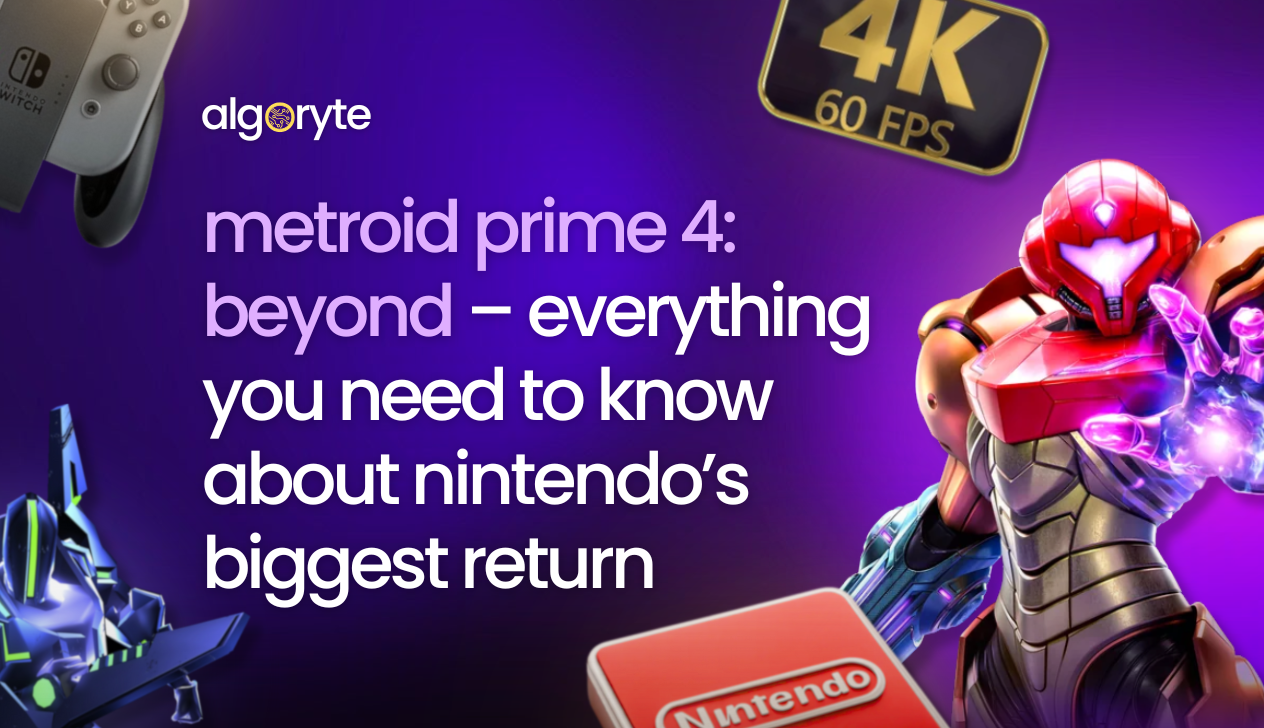
- Metroid Prime 4: Beyond is a long-awaited follow-up to the original trilogy, confirmed for a December 4, 2025, release on Nintendo Switch and Nintendo’s upcoming successor console, with development restarted from scratch in 2019 under Retro Studios after the first version failed to meet Nintendo’s standards.
- The game preserves classic exploration-driven first-person gameplay while adding psychic-style abilities, the Vi-0-La motorcycle for traversing larger areas, and a new alien world (Viewros with the Lamorn civilization), making it both a nostalgic return and a modernized evolution of the Metroid Prime formula.
After 18 years, Samus Is Finally Back
18 years after Metroid Prime 3: Corruption (2007), Samus Aran’s next first-person adventure is finally approaching. Metroid Prime 4: Beyond is confirmed for December 4, 2025, on Nintendo Switch and its next-generation successor (often referred to as “Switch 2”).
Whether you’re a longtime Metroid fan or curious about what makes this return so significant, here’s everything we know so far.
A Rocky Road to Release
Metroid Prime 4 was first announced at E3 2017 with nothing but a logo – no gameplay, no details, just a promise that the beloved series would return.
Behind the scenes, development was troubled. The project was initially handled by a different studio (widely reported to be Bandai Namco), but progress reportedly failed to meet Nintendo’s internal quality bar.
In January 2019, Nintendo made a rare, very transparent public announcement:
Development was being completely restarted.
In a video message, Senior Managing Executive Officer Shinya Takahashi explained that the project “had not reached the standards we seek in a sequel to the Metroid Prime series,” and that Nintendo was scrapping that version and starting over with Retro Studios, the original team behind the Metroid Prime trilogy.
Under Retro Studios, the team has been expanded with talent who’ve previously worked on major FPS and AAA franchises, and the studio has modernized its tools and pipelines to target both current Switch hardware and Nintendo’s more powerful next-gen console.
Why the Original Trilogy Matters
To understand why Metroid Prime 4: Beyond carries so much weight, you have to look back at the original Metroid Prime trilogy.
When Metroid Prime launched on GameCube in 2002, many fans were skeptical about turning a 2D side-scrolling series into a first-person game. The result quickly became one of the most acclaimed games of all time, praised for how it blended:
- Atmospheric, lonely exploration instead of constant action.
- A scan visor that rewarded curiosity with deep lore and world-building.
- Non-linear world design that encouraged backtracking with new abilities.
- Distinctive art direction and a haunting soundtrack.
- A careful balance of combat, platforming, and puzzle-solving.
Metroid Prime 2: Echoes (2004) and Metroid Prime 3: Corruption (2007) were strong follow-ups, but many fans still regard the first game as the untouchable masterpiece. Prime 3 ended with a tease: a mysterious ship, believed to belong to rival bounty hunter Sylux, following Samus – a thread that remained unresolved for nearly two decades.
Metroid Prime 4: Beyond is positioned as the next major step in that legacy, with Sylux finally taking a more central role.
What’s New in Metroid Prime 4: Beyond
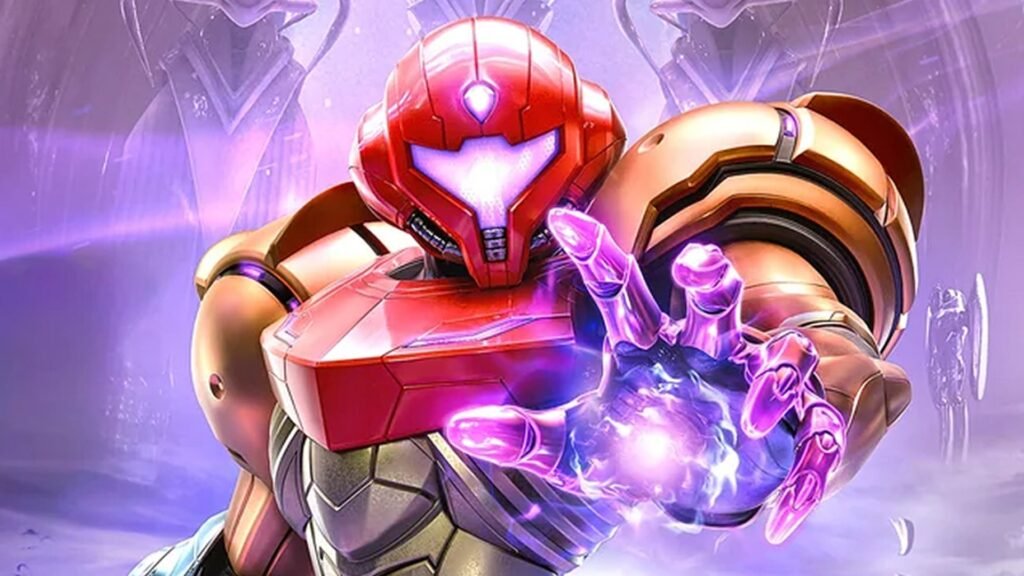
From previews and official materials, Metroid Prime 4: Beyond aims to preserve the core exploration-driven, first-person adventure formula while introducing new systems and broader environments suited to modern hardware.
Returning classic elements include:
- First-person exploration using Samus’s arm cannon and multiple visor modes.
- Morph Ball traversal through tight tunnels, vents, and hidden paths.
- Scanning environments and enemies for lore, hints, and tactical advantages.
- Non-linear progression gated by new abilities and suit upgrades.
- Atmospheric isolation on hostile alien worlds with strong environmental storytelling.
New additions confirmed so far:
- Psychic-style abilities that let Samus redirect or bend beam trajectories and interact with alien technology in new puzzle and combat scenarios.
- A new traversal vehicle, the Vi-0-La motorcycle, used to cross larger and more open areas while still anchoring exploration in Metroid-style level design.
- A new planet, Viewros, featuring the alien civilization known as the Lamorn, bringing fresh environments, culture, and lore to uncover.
- A stronger narrative focus, with more cinematics and game character interactions, while still retaining the series’ preference for environmental storytelling.
- Sylux taking a prominent role as an antagonist with a personal grudge against both Samus and the Galactic Federation.
The motorcycle and more open hub-like areas are intended to address a common criticism that earlier Prime worlds could feel relatively compact by modern standards. According to previews, the game keeps tight, intricate interior spaces but connects them with larger landscapes that justify faster traversal.
The psychic abilities are one of the most distinctive changes: rather than feeling like a bolt-on gimmick, early hands-on impressions suggest they’re integrated into both combat (redirecting shots, manipulating enemy positions) and puzzle design (remote interactions, energy routing, and device control).
Cross-Generation Release on Switch & Nintendo’s Next Console
Nintendo has confirmed that Metroid Prime 4: Beyond will launch on both Nintendo Switch and its next-generation console, widely referred to as “Switch 2”.
On the next-gen system, previews and listings report:
- A 4K 60 FPS “quality” mode.
- A 1080p 120 FPS “performance” mode.
- Noticeably improved textures, lighting, and particle effects compared to the original Switch version.
- Support for a “Joy-Con mouse” style control option for more precise aiming, using a flat surface and sensor input instead of traditional thumbstick control.
For the current Nintendo Switch, Nintendo has not released full technical breakdowns yet, but the game is developed to run properly on the older hardware – likely at lower resolution and frame rates compared with the next-gen version. The aim is clearly to make the game accessible to the massive existing Switch install base while letting the successor hardware show what Retro’s updated tech can really do.
Do You Need to Play the Previous Metroid Prime Games First?
Nintendo and Retro Studios are clearly positioning Metroid Prime 4: Beyond as approachable for newcomers, even though it carries forward elements established in the trilogy. Current messaging and preview coverage suggest:
- You can start with Prime 4. The game reintroduces game mechanics gradually and isn’t framed as a direct continuation of the old Phazon storyline.
- However, playing Metroid Prime Remastered on Nintendo Switch is strongly recommended if you want to understand why fans hold the series in such high regard. It’s widely praised both as a remaster and as a timeless game in its own right.
For returning fans, Prime 4 appears to reward franchise knowledge with references, returning elements (like Sylux), and thematic callbacks – but it isn’t locking newcomers out behind 20 years of lore.
The Bottom Line (So Far)
Metroid Prime 4: Beyond represents:
- A rare public reboot of a major Nintendo project after a failed initial development phase.
- Nintendo’s commitment to letting Retro Studios carry the series forward while embracing more modern hardware and design expectations.
- One of the flagship cross-generation titles meant to showcase why Nintendo’s next console matters while not abandoning the original Switch audience.
It may not yet be clear whether Prime 4 will reach the same legendary status as the 2002 original, but everything shown so far suggests a project that takes the series’ legacy seriously and tries to extend it rather than replace it.
FAQs
1. Do I need to play previous Metroid Prime games before playing Prime 4?
No. Metroid Prime 4: Beyond is being designed as a good entry point for newcomers. The game mechanics are introduced gradually, and the story isn’t a direct continuation of the old Phazon arc. That said, playing Metroid Prime Remastered on Switch is an excellent way to understand the tone, pacing, and design philosophy that Prime 4 is building on.
2. What’s the difference between the Switch and the next-gen (Switch 2) versions?
The next-gen version offers major technical upgrades. Previews report a 4K/60 FPS quality mode and a 1080p/120 FPS performance mode, along with improved textures, lighting, and effects, plus a Joy-Con “mouse” control option for precise aiming. The original Switch version is being optimized to run well on older hardware, but with lower resolution and frame rate.
3. Why has Metroid Prime 4 taken so long to develop?
The game was announced in 2017, then effectively rebooted in 2019 when Nintendo scrapped the initial version and assigned Retro Studios to rebuild it from the ground up. On top of that, the project now has to support both current Switch hardware and Nintendo’s next-gen console, adding cross-generation complexity. The result is a development timeline of at least eight years from announcement to planned release.
4. What new features set Metroid Prime 4 apart from the earlier games?
New features include:
- Psychic-style abilities that let Samus bend beam trajectories and interact with alien tech in fresh puzzle and combat scenarios
- The Vi-0-La motorcycle for traversing larger areas and connecting more open-ended regions to classic Metroid-style spaces
- The new world of Viewros, home to the Lamorn civilization, expanding the universe’s lore
- A stronger emphasis on cinematics and character interactions, while still leaning heavily on environmental storytelling
Core game mechanics like scanning, Morph Ball traversal, visor systems, and ability-gated exploration all return.
5. Is Metroid Prime 4 worth planning for if I’ve never played Metroid before?
If you enjoy atmospheric first-person exploration, environmental puzzles, and deliberate combat pacing rather than pure run-and-gun action, Metroid Prime 4: Beyond looks like a strong candidate for your radar. Because it’s designed to be newcomer-friendly while still rewarding long-time fans, a good approach is:
- Play Metroid Prime Remastered now if you’re curious and want to see where the hype comes from.
- If you like that experience, Prime 4 is shaping up to be a natural next step when it lands in 2025.