





Overview
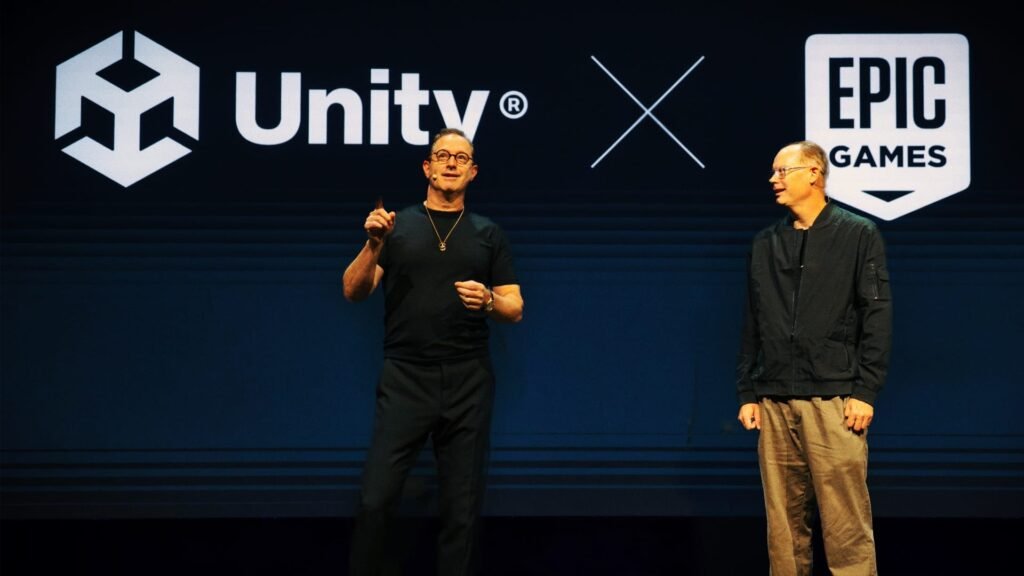
- Unity Technologies and Epic Games announced a historic partnership at Unite 2025, bringing Unity-developed games into Fortnite’s creator ecosystem and adding Unreal Engine support to Unity’s cross-platform commerce tools. The Unity Epic Games collaboration opens the door to greater interoperability between engines while both companies continue to compete on core features and pricing. While the initial partnership focuses on Fortnite integration and commerce, it also signals a longer-term push toward reduced fragmentation and deeper interoperability in the engine ecosystem.
- The collaboration can benefit indie game studios by reducing fragmentation in where and how they ship games, giving AAA studios new distribution and commerce options across multi-engine portfolios, supporting broader game development training, and responding to competitive pressures from tech giants and developer demands for less fragmentation in the engine ecosystem.
Introduction
In an unexpected development, Unity Technologies and Epic Games – longtime competitors in the game development engines space – announced a strategic partnership at Unite 2025. This collaboration between the two dominant forces in game creation represents a seismic shift in an industry historically defined by fierce competition between Unity Engine and Unreal Engine games.
For years, developers have debated Unity vs. Unreal, choosing sides based on project needs, expertise, and platform targets. The Unity engine dominated mobile and indie development with its accessibility and cross-platform strengths, while Unreal captured the AAA market share with cutting-edge graphics and robust tooling. Now, these rivals are joining forces in ways that could fundamentally reshape how games are built, distributed, and experienced across the entire industry.
Understanding what this partnership means requires examining what each company brings to the table, what they’re actually collaborating on, and how this affects developers currently building games made with the Unity engine or games on the Unreal Engine.
The Partnership: What Was Announced
The Unity-Epic Games partnership centers on several key collaborative initiatives announced during the Unite 2025 keynote, each addressing specific pain points developers face when working with game development engines:
1. Unity Games Inside the Fortnite Ecosystem
One concrete pillar of the partnership is making it possible for Unity-built games and experiences to run inside Fortnite, alongside content created with Unreal Editor for Fortnite (UEFN). Instead of having to rebuild their projects in Unreal, Unity developers will be able to adapt compatible experiences to publish into Fortnite’s massive player ecosystem, opening up new discovery, monetization, and community opportunities.
For developers, this means Fortnite becomes less of an “Unreal-only” playground and more of a shared distribution surface. Unity teams keep using their existing engine, workflows, and tools, but gain a new way to reach players through one of the world’s largest live service games – without a full engine migration.
2. Shared Distribution & Commerce Infrastructure
One of the most concrete parts of the partnership is about where games can be distributed and how money flows. Unity and Epic announced two big moves: bringing Unity games into Fortnite as a distribution surface, and adding Unreal Engine support to Unity’s cross-platform commerce platform.
Unity Games in Fortnite
Unity and Epic plan to let creators ship Unity-built experiences into Fortnite’s ecosystem, similar to how Unreal UEFN creators publish islands today. For developers, this effectively turns Fortnite into a new discovery and distribution channel, without forcing them to switch engines. A Unity project can target traditional platforms and live inside Fortnite’s massive player base, opening up new reach and monetization options.
Unreal Support in Unity’s Commerce Stack
Unity will extend its cross-platform commerce platform (the one powering web shops, catalog management, and multi-provider payments) to support games built with Unreal Engine. That means Unreal developers will be able to use Unity’s commerce tools to manage digital catalogs, payment providers, pricing, promotions, and regional web shops across PC, mobile, and web – all through a single integration.
For developers, this shifts the conversation from “which engine has the better walled garden?” to “how can I use shared infrastructure to sell and distribute my game regardless of engine?” Unity and Epic still compete on core engine tech, but they’re clearly willing to collaborate on distribution and commerce where both ecosystems – and their developers – stand to benefit.
3. Collaborative Developer Tools & Standards
While the initial partnership focuses heavily on distribution and commerce infrastructure, this collaboration opens the door for longer-term improvements in how developers work across engines. Many in the industry hope to see progress toward more unified development standards – such as consistent approaches to game data formats, player identity systems, and analytics workflows – that would reduce fragmentation and simplify cross-engine support.
Nothing in this area has been formally announced, but Unity and Epic’s decision to cooperate where it benefits developers suggests a shift toward broader ecosystem alignment in the future.
What This Means for Different Developer Segments
The Unity-Epic partnership impacts various developer communities differently depending on their project types, team sizes, and current engine investments:
For Indie Developers & Small Studios
Indie game studios gain most immediately from new distribution and monetization options, along with the longer-term push toward better interoperability. Many indie studios experiment with both game development engines, using Unity for mobile projects while exploring Unreal for more graphically ambitious titles. Historically, this meant maintaining completely separate skill sets and asset libraries.
The partnership benefits indie developers through:
- Reduced learning curve barriers when moving between engines for different projects, as both companies increasingly highlight shared principles and similar workflows in their educational material.
- Greater flexibility in choosing the right tool for specific projects without worrying as much about fragmenting studio expertise across completely separate ecosystems.
For studios currently debating Unity vs. Unreal for upcoming projects, the partnership suggests the choice becomes less binary – teams can potentially leverage both engines’ strengths within their overall development pipeline without the historical penalties of switching.
For AAA Studios & Large Developers
Large studios often already use multiple game development engines across different projects. EA uses both Frostbite (proprietary) and Unreal, while other publishers maintain projects spanning Unity and Unreal based on team expertise and project requirements.
The partnership particularly helps AAA developers with:
New cross-platform distribution and commerce options, such as bringing Unity-built experiences into Fortnite while also using Unity’s commerce tools with Unreal titles, without having to standardize on a single engine.
AAA studios also benefit from reduced “engine lock-in” concerns. When choosing game engines for decade-long franchises, studios historically worried about being unable to switch engines if requirements changed. Improved interoperability reduces these risks by making future migration less costly and disruptive if studios decide to shift parts of their pipeline or new projects to a different engine.
For Educational Institutions & Aspiring Developers
Game development education faces challenges when Unity vs. Unreal debates force choosing a single engine for curricula, potentially disadvantaging students by narrowly focusing their skills. The partnership eases these educational challenges.
Educational benefits include:
- Curriculum development becomes more flexible when shared standards mean concepts taught for Unity transfer to Unreal and vice versa, allowing institutions to cover game development principles rather than just engine-specific training.
- Student portfolios gain value when projects demonstrate understanding of game development fundamentals applicable across game engines, rather than just proficiency in specific tools that may change industry preference.
- Career preparation improves as graduates understand both major game development engines and can work comfortably across either, based on employer or project needs, rather than being limited to single-engine job opportunities.
The partnership implicitly acknowledges that game development education should focus on principles and problem-solving rather than just tool mastery, benefiting the next generation of developers.
Strategic Motivations: Why Now?
Understanding why Unity Technologies and Epic Games chose a partnership over continued competition reveals industry pressures and opportunities driving this historic collaboration:
Competitive Pressure from Outside Gaming
Both Unity and Epic face competition not just from each other but from tech giants entering the game development engine space. Amazon’s Lumberyard (now Open 3D Engine), Google’s various gaming initiatives, and increasing interest from Microsoft, Apple, and others in gaming infrastructure create competitive pressures beyond the traditional Unity vs. Unreal dynamic.
Partnering allows Unity and Epic to present a united front, defending their combined market dominance against well-resourced competitors who could fragment the market further. Together, they represent the vast majority of the third-party game engine market share – a position worth defending collaboratively.
Developer Community Demands
Developers have increasingly voiced frustration with fragmentation in game development tools and infrastructure. Managing separate asset pipelines, learning curves, and networking systems for different engines creates inefficiencies that developers want resolved.
The partnership responds directly to developer feedback requesting more interoperability, shared standards, and reduced friction moving between game engines. By addressing these pain points collaboratively, both companies strengthen relationships with development communities increasingly willing to choose alternatives if major engines don’t evolve to meet changing needs.
Economic Realities of Modern Game Development
Game development costs continue escalating while success remains unpredictable. Studios need flexibility, experimenting with different approaches without committing exclusively to a single game development engine before knowing what works for specific projects.
The partnership acknowledges economic realities where rigid engine choices impose unnecessary risk. Allowing developers to leverage both the Unity engine and Unreal Engine strengths for different aspects of development or different projects reduces risk while potentially increasing overall engine adoption across more projects per studio.
What Doesn’t Change: Continued Competition
Despite partnership announcements, Unity Technologies and Epic Games remain competitors in fundamental ways. The collaboration focuses on specific interoperability and standards initiatives, not merging companies or eliminating competition between game engines.
Both companies will continue competing on:
- Core engine features and capabilities, where Unity vs. Unreal debates around graphics quality, performance, workflow efficiency, and platform support remain relevant based on project-specific needs.
- Pricing and licensing models where each company independently determines costs for using their respective game development engines, potentially using competitive pricing as differentiation.
- Exclusive features and innovations where proprietary technologies, tools, and capabilities unique to each engine continue to develop independently, providing reasons developers choose one over the other.
- Developer acquisition and retention, where each company continues marketing advantages, building communities, and attracting developers to their ecosystems through support, documentation, and evangelism.
The partnership represents selective collaboration in areas benefiting the broader industry while maintaining healthy competition, driving innovation in game development engines.
Timeline & Implementation
The first practical outcomes of the Unity–Epic partnership are expected during 2026, including the ability for Unity-built games to launch inside Fortnite and for Unreal-based titles to use Unity’s cross-platform commerce tools.
Beyond these confirmed milestones, both companies have expressed interest in expanding collaboration, but detailed timelines for additional interoperability features have not been announced.
Implications for the Future of Game Development
This partnership signals broader shifts in the game development industry beyond immediate technical benefits, suggesting directions the field may evolve over the coming decade:
From Engine Wars to Ecosystem Collaboration
The Unity-Epic partnership potentially marks a transition from the “engine wars” mentality, where game engines competed zero-sum for exclusive developer loyalty, toward ecosystem collaboration, recognizing developers benefit from interoperability and shared standards more than from forced exclusivity.
Other game development engines may need to join this collaborative approach or risk being isolated in increasingly interconnected development ecosystems. Open standards emerging from the Unity-Epic collaboration could become industry expectations that new engines must support to gain developer adoption.
Potential for Additional Industry Partnerships
If the Unity-Epic collaboration succeeds, similar partnerships addressing other fragmentation points in game development become more likely. Asset store consolidation, cross-platform player identity systems, unified analytics standards, and shared development tools could emerge from additional industry collaborations.
The partnership establishes a precedent that competitors can collaborate on infrastructure, benefiting entire industries while maintaining competition on user-facing features and services, differentiating their offerings.
Impact on Platform Holders & Publishers
Console manufacturers, mobile platform holders, and publishers may find their influence over game development engines shifted by the Unity-Epic alignment. When the two dominant engines coordinate, their combined developer bases give them substantial leverage in negotiations with platforms over policies, revenue sharing, and technical requirements.
This could benefit developers if Unity and Epic use coordinated influence advocating for developer-friendly platform policies, or create concerns if the partnership consolidates power in ways that prioritize engine company interests over broader developer communities.
Conclusion
The Unity Technologies and Epic Games partnership represents one of the most significant developments in game development engine history, signaling that even fierce competitors recognize benefits from selective collaboration, addressing industry-wide challenges. For developers, this marks an early step toward reduced friction when working across game engines – especially in distribution and commerce – and greater flexibility in choosing appropriate tools for different projects without being locked into a single ecosystem.
The partnership doesn’t eliminate Unity vs. Unreal debates – both game engines maintain distinct strengths, making them better choices for different project types. Unity continues excelling at cross-platform development, rapid iteration, and accessibility, while Unreal remains the graphics powerhouse with robust AAA tooling. What changes is that choosing between Unity Engine and Unreal Engine games becomes less all-or-nothing, with developers able to leverage both when appropriate.
Whether you’re building games made with Unity, developing games on the Unreal Engine, or planning future projects across multiple game development engines, this partnership expands possibilities while maintaining the competition and innovation that have made both engines industry leaders. The future of game development looks less like choosing sides in engine wars and more like strategic tool selection from increasingly interoperable options serving the ultimate goal:
Creating great games that players love.
FAQs
1. Does this partnership mean Unity and Unreal are merging into one engine?
No, the Unity engine and Unreal Engine remain completely separate game development engines with distinct features, strengths, and licensing. The partnership focuses on letting Unity-built games publish inside Fortnite and on adding Unreal Engine support to Unity’s cross-platform commerce tools. Both companies continue to compete on core engine capabilities, pricing, and exclusive features.
2. Can I start using cross-engine features immediately?
Not yet. The first concrete outcomes – Unity-built games publishing inside Fortnite and Unreal Engine support in Unity’s cross-platform commerce tools – are expected to start rolling out in 2026. Beyond that, both companies have signaled interest in doing more together, but no detailed roadmap has been announced.
3. Will this partnership make Unity vs. Unreal debates irrelevant?
No, choosing between Unity and Unreal remains important based on project-specific needs. Unity’s cross-platform strengths and Unreal’s graphics capabilities remain distinct. The partnership reduces penalties for choosing “wrong” engines by making asset migration and cross-engine work easier, but doesn’t eliminate meaningful differences between game engines.
4. How does this affect games already made with Unity or Unreal Engine?
Existing games made with Unity or games on the Unreal Engine aren’t automatically affected – the immediate impact is mainly about new distribution (Fortnite) and commerce options. If future interoperability features go beyond those areas, studios may choose to integrate them into existing titles, but nothing specific has been detailed yet.
5. Should indie developers wait to start projects until partnership features are available?
No, continue developing with whichever game development engines best fit the current project needs. The partnership provides future benefits but doesn’t invalidate existing workflows or engine choices. Start projects now with engines you know, and consider how future interoperability might benefit subsequent projects as partnership capabilities become available.