



 Al Services
 Blockchain and Web3 Development
Data Science
Blockchain and Web3 Development
Data Science
 Game Development
 Game Art
 VR/XR Development
 Resource Augmentation
Al Services
Blockchain and Web3 Development
Data Science
Game Development
Game Art
VR/XR Development
Resource Augmentation
Resource Augmentation
Al Services
Blockchain and Web3 Development
Data Science
Game Development
Game Art
VR/XR Development
Resource Augmentation
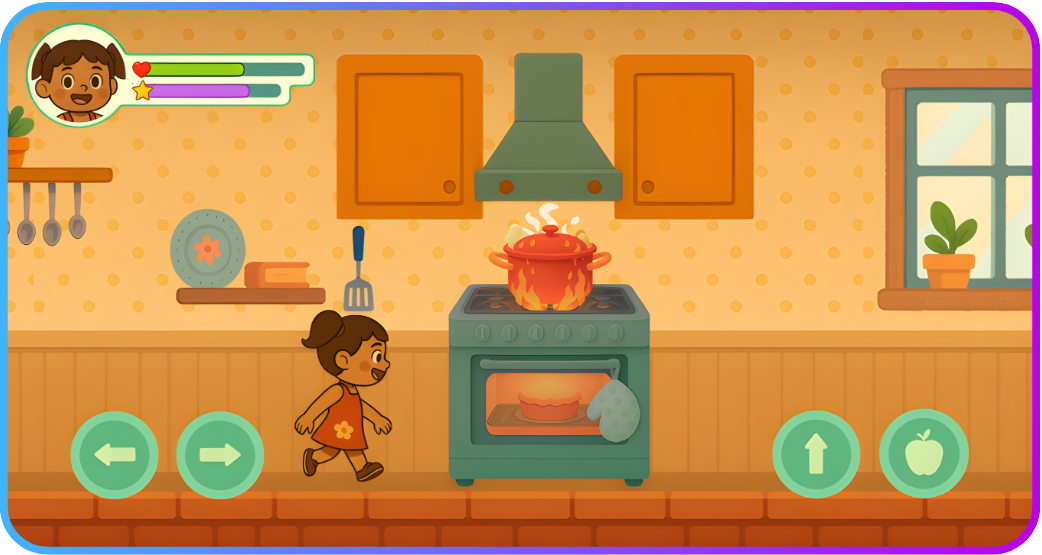
Bladder Defender is a platformer game developed for health-related educational and learning purposes. The game centers on bladder hygiene, with preschoolers and elementary school-aged children (ages 3-10) as the primary audience and their parents as the secondary audience who can provide oversight during the gaming experience.
The aim is to seamlessly blend education with gaming – making learning enjoyable, enhancing knowledge retention, and encouraging the practical application of learned concepts.
Given that Bladder Defender is designed for children, it is developed for mobile devices, iPads, and tablets to ensure accessibility and ease of use for young players. The game offers a single-player experience with two player modes and three different levels.
With its relatable and dynamic backdrop, levels, characters, objects, and props, the goal is to educate the children on bladder health matters while keeping the gameplay engaging and captivating for them.
The client briefed our team to develop an educational game for preschool and elementary school children that focuses on bladder hygiene awareness and recognition of good foods and bad foods in a fun and intuitive way. They wanted a casual game that teaches children about healthy bladder habits in a non-traditional learning format.
As a gaming studio, we have extensive experience in transforming one-liner game concepts into full-fledged, functioning, and playable games. Researching the game concept and target audience, we came up with the following major consultations:
Focusing on the concept, “You’re what you eat”, we created awareness for kids around good foods and bad foods and the results that each of these foods has on the bladder, urinary tract, and gut health.
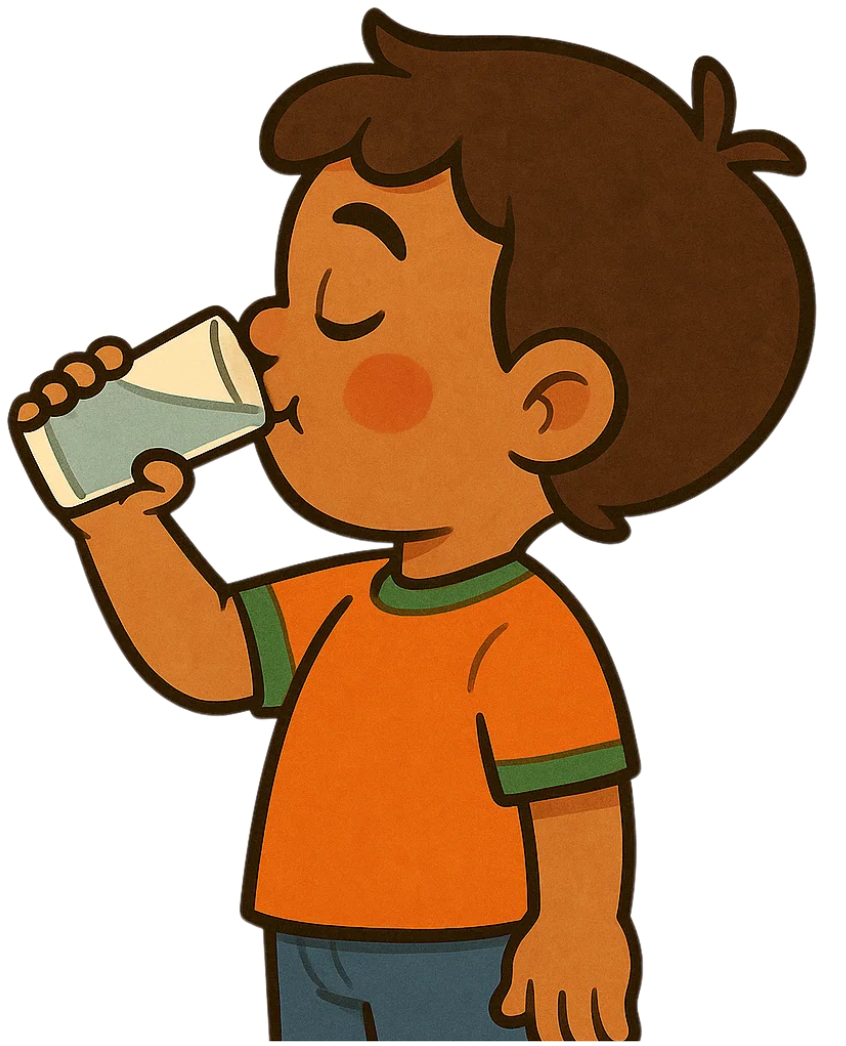
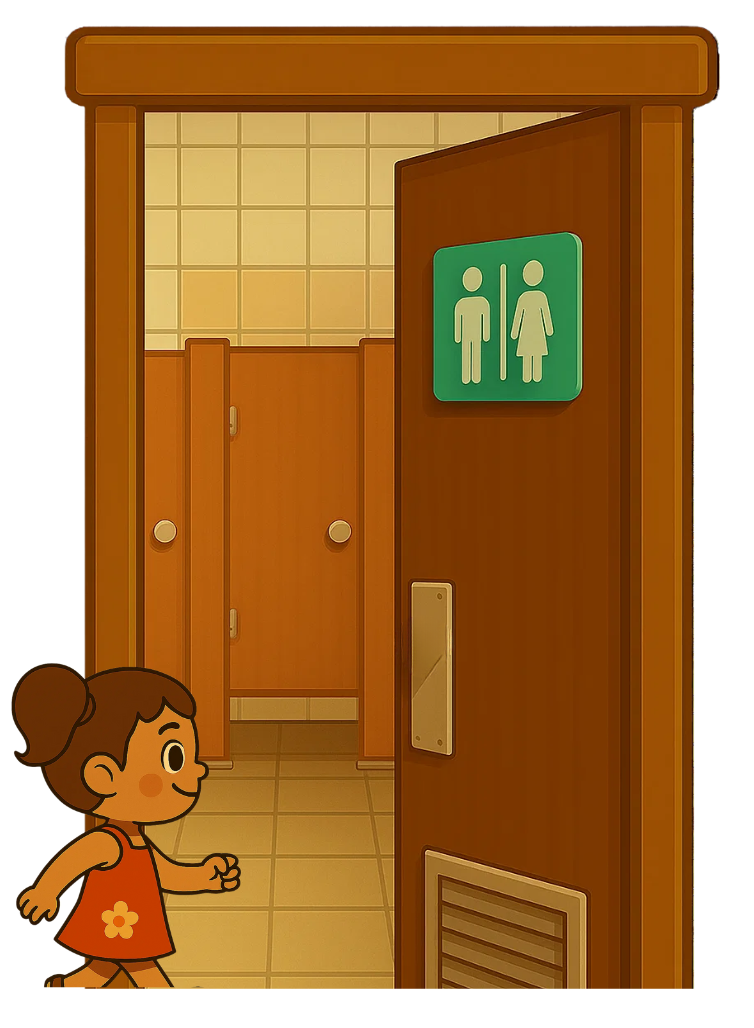
We introduced necessary check-ins in the gameplay to promote the importance of water intake and taking timely washroom breaks throughout the day for better gut and bladder health.
Through this game, we wanted the kids to learn that non-advisable, unhealthy actions can lead to adverse outcomes affecting their physical, emotional, and mental health, but we also wanted to keep the door open for redemption. We wanted children to take away the understanding that making mistakes is completely normal – they can always learn and start over.
We have also incorporated adult supervision in the game through non-intrusive pop-ups that maintain the child’s uninterrupted gaming experience. It ensures that important instructions, safety messages, or educational cues are delivered at appropriate moments, helping children receive support when needed.
The game’s concept art and moodboarding are grounded in thorough research to ensure accuracy, relevance, and educational value. Extensive medical consultations and studies on bladder health and hygiene informed the game’s content, while research into effective art styles and UI/UX principles guided visual and interactive design choices.
As it is an educational game with a health-related theme, we conducted detailed primary and secondary research on bladder health. We consulted urologists, and read and analyzed studies and research papers to base our game on medically correct information. The research was done on the following topics to ensure accuracy and usefulness:
The recommended daily fluid intake by age, the best drinks for bladder health, and drinks to avoid.
How often kids should urinate and the importance of not holding urine for too long.
We identified the following foods as good and bad, keeping in mind their utilization while developing the game:
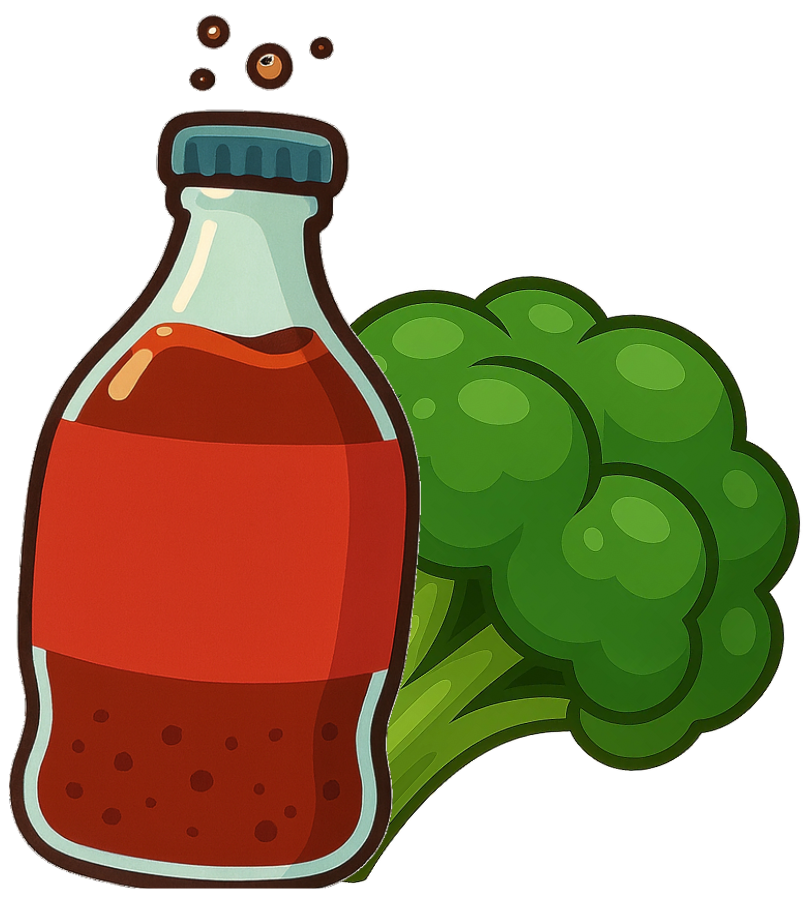
Water, Milk, Fruits, Berries, Green vegetables, Lean proteins, Whole grains, and Fibre-rich foods.
Carbonated beverages, Spicy and oily foods, Sugar and artificial sweeteners, Cookies, and Chocolates.
Overactive bladder, infrequent voiding, and warning signs like urgency, leakage, or infections.
Importance of listening to the body’s signals and taking timely bathroom trips.
This information guided our game’s content to teach kids good bladder habits, encourage regular bathroom use, and promote healthy lifestyle choices around hydration and hygiene.
Based on the game’s central theme and story, we selected 2D flat art as our chosen visual style because it offers significant artistic freedom and strong opportunities for narrative building. Its quality lies in its simplicity, clarity, and approachability – using clean lines, light colors, and minimal shading to make visuals appealing and easy to understand for young children.
Additionally, 2D flat art is highly versatile and scalable across devices. By maintaining harmony in style, color, and readability, this art style effectively supported our game’s educational goals by making information clear for preschool and elementary-aged players.
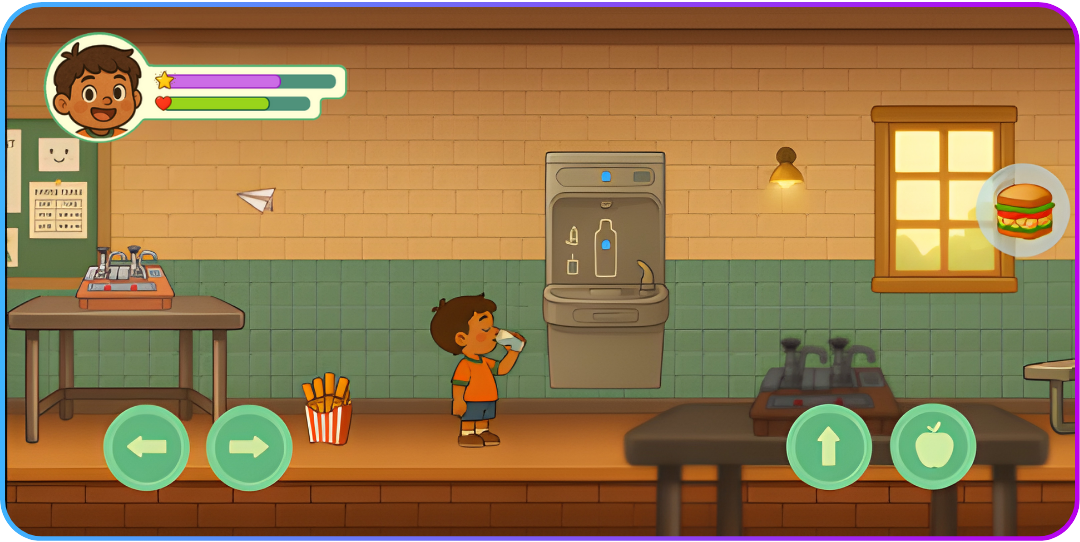
The UI/UX design of the game has been carefully crafted to create a seamless and supportive experience tailored for young players. By focusing on accessibility and responsiveness, the interface ensures that children can navigate and interact with the game effortlessly while staying fully immersed in the learning process:
Considering real-world distractions and shorter attention spans, we crafted the game environment to be minimally stimulating for children, incorporating thoughtful pacing of challenges and obstacles alongside a natural rhythm of jumping and running to sustain their interest. The game’s atmosphere, characters, and props feature neutral, pastel color palettes, soft music, and gentle, non-aggressive actions. This clean and straightforward design supports player focus on key game elements without overwhelming them with unnecessary details or visual clutter.
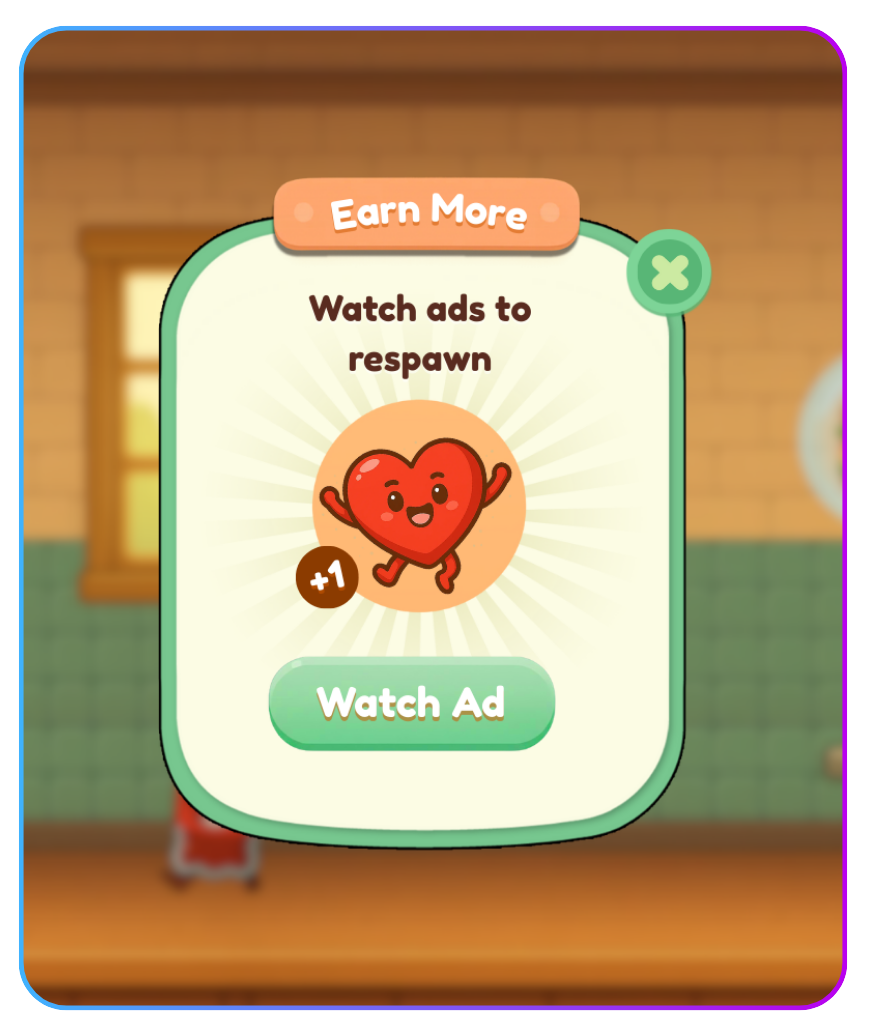
UI is designed to be simple and easy to navigate, with clear buttons and icons that preschool and elementary-aged children can understand and use without frustration.
As it is a kids’ learning game, interactive elements
are designed to provide immediate visual or auditory feedback, keeping players informed about their actions.
To preserve visual and sound balance, the UI complements the overall soft aesthetic with subtle design elements, avoiding overly flashy visuals and jarring sound effects that could saturate the screen. Both playable and non-playable characters are designed to blend smoothly into the environment.
The text is encouraging and motivating, carefully crafted to avoid making players feel bad about mistakes.
The UI is optimized for touchscreens, with appropriately sized touch targets for little fingers.
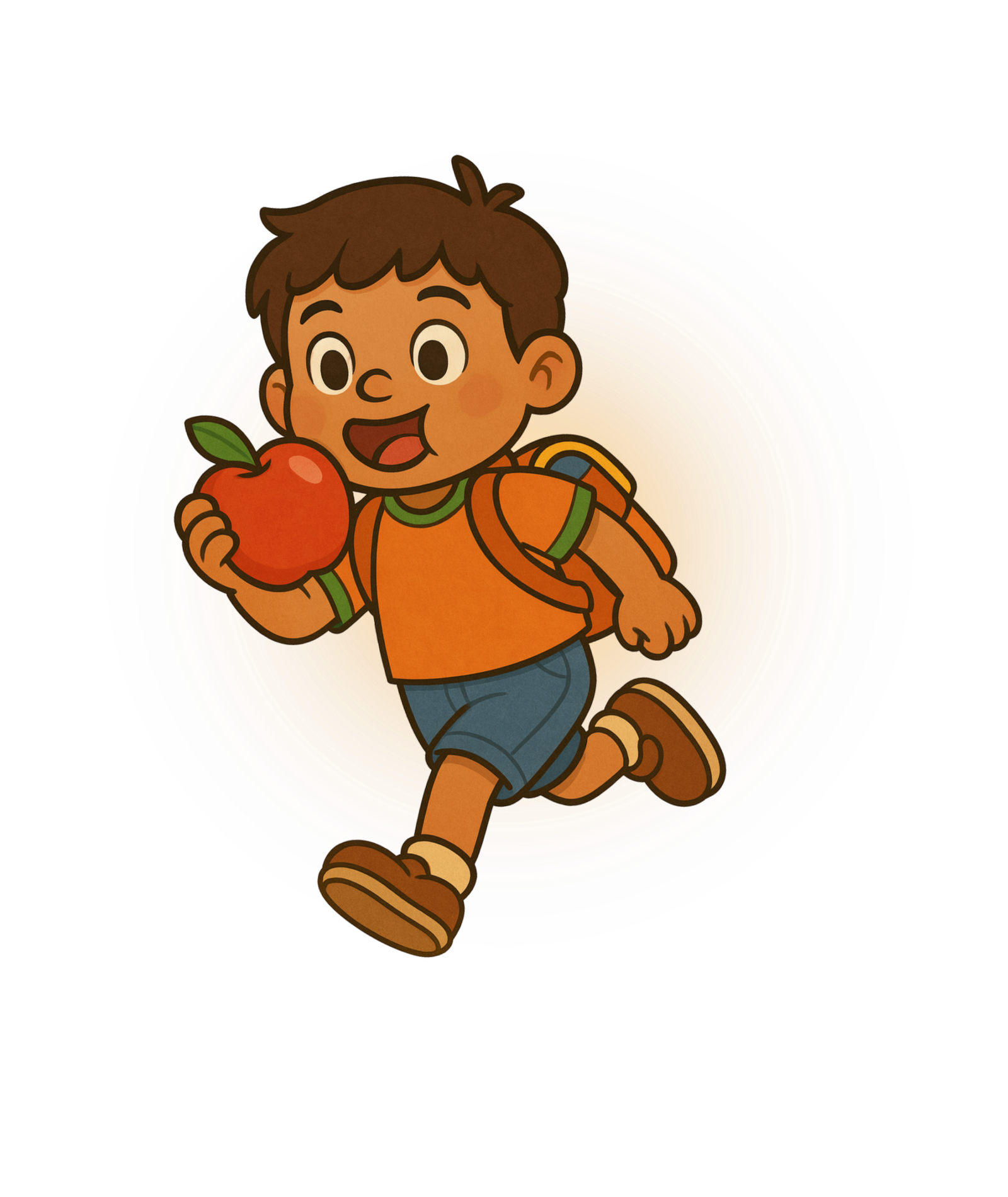
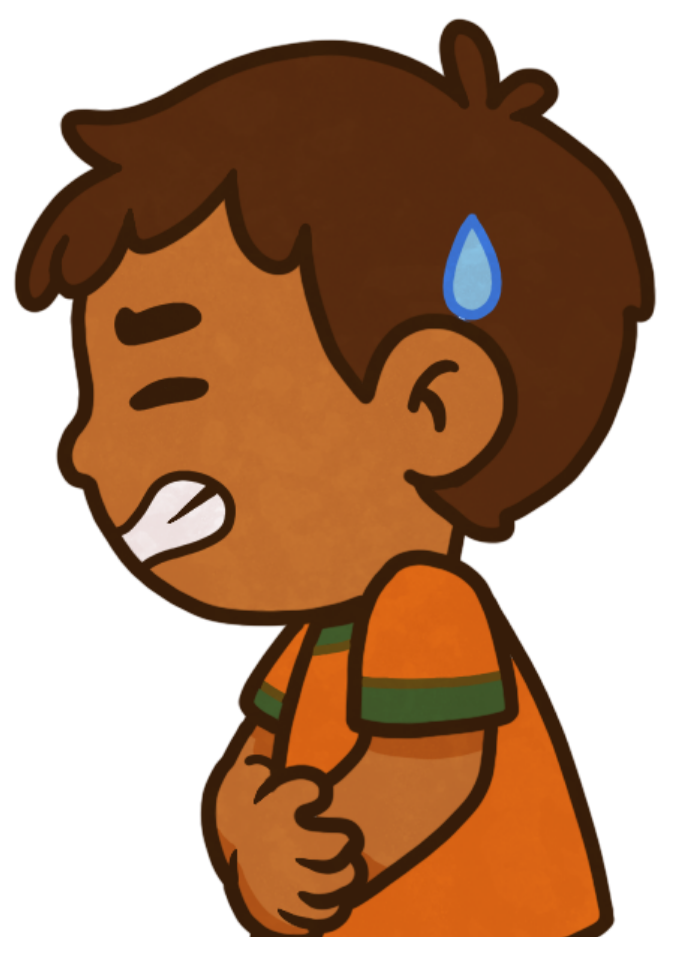
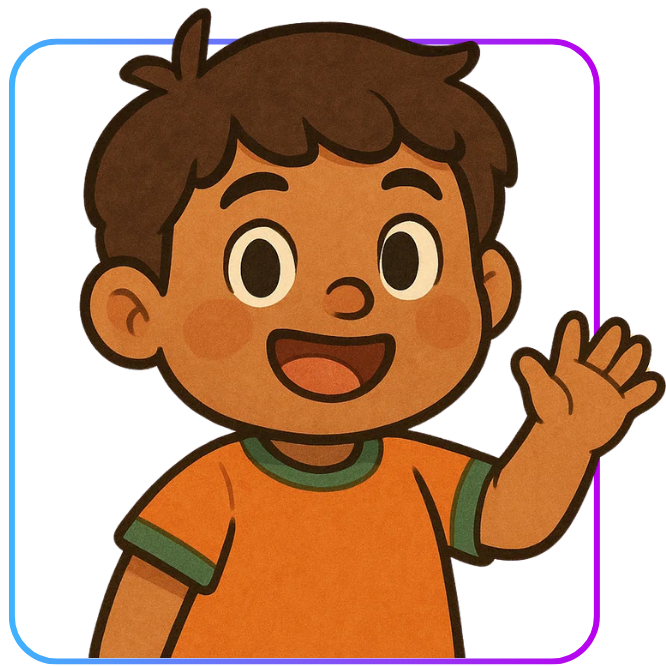
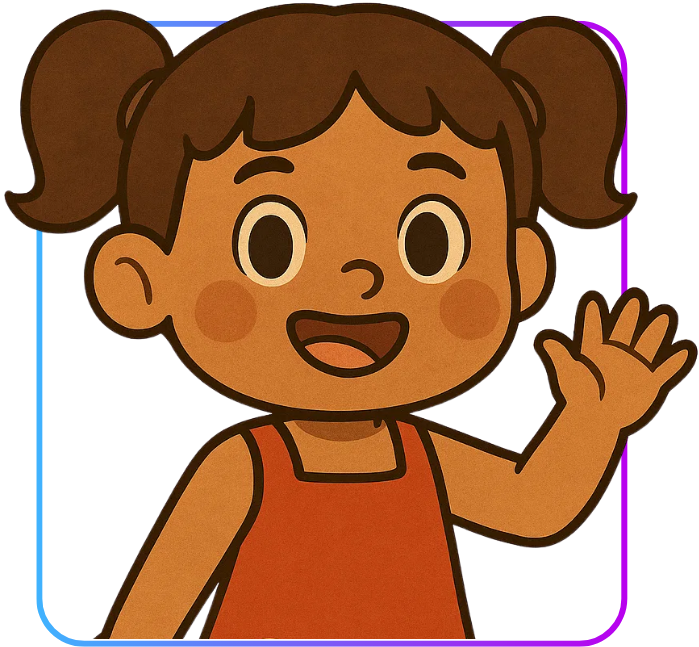
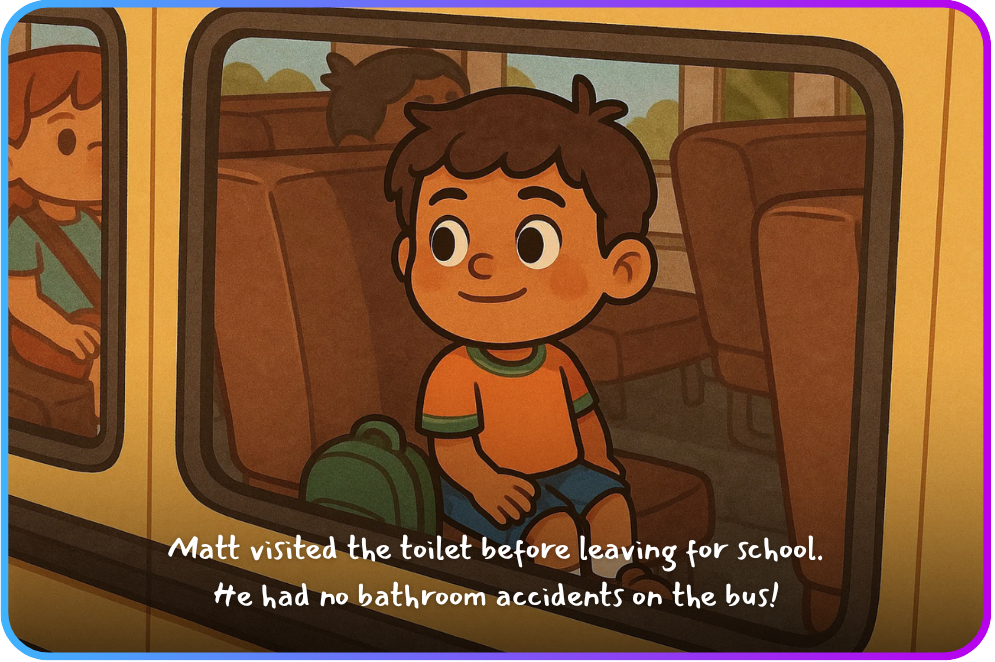
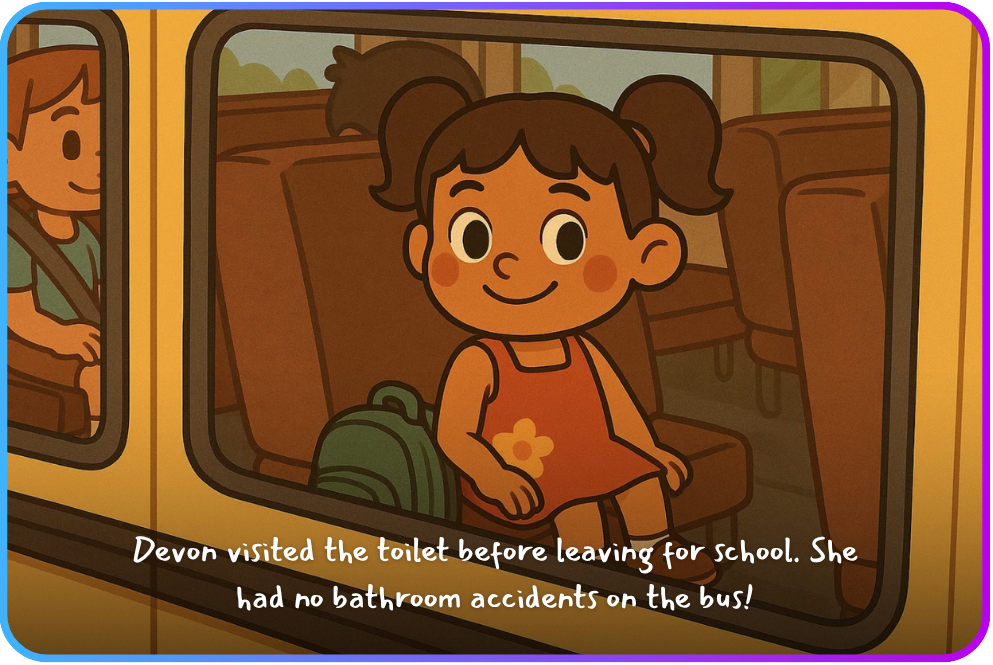
There are two main characters in the game, i.e., male and female elementary school-going kids, for the two player modes:
We used observational research as a primary source of inspiration, specifically by closely watching real elementary school children to capture realism-based body movements (walking, running, jumping) and facial expressions (happy, worried, weeping). The team drew from a diverse set of cultural references to create ethnicity- and race-neutral characters.
In addition to that, we referenced cross-cultural studies on child play behaviors to identify universal elements that transcend cultural boundaries. Our process included gathering extensive visual references, conducting iterative concept sketches, and validating designs against the intended user experience, ensuring the characters fit well within the educational game’s context.
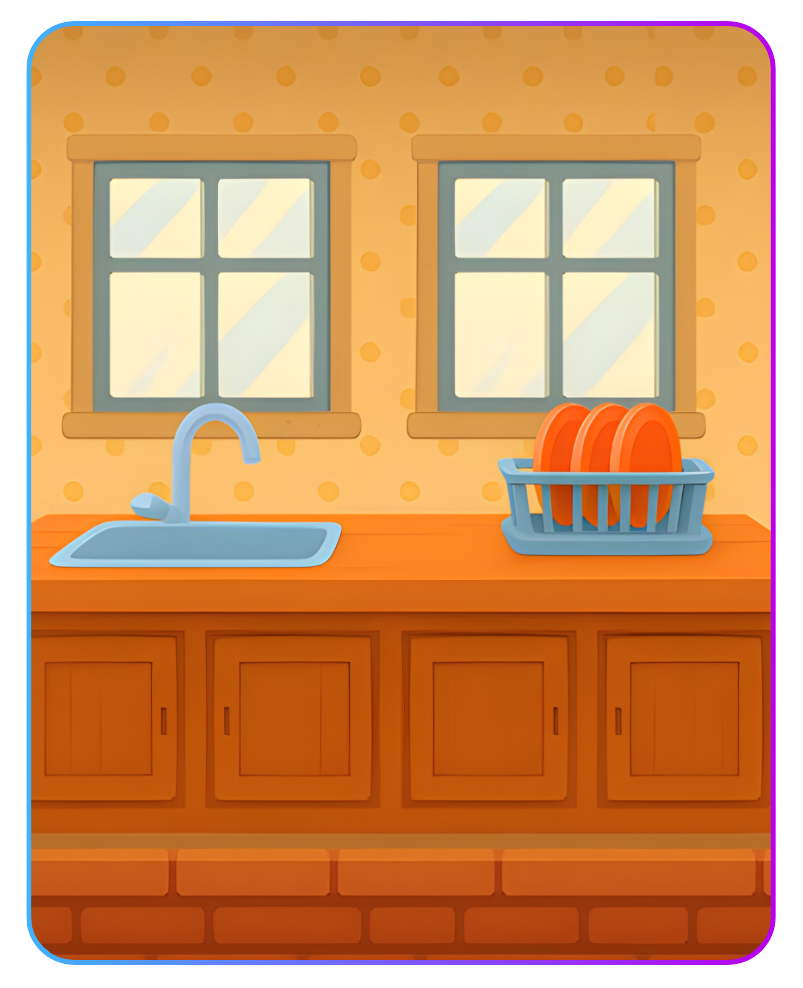
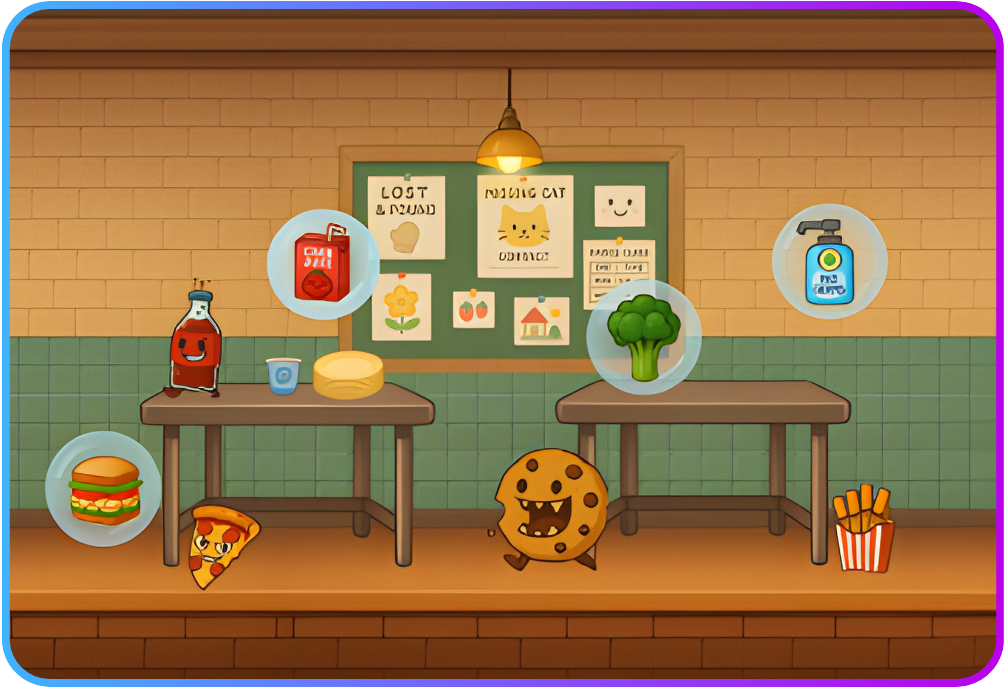
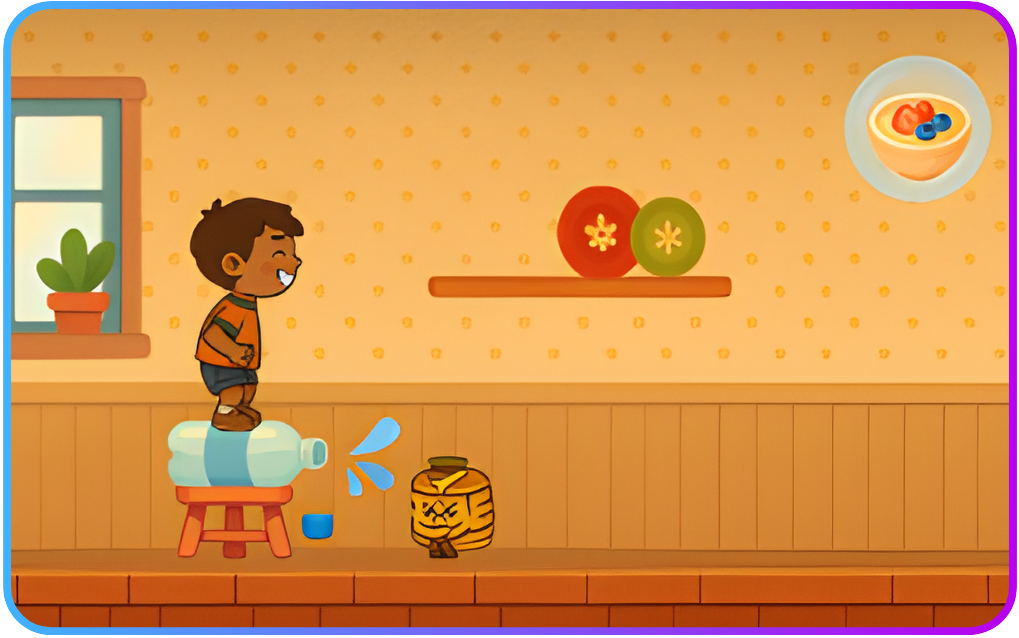
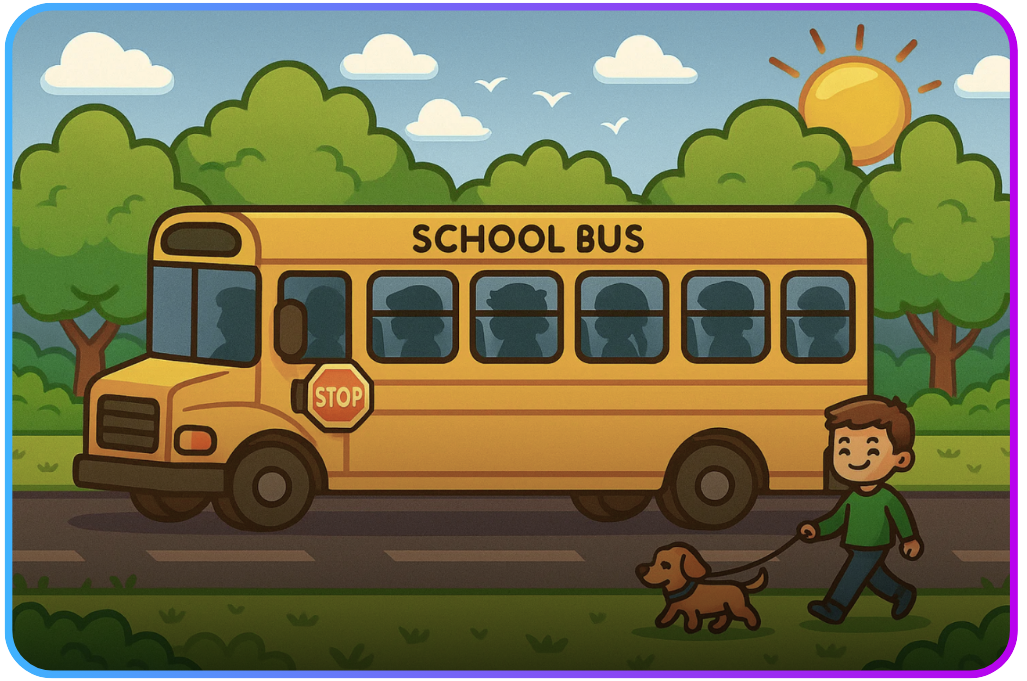
We curated the game’s environment and atmosphere in all the levels to reflect the daily experiences of preschool and elementary school children, ensuring that each level feels familiar and relatable to them. In that way, experiencing similar situations in the game as they do in real life will help children remember and recall information more effectively.
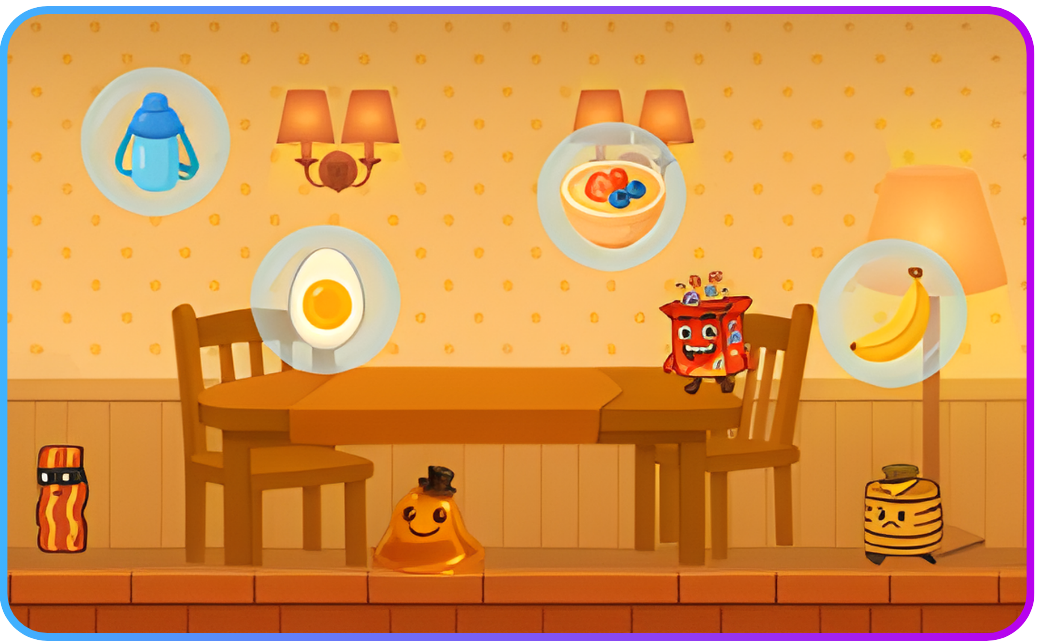
The game progresses level by level through three settings:
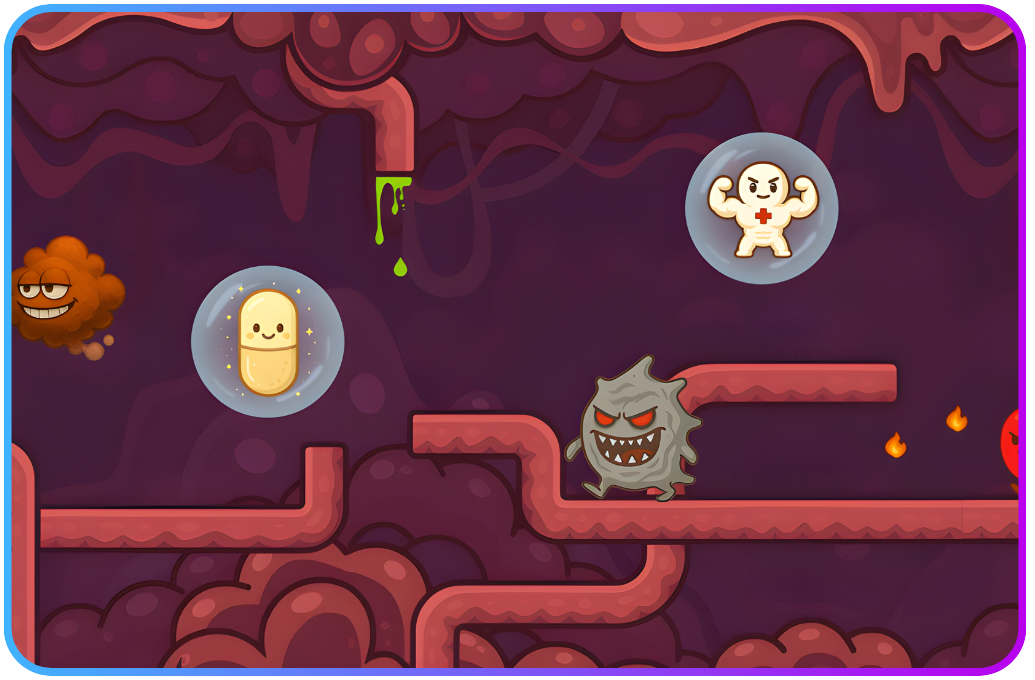
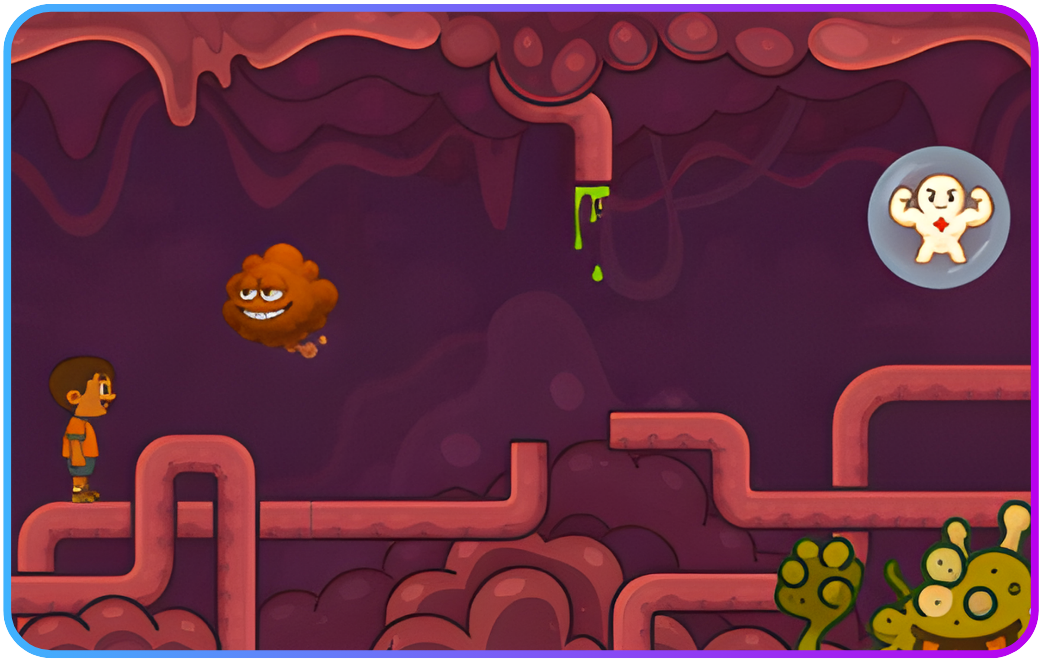
In both home and school environments, our design incorporates a wide range of elements, from food items to architecture, furniture, utensils, appliances, decorations, color-coding, lighting aesthetics, and non-playing characters. The level inside the gut has its own unique design elements based on the human anatomy.
To ensure authenticity and inclusivity for the first two levels, our design team extensively explored a variety of Western and Eastern cultural content, including visuals, movies, and video games, to create a seamless blend that resonates universally. This careful and thorough approach is adopted to prevent any player from feeling out of place, regardless of their cultural background.
For the third level, we validated minute details from medical literature and documentaries, as well as double-checked the intricacies with medical professionals to keep it believable.
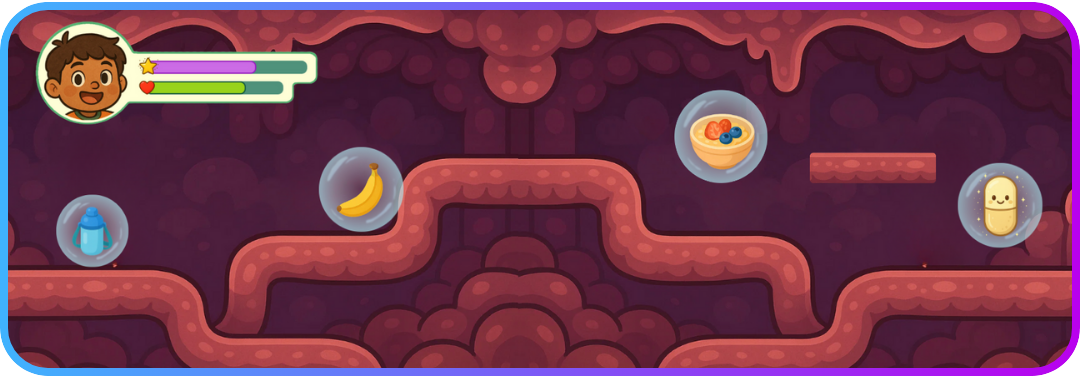
For each level, based on our research, we incorporated a variety of good foods as collectibles and bad foods as enemies:
As a reward for collecting good foods and a penalty for being attacked by bad foods, the player’s confidence level is shown to increase or decrease, as evaluated on the confidence meter after every interaction.
Each level features a unique scene that seamlessly progresses, accompanied by a distinct set of objects and hurdles, as well as related rewards and lessons. Level 3 serves as the conclusion for Levels 1 and 2, showing the player the consequences of good and bad eating habits, along with neglecting hydration and bathroom breaks.
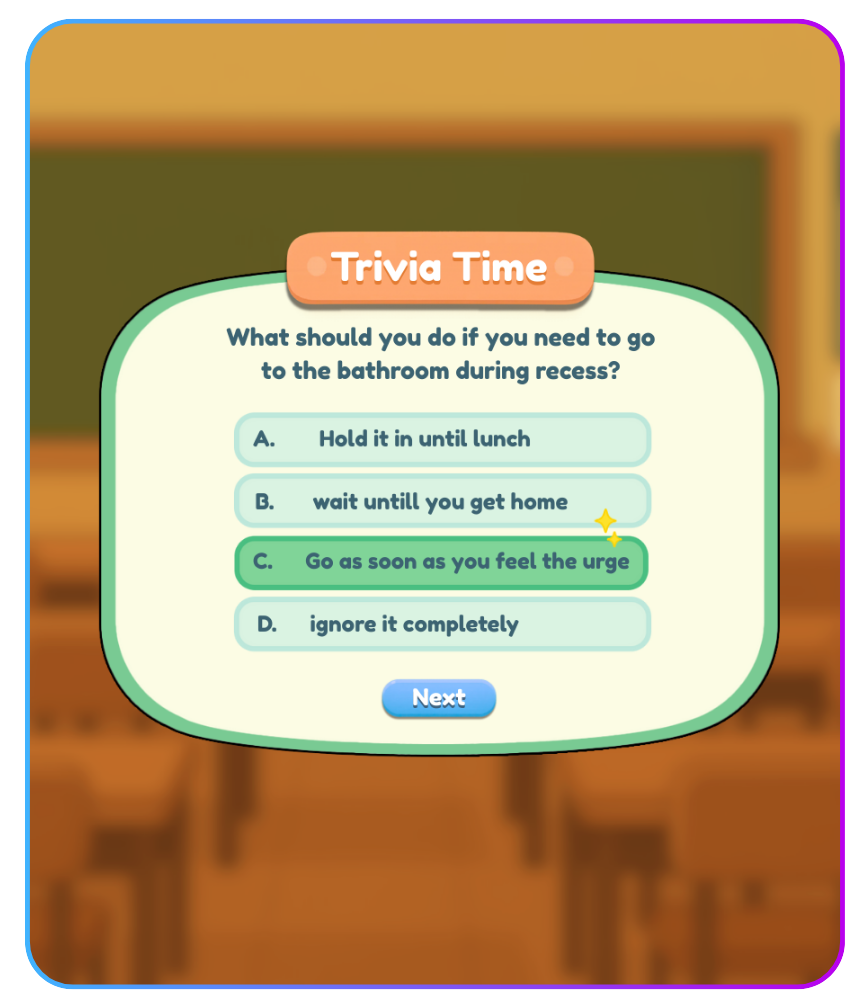
After each level, there are non-playable short story pieces and educational content, such as:
Such learning exercises are included in the gameplay to employ different means to further reinforce in the young players’ minds the importance of bladder hygiene, water intake, and timely bathroom breaks.
Collecting healthy foods increases the confidence meter, creating immediate rewards that reinforce good choices and increase the likelihood of repeating these behaviors both in-game and in real life.
The confidence meter decreases when encountering unhealthy (enemy) foods, demonstrating consequences without being overly punitive.
The three-level structure (kitchen → cafeteria → biological consequences) creates a variable ratio schedule that maintains engagement while building complexity from simple recognition to understanding real-world health impacts.
Non-playable learning segments between levels serve as secondary reinforcers, strengthening connections between game actions and actual health outcomes.
Combining game mechanics with educational content creates multiple learning pathways that promote lasting behavioral change in children’s eating and hygiene habits beyond the gaming environment.
Up until level 3, Bladder Defender’s MVP and core gameplay are complete. In the game’s ongoing development phase, we are researching, designing, and expanding the characters, storyline, and gameplay systems that build upon the foundational theme while remaining aligned with our target audience’s needs.