



Overview
- Game art styles significantly shape the first impression a game makes, influencing player perceptions of quality, game genre, and engagement potential.
- Choosing the right art style involves considering game genre conventions, target audience preferences, game mechanics, and narrative themes.
- 2D game art uses flat, stylized visuals like pixel and hand-drawn art, focusing on simplicity and clarity. 3D game art adds depth with polygonal models and realistic lighting, creating immersive, detailed worlds. Both styles offer unique creative options suited to different game types and player experiences.
Why Do Game Art Styles Matter?
Game art style is often the make-or-break factor that determines whether players will even give your game a chance, because in the gaming world, first impressions matter greatly. Within seconds of seeing a screenshot or trailer, players form judgments about your game’s quality, game genre, and whether it’s for them based purely on visual presentation.
A well-chosen art style doesn’t just make your game look good; it plays a role in game storyboarding, player attention and retention, gameplay clarity, and maintaining its uniqueness and distinctiveness from the get-go.
What to Consider Before Choosing Your Game Art Style?
Selecting the right art style involves understanding how game genre conventions, target audience preferences, gameplay mechanics, and story themes shape the visual language that best supports the player’s experience and engagement:
Game Genre
Game genres establish visual conventions that immediately signal gameplay expectations. Horror games utilize dark atmospheres, while puzzle games favor clean, minimalist designs, and each genre has developed its own distinct visual language that prepares players for their experience.
Target Audience
The target audience determines complexity and appeal. Children’s games often feature bright, simple designs, while mature titles can explore darker themes and employ sophisticated techniques. Cultural considerations also affect character and environmental choices for global markets.
Game Mechanics
Game mechanics require art that serves functionality first. Fast-paced games need high contrast and clear silhouettes for quick recognition, while puzzle games benefit from uncluttered visuals that don’t compete with mental challenges.
Story & Narrative
Story and narrative guide emotional and thematic artistic choices. Post-apocalyptic games use weathered, decaying visuals, while fairy tales employ soft, magical aesthetics. Art style becomes a storytelling tool that reinforces the narrative alongside dialogue and cutscenes.
Historical Evolution: Pixel Art to Modern 3D Pipelines
The evolution of game art has progressed from the early pixel art of the 1970s and 80s, characterized by simple, blocky visuals due to technological limitations, to the complex and immersive 3D graphics pipelines of today.
The 1990s marked a turning point with the introduction of polygonal 3D graphics in games like Super Mario 64 and Tomb Raider, enabling fully explorable, lifelike worlds.
Since then, advances in 3D animation and modeling software, real-time rendering engines, and techniques like motion capture have allowed artists to create richly detailed, realistic environments and characters, shaping the modern gaming visual experience.
2D Art & 3D Art Styles
There are many different art styles used in video games, broadly categorized into 2D and 3D styles, each with unique visual characteristics and suited to different game genres and narratives. Here are some common types of art styles:
2D Art Styles
- Pixel Art: Uses small colored squares (pixels) to create retro, nostalgic visuals, popular in indie and platform games (Pac-Man – 1980, Chrono Trigger – 1995).
- Flat/Minimalist Art: Simple shapes and colors with little texture or shading, often used for clean and modern aesthetics (Monument Valley – 2014, Alto’s Adventure – 2015).
- Vector Art: Clean, scalable graphics defined by paths instead of pixels, suited to mobile and casual games (Geometry Wars – 2003, Crossy Road – 2014).
- Hand-Drawn: Detailed, frame-by-frame illustrations providing a personal, artistic feel, often used in story-driven games (Cuphead – 2017, Hollow Knight – 2017).
- Cartoon/Anime: Stylized, exaggerated forms with vibrant colors, common in casual and action games. (Borderlands series, Ni no Kuni – 2010).
- Cel Shading: Mimics comic or cartoon shading with strong outlines and flat colors (The Legend of Zelda: Wind Waker – 2002, Borderlands series).
- Monochromatic: Uses shades of a single color or black and white for mood-focused visuals (Limbo – 2010).
- Cutout Art: Uses flat shapes that mimic paper cutouts or collage (South Park: The Stick of Truth – 2014, Don’t Starve – 2013).
- Doodle/Sketchy Art: Rough, sketch-like drawings for a playful, informal look (Draw a Stickman – 2012, Scribblenauts – 2009).
3D Art Styles
- Realism: Highly detailed, lifelike characters of video games and environments (The Last of Us Part II – 2020, Red Dead Redemption 2 – 2018).
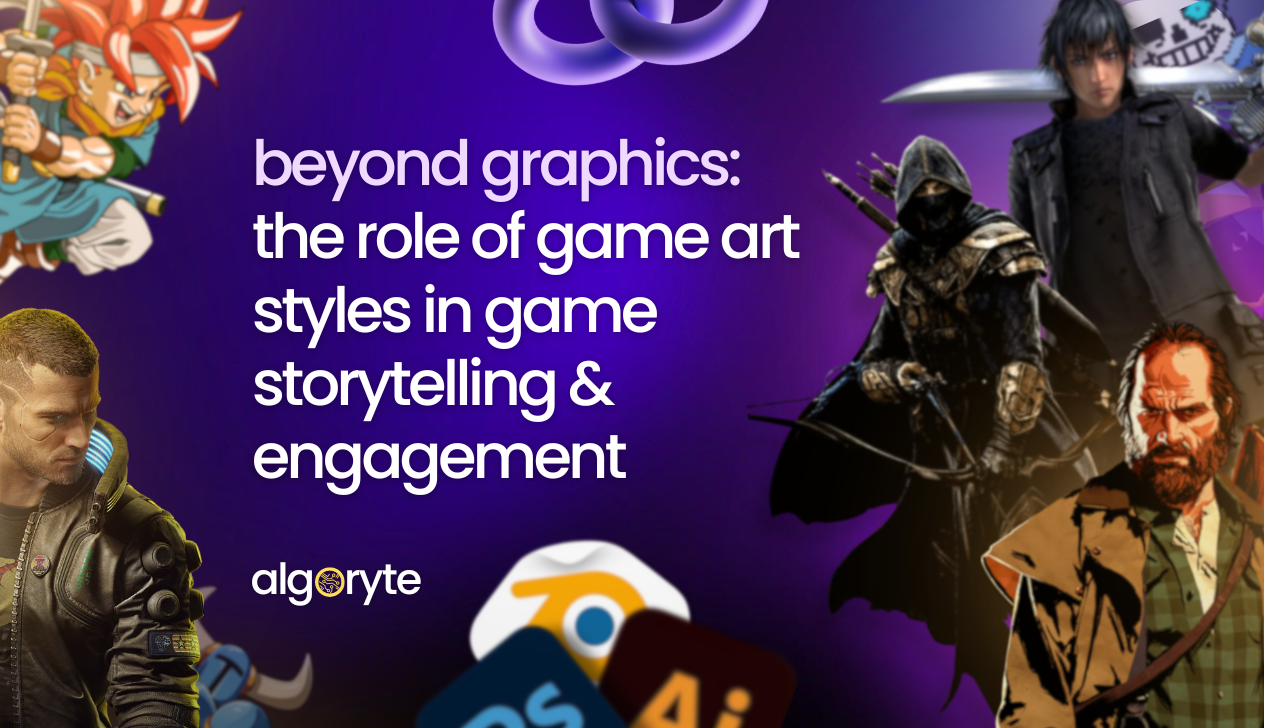
- Fantasy Realism: Realistic rendering with fantastical or sci-fi themes (Final Fantasy XV – 2016, The Elder Scrolls V: Skyrim – 2011).
- Low Poly: Simple, geometric shapes with low polygon counts, often stylized (Firewatch – 2016, Journey – 2012).
- Hand-Painted: Textures and shading are hand-painted onto models for a unique artistic feel (Ori and the Blind Forest – 2015, Sea of Thieves – 2018).
- Voxel Art: 3D pixels (voxels), creating blocky worlds like in Minecraft (Minecraft – 2011, Trove – 2015).
- Digital Sculpture: Highly detailed 3D models with intricate sculpted details (Halo Infinite – 2021, God of War – 2018).
- Technical Art: Emphasizes technological aesthetics, cyberpunk, or mechanical visuals (Cyberpunk 2077 – 2020, Deus Ex: Human Revolution – 2011).
- Neo-Noir/Neon Glow: Uses vibrant neon colors and dark, moody lighting, often in futuristic settings (Hotline Miami – 2012).
- Gothic 3D: Dark, atmospheric style inspired by Gothic art and architecture (Dark Souls series, Bloodborne – 2015).
- Organic/Fluid: Characters of video games and environments that appear alive and flowing, often using fluid dynamics (Abzû – 2016).
Specialized Styles
- Isometric Art: 3D perspective in 2D space, used for strategy and RPG games (Diablo II – 2000, Hades – 2020).
- Digital Painting: Rich, textured visuals created digitally for cinematic effects (The Banner Saga series, Transistor – 2014).
- Chiptune-Inspired: Retro style emulating early console palettes (Shovel Knight – 2014, Undertale – 2015).
- Watercolor: Soft, blended colors resembling watercolor paintings (Child of Light – 2014, Gris – 2018).
- Metaphoric/Symbolic: Abstract or surreal art used for emotional or interpretive storytelling (Inside – 2016).
Game Art Style Tools
These tools serve different purposes, from asset creation to animation, and are widely used across both indie and AAA studios for producing high-quality game art.
Tools for 3D Game Art Styles
- Adobe Photoshop: Industry standard for raster graphics, digital painting, texturing, and UI design.
- Clip Studio Paint: Excellent for hand-drawn, manga, and frame-by-frame animation.
- Krita: Free and open-source, great for raster painting, concept art, and 2D animation.
- Adobe Illustrator: Best for vector art and scalable graphics.
- Spine 2D: Specialized in bone-based animation and rigging for smooth 2D motions.
- GIMP: Free basic raster graphics editor, useful for simple asset creation.
Tools for 3D Game Art Styles (3D Animation)
- Blender: A free and versatile tool for 3D modeling, sculpting, animation, and texturing.
- Autodesk 3ds Max / Maya: Industry standard for 3D modeling, animation, and digital sculpting.
- ZBrush: Specialized in high-detail digital sculpture and organic modeling.
- Substance Painter: Popular for hand-painted textures and detailed material creation.
- Unreal Engine / Unity Engine: Game engines with integrated tools for 3D asset import, scene setup, animation, and rendering.
Game Art Style: A Game’s Distinguishing Identity in a Saturated Space
In an oversaturated market where thousands of games compete for attention daily, your art style serves as both a filtering mechanism and its identity – distinguishing it within a crowded market, enhancing player immersion, and creating lasting emotional connections. The right style not only beautifies the game but also becomes an integral storytelling tool that defines how players experience and remember the game.
FAQs
1. Why is choosing the right art style important for a game?
The right art style captures player attention, sets expectations, enhances storytelling, and supports gameplay mechanics, making the game more engaging and memorable.
2. How do game genres influence art style choices?
Different game genres have established visual conventions – horror games favor dark, moody visuals, while puzzle games lean towards clean, minimalist designs to communicate the intended player experience instantly.
3. Can a unique art style improve a game’s success?
Yes, a distinctive art style can differentiate a game in a crowded market, attract a dedicated player base, and strengthen brand recognition.
4. What tools are commonly used for creating 2D and 3D game art?
Popular 2D tools include Adobe Photoshop, Krita, and Clip Studio Paint; for 3D, Blender, Autodesk Maya, and Substance Painter are widely used.
5. How has game art evolved over time?
Game art started with simple pixel art in the 1970s and progressed to highly detailed 3D art using advanced modeling and rendering pipelines, enriching visual storytelling and immersion.