






Overview
- The stories in games act as the bridge between game design and player emotion, shaping how players connect with game characters, worlds, and progression.
- From 2D art and 3D animation to interactive game genres like RPGs or virtual reality experiences, story drives immersion and keeps players engaged beyond game mechanics or visuals.
Introduction: Why Storytelling Matters
Every successful game, whether indie or AAA, is more than just game mechanics and systems – it’s a story waiting to be lived. The power of storytelling in games lies in its ability to emotionally connect players with the world and the game characters they inhabit or encounter. Whether through linear plots, branching narratives, or environmental storytelling, the story gives purpose to action.
Games like The Last of Us (with emotionally driven arcs), Hollow Knight (with environmental lore), or Crown of Khosrow – available to play on Google Play & App Store (with real-life 7th-century Arabian-Persian conflict) show that storytelling elevates gameplay from a sequence of objectives into an experience of meaning. When woven into game design, storytelling enhances immersion, encourages replayability, and transforms players into co-authors of the narrative.
Why Storytelling is Crucial in Games
Storytelling adds depth and meaning to interactive experiences. It transforms a simple game from a sequence of challenges or puzzles into a compelling journey that a player wants to undertake. Here are key reasons why storytelling matters:
- Emotional Engagement: Narrative builds emotional connections with characters and worlds. Players empathize with heroes, villains, and NPCs (non-player characters), which boosts immersion.
- Context for Gameplay: Story provides context and motivation. It explains why players perform actions, making game mechanics meaningful rather than arbitrary.
- Player Agency: Good stories adapt to player choices, empowering players with agency and resulting in personalized story arcs – a hallmark of immersive game design.
- Enhancing Genres: Whether it’s the epic quests of RPGs, the fast-paced action of shooters, or the puzzle-solving of adventure games, storytelling shapes how game genres are perceived and enjoyed.
Storytelling Across Different Artistic & Technical Media
3D Animation & Storytelling
3D animation brings stories to life with dynamic visuals and lifelike character expressions. Detailed environments and fluid motion craft believable worlds that players want to explore. Cinematic sequences in 3D games often serve as narrative anchors that deepen immersion and strengthen emotional impact.
2D Art as a Narrative Vehicle
2D art offers unique charm and stylistic flexibility. Through expressive character sprites, rich backgrounds, and atmospheric color palettes, 2D games tell stories in a visually striking, often minimalist way. Storytelling in 2D games relies heavily on design choices and environmental storytelling techniques.
Virtual Reality Experiences & Story Depth
Virtual reality (VR) adds a layer of presence and immediacy to storytelling. Players aren’t just watching or controlling a character; they inhabit the story world. VR storytelling focuses on immersion through spatial sound, interaction, and a first-person perspective that makes narratives feel personal and immediate.
Storytelling & Game Genres: A Symbiotic Relationship
Every game genre uses storytelling differently:
- Role-Playing Games (RPGs): Heavily narrative-driven, RPGs immerse players in character-driven epics with branching dialogues and complex lore.
- Platformers & Puzzle Games: Stories here may be simpler or subtle, often conveyed via environmental clues and visual theming to motivate gameplay goals.
-
Action & Adventure: Stories might blend adrenaline-pumping action with emotional arcs that drive the player forward.
- Simulation & Strategy Games: Narratives can emerge from player decisions and world-building, rather than predefined plots.
The choice of storytelling style hinges on the game genre and targeted player experience.
Game Characters: Storytelling’s Heartbeat
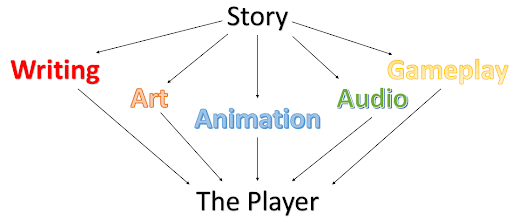
Characters serve as the player’s emotional anchors. Well-written characters with backstories, personalities, and motivations elevate gameplay beyond mechanical interaction. Visual design, whether 3D models with realistic animations or 2D stylized sprites, works hand in hand with narrative development to create memorable protagonists, antagonists, and side characters.
In immersive storytelling, players identify with characters, making victories sweeter and losses more impactful. Character-driven stories compel players to invest time and emotions into a game, increasing replayability and player loyalty.
What Do You Start With – Game Mechanics or Story?
One of the ongoing debates in game design is whether narrative or game mechanics should precede. Both are vital, but their integration and order depend on project goals:
- Mechanics-First Approach: Some developers start with gameplay concepts, defining mechanics like combat, puzzle-solving, or exploration first. Narrative is then crafted to fit the gameplay structure, enhancing engagement without limiting player freedom. This approach suits games focusing heavily on innovative game mechanics or emergent gameplay.
- Story-First Approach: Other designers prioritize narrative and build mechanics to serve the story. This ensures the gameplay supports emotional beats and plot progression, as seen in cinematic games with strong story arcs.
- Iterative Integration: Increasingly, successful projects adopt an iterative approach, developing story and game mechanics simultaneously. This integrated design allows mechanics to reinforce narrative themes while the story evolves through gameplay testing and player feedback.
In any case, a successful game balances both narrative and mechanics so neither feels forced or secondary.

Practical Tips for Balancing Story & Gameplay
- Use storytelling to justify gameplay goals and player actions naturally.
- Design game mechanics that enhance the delivery of narrative without interrupting flow.
- Consider environmental storytelling (visual and audio cues) to enrich the story world around the player.
- Leverage player choices to create branching narratives and replay value.
- Adapt story complexity to fit your genre and audience expectations.
Storytelling in Emerging Spaces: The Future
Storytelling evolves with technology:
-
Virtual reality experiences create embodied storytelling. Players don’t just watch; they exist inside the story. Games like VRChat blur the line between story and social experience.
- AI in gaming and procedurally generated content will create infinite branching narratives tailored to each player. Imagine game types and genres where every playthrough feels like a new book written for you.
- Web3 and blockchain-based systems may tie narrative progression to digital ownership, where game characters or story outcomes can become unique, tradable artifacts in decentralized economies.
The future isn’t about whether story matters in games; it’s about how storytelling will be reinvented by technology.
Conclusion: Storytelling as the Essence of Unforgettable Games
Storytelling is the soul of games. It transforms game mechanics into meaning, visuals into emotion, and worlds into experiences. Whether conveyed through 2D art, cinematic 3D animation, or fully immersive virtual reality experiences, stories connect players to the heart of a game.
The debate between story-first and mechanics-first will continue, but what’s clear is that neither can thrive alone. A story without mechanics risks being a novel; mechanics without a story risk feeling empty. The best game design fuses both – crafting experiences where every click, jump, or dialogue choice deepens immersion.
As game genres evolve, from traditional RPGs to virtual reality experiences, storytelling remains the timeless thread tying all innovation together. It’s what makes players laugh, cry, and remember long after the credits roll.
FAQs
1. Can a game succeed without a strong story?
Yes, especially games that excel at game mechanics, multiplayer interaction, or competitive play. However, narrative often adds layers of engagement that extend a game’s appeal.
2. How important are characters in storytelling for games?
Characters are crucial. They humanize storylines and create emotional investment, which enhances player commitment.
3. What is stronger in VR games: story or immersion?
Immersion is typically the defining feature, but effective storytelling within immersion is essential for deeper player connection.
4. How can indie game studios improve storytelling in games?
Focus on clear, relatable narratives, leverage art styles that fit your story tone, and integrate story elements directly into gameplay mechanics.
5. In game design, should storytelling or mechanics come first?
It depends on the vision. Puzzle or arcade games may prioritize mechanics, while RPGs or narrative-driven titles may start with story. Ideally, both evolve together.