






Introduction: The Journey of 2D Art in Games
The world of 2D game art in gaming is a fascinating journey—a story of creativity, technological evolution, and the constant push to deliver engaging visual experiences. From the humble beginnings of pixelated sprites to the rich, immersive 2D fantasy game art we see today, the history of 2D games reflects both the game development industry growth and the ingenuity of the developers behind the screens.
At Algoryte, we believe understanding the evolution of 2D animation isn’t just a nostalgic exercise—it’s essential for any developer or designer looking to create fantasy game art that resonates with modern players. Let’s explore how simple game art styles transformed into sophisticated visual narratives that define today’s gaming landscape.
The Origins: Pixels and Simple Game Art Styles
In the late 1970s and early 1980s, 2D games were born out of technical limitations. Memory, processing power, and screen resolution constrained artists to create characters and environments with minimal detail—what we now recognize as pixel art.
- Pixel Art: Tiny, square blocks of color arranged to form characters, enemies, and game worlds.
- Simple Game Art Styles: Focused on clarity and readability, often relying on imaginative interpretation from the player.
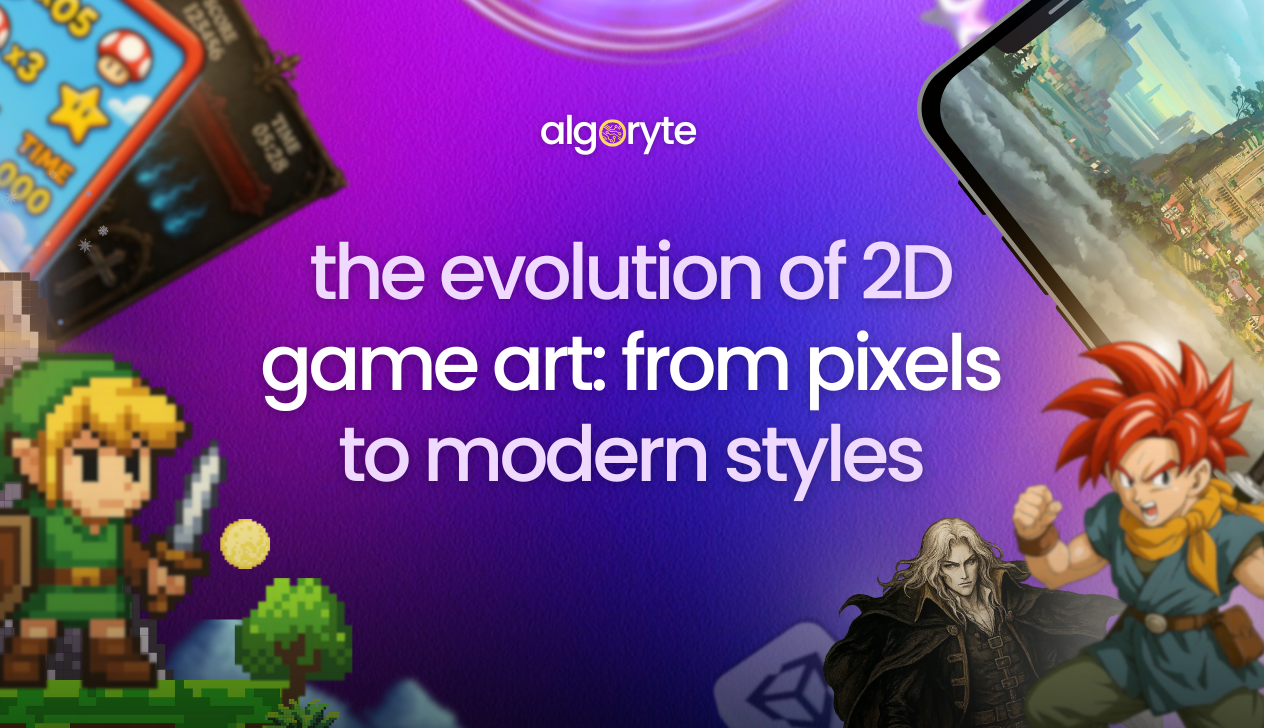
Games like Pac-Man, Super Mario Bros., and The Legend of Zelda relied on simple 2D art styles to communicate gameplay while sparking creativity. Despite the simplicity, these visuals established timeless icons in the gaming world and laid the foundation for the 2D animation evolution.
The Growth of 2D Art: More Detail, More Expression
As hardware capabilities grew, the history of 2D game art saw a significant shift. Developers could now create more complex sprites, richer backgrounds, and nuanced animations. This period marked the rise of 2D fantasy game art, allowing developers to craft visually compelling worlds.
- Animation Advancements: Smooth motion and multiple frames made characters feel alive.
- Color Palettes: Expanded color options allowed for more expressive environments.
- Layered Backgrounds: Introduced depth to 2D worlds, moving beyond flat, static visuals.
This era also emphasized Unity game development tools, giving indie developers the power to experiment with artistic styles. Games like Chrono Trigger and Castlevania: Symphony of the Night exemplified this evolution—mesmerizing audiences with detailed sprites, flowing animations, and enchanting worlds.
Pixel Art vs. Modern 2D Art: A Visual Debate
Today, 2D games can lean toward the nostalgic charm of pixel art or embrace modern digital painting techniques. Each style has its own appeal:
- Pixel Art: Retains retro appeal and works well for stylized indie games. It emphasizes gameplay clarity over visual complexity.
- Modern 2D Art: Focuses on realism, intricate environments, and expressive characters. This approach often uses digital painting and vector graphics, making it suitable for AAA-quality fantasy game art.
Understanding the strengths of each approach is crucial when planning your game. A well-designed modern 2D game may still borrow elements from classic pixel aesthetics to evoke nostalgia while maintaining contemporary visual standards.
The Role of 2D Animation Evolution in Gameplay
Animation is more than decoration—it communicates mechanics, guides players, and enhances immersion. The 2D animation evolution has enabled developers to:
- Express Character Personality: Through idle animations, gestures, and attack sequences.
- Indicate Interactivity: Highlighting clickable objects or interactive environments.
- Enhance Storytelling: Animating cutscenes, background elements, and dynamic events.
For instance, games using 2D fantasy game art often rely on elaborate animations to convey magic spells, combat choreography, or environmental hazards. The subtle use of animation can make worlds feel alive, even in 2D.
Modern 2D Art Styles: From Flat to Fantasy
Today, developers have access to tools like Unity and other game development services platforms to create intricate 2d art styles fantasy simple or highly detailed 2D fantasy game art. Some key modern trends include:
- Hand-Painted Art: Digital painting techniques that emulate traditional artwork.
- Vector-Based Design: Clean, scalable visuals ideal for UI and stylized games.
- Dynamic Environments: Layers and effects that respond to player actions or weather changes.
- Hybrid Approaches: Combining pixel art with digital enhancements to balance nostalgia and sophistication.
The rise of mobile and indie gaming has popularized simple game art styles with accessible mechanics, while AAA studios push the boundaries with fully realized fantasy game art.
Unity Game Development: Driving Innovation in 2D
The best Unity games showcase how the platform empowers developers to innovate in 2D art. Unity’s 2D toolset allows for:
- Sprite Management: Efficient handling of large numbers of animated sprites.
- Physics Integration: Adding realistic movement and interactions in 2D spaces.
- Particle Systems: Creating magical effects, weather phenomena, or environmental flair.
- Animation Controllers: Managing complex sequences for characters and objects.
With Unity, developers can merge 2D fantasy game art and gameplay mechanics seamlessly, creating engaging worlds that captivate players while maintaining efficient performance.
The Future of 2D Game Art
Looking forward, the game development industry will continue to see a fusion of old and new. Nostalgic pixel aesthetics will remain popular, while advanced 2D animation evolution and modern tools push artistic boundaries. Developers can expect:
- AI-Assisted Animation: Automating repetitive tasks while maintaining artistic quality.
- Interactive Storytelling: Dynamic 2D worlds responding to player choices.
- Cross-Platform Integration: Ensuring the best Unity games and indie titles reach mobile, desktop, and consoles.
For aspiring developers and studios, mastering 2D art, understanding pixel art vs modern art, and leveraging platforms like Unity will be key to creating unforgettable experiences.
Conclusion: Mastering 2D Art in Game Development
From the early days of pixels to the sophisticated 2D fantasy game art of today, the journey of 2D art reflects the growth of the game development industry. Whether you are crafting retro-inspired titles or exploring modern, immersive worlds, understanding the history of 2D game art and the tools available—like Unity—ensures your games stand out.
At Algoryte, we champion developers who embrace innovation, study the evolution of art, and craft experiences that resonate with players. By blending simple game art styles with modern techniques, you can create best Unity games that are visually stunning, mechanically engaging, and culturally memorable.
The evolution of 2D game art is ongoing—and as a developer, understanding and leveraging this evolution is the first step toward creating timeless games.